India’s economy is projected to grow at 6.3% in FY2025-26, retaining its position as the fastest-growing major global economy, according to the World Bank’s latest Global Economic Prospects report. However, this projection marks a downward revision from earlier estimates due to weakening exports, rising trade barriers, and global policy uncertainty. While domestic sectors like services and construction show resilience, external headwinds are expected to constrain overall growth. The World Bank also foresees a slight recovery in the years ahead, provided geopolitical tensions ease. This article examines the report’s key takeaways and what they mean for India’s economic trajectory.
Revised Outlook Amid Global Headwinds
The World Bank has lowered India’s growth forecast for FY2025-26 to 6.3%, revising its earlier estimate of 6.7% issued in January. The recalibration comes as global economic conditions continue to deteriorate, driven by increased trade restrictions, volatile financial markets, and policy uncertainties in major economies.
Despite the downgrade, India remains the top performer among major economies, outperforming China, whose growth is forecast to slow to 4.5% in 2025 and 4% in the following year. However, the World Bank noted that global trade tensions have weighed heavily on export-led economies, especially in the South Asia region, which is projected to see decelerated growth of 5.8% in 2025.
Domestic Drivers Remain Resilient
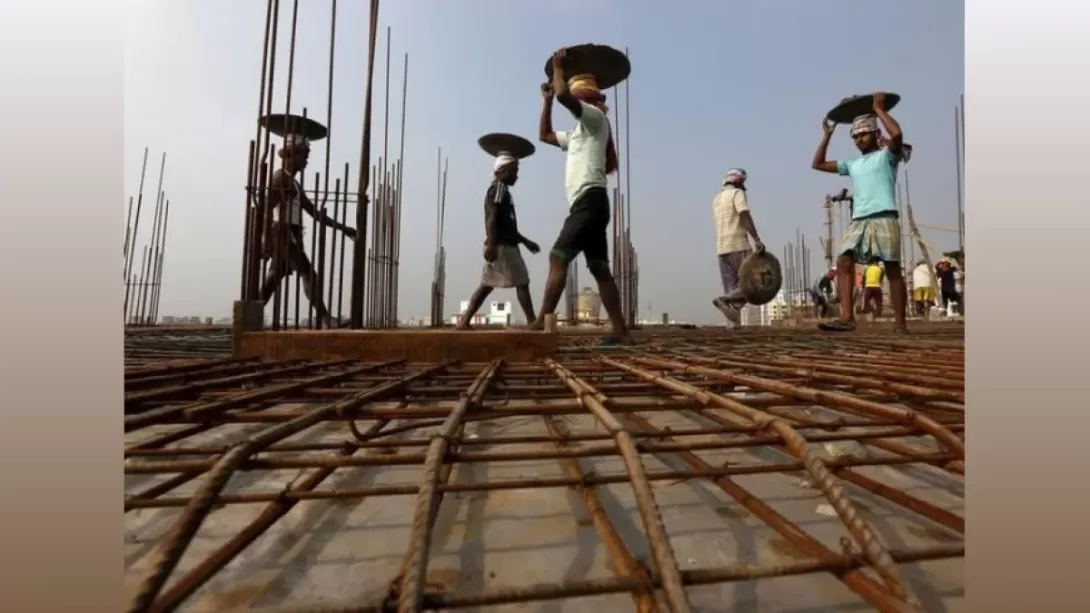
India’s economy has shown remarkable tenacity despite the turbulence in the global environment. While industrial output growth moderated in recent quarters, other key segments—particularly construction and services—have maintained robust momentum. The agricultural sector also staged a recovery following earlier drought-related disruptions, supported by strong rural demand.
The Reserve Bank of India (RBI) last week retained its GDP forecast for FY2024-25 at 6.5%, highlighting that the economy remains resilient and continues to offer stability and opportunity amid global volatility. This aligns with the World Bank’s assessment of India’s underlying economic strength, even as external factors weigh on the overall outlook.
Trade and Investment Cloud Near-Term Outlook
The downward revision in India’s growth forecast reflects broader regional and global dynamics. Exports are likely to remain subdued due to sluggish demand from key international markets and the rise of protectionist trade policies. In parallel, investment growth is expected to slow, constrained by rising geopolitical tensions and uncertain regulatory environments.
The report underscores the impact of a rising tide of trade barriers and the resulting drag on business confidence. Nearly 70% of global economies—across income levels and regions—have seen their forecasts downgraded, with 2025 expected to register the slowest global growth rate since 2008 outside of recession years.
Longer-Term Growth Prospects
Despite current challenges, India’s growth trajectory is expected to regain momentum beyond FY2025-26. The World Bank projects GDP growth to recover to 6.6% annually during FY2026-27 and FY2027-28. This rebound will likely be fueled by a continued surge in services exports and renewed investment activity, as trade conditions normalize.
However, India’s projected growth of 6.5% in FY2026-27 also reflects a 0.2 percentage point downgrade from earlier estimates. Still, the sustained uptick in domestic consumption and strategic infrastructure development should help anchor medium-term economic stability.
Navigating Global Uncertainty: Policy Recommendations
The report calls on developing economies like India to proactively manage external shocks by diversifying trade routes and strengthening regional economic ties. It recommends that policymakers prioritize domestic revenue mobilization, targeted fiscal spending, and robust institutional frameworks to mitigate risks.
Importantly, the report also suggests that global growth could accelerate if current trade tensions are resolved. Modeling shows that if global tariffs were halved from May 2025 levels through cooperative trade agreements, average world growth could rise by 0.2 percentage points over 2025 and 2026.
Conclusion: A Mixed Picture for India’s Growth Story
While India continues to outperform global peers, the economic narrative is tempered by evolving international challenges. With export performance under pressure and investment likely to slow, policymakers will need to strike a careful balance between sustaining domestic momentum and safeguarding against external shocks.
Yet, the core fundamentals of the Indian economy remain strong. As the global trade architecture evolves, India’s ability to adapt—through diversification, reform, and regional collaboration—will determine whether it can not only maintain but accelerate its growth in the years ahead.
Comments