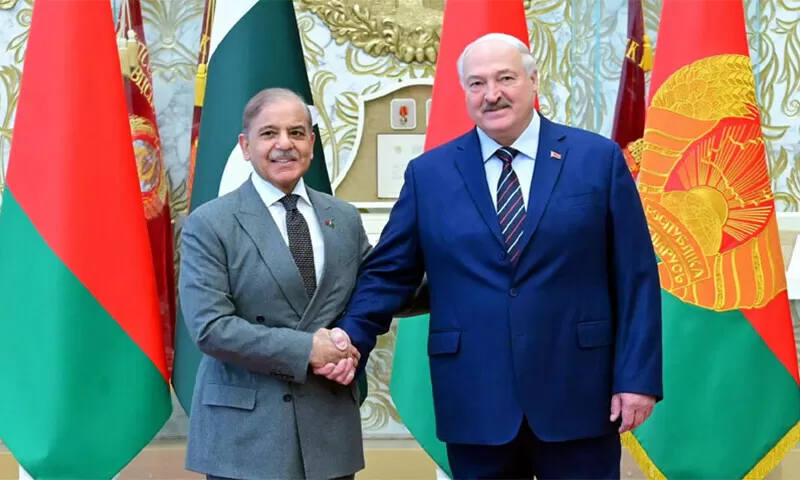
In a significant geopolitical and economic development, Pakistan and Belarus have reaffirmed their commitment to deepen bilateral ties, focusing on strategic sectors such as agriculture, mining, manufacturing, and defense. During a high-level meeting in Minsk between Prime Minister Shehbaz Sharif and President Aleksandr Lukashenko, the two nations agreed to pursue joint ventures, particularly in agricultural equipment production and mineral resource development. With over 65% of Pakistan’s population residing in rural areas, the collaboration aims to enhance productivity, promote industrial growth, and create export-ready sectors. This partnership is expected to stimulate investment flows, improve human capital mobility, and redefine Pakistan's economic direction.
Strategic Dialogue Ushers in a New Era of Bilateral Cooperation
Prime Minister Shehbaz Sharif’s visit to Belarus marks a pivotal shift in Pakistan's foreign economic policy, reflecting an emphasis on diversifying trade partnerships beyond traditional allies. The official discussions in Minsk were not only ceremonial but deeply strategic, resulting in a broad framework for future cooperation. Both leaders emphasized mutual trust and long-term engagement, with a particular focus on high-impact industries such as agriculture, mineral extraction, defense technology, and public transportation infrastructure.
Agriculture as a Cornerstone of Industrial Cooperation
Recognizing Pakistan’s identity as an agrarian economy—with nearly two-thirds of its population residing in rural areas—Prime Minister Sharif expressed a keen interest in leveraging Belarusian expertise in agricultural machinery manufacturing.
Belarus, a country with advanced capabilities in heavy-duty machinery, harvesting systems, and precision farming, presents a valuable partner in modernizing Pakistan’s outdated agricultural infrastructure. Proposed joint ventures to manufacture agricultural equipment domestically aim to:
- Reduce import dependency
- Lower equipment costs for local farmers
- Boost domestic manufacturing and employment
Sharif also underlined the need to enhance per-acre agricultural yield, noting that collaboration in research, technology transfer, and farming methodologies could significantly improve food security and export competitiveness.
Unleashing the Potential of Pakistan’s Untapped Mineral Wealth
Another major focal point was mineral exploration and processing. Pakistan is home to an estimated multi-trillion-rupee portfolio of natural resources, including copper, gold, rare earths, and coal. However, the country’s mining sector remains vastly underdeveloped due to outdated extraction methods and lack of technological know-how. Belarus, with its well-established mining and geological surveying capabilities, can provide the technical assistance Pakistan requires to transform this sector into a substantial driver of GDP. Strategic collaboration in resource mapping, mineral refinement, and export facilitation could position Pakistan as a key player in the global commodities market.
Technology Transfer in Defense and Transport Sectors
In addition to agriculture and mining, discussions extended to defense production and public transportation systems. Both nations agreed to explore collaborative models in:
- Defense manufacturing and supply chain integration
- Urban and intercity transport modernization, including electric buses and rail systems
By capitalizing on Belarusian industrial capabilities and Pakistan’s growing demand, these partnerships could deliver tangible infrastructure improvements while also opening up avenues for regional export opportunities.
Human Capital Mobility: A Win-Win Initiative
In a noteworthy gesture, Belarus has agreed to invite approximately 150,000 skilled Pakistani workers to its labor market. The Pakistani government will certify these individuals to ensure they meet international standards and industry-specific skill sets.
This labor export initiative will:
- Provide employment opportunities for Pakistani youth
- Help Belarus address labor shortages in specialized sectors
- Boost remittances to Pakistan, a key pillar of its external account stability
Institutional Support and Diplomatic Formalities
During the visit, both countries signed multiple agreements and Memorandums of Understanding (MoUs) covering:
- Interior affairs
- Defense cooperation
- Environmental management
- Bilateral trade and economic reforms
These documents formalize the framework of cooperation and ensure institutional continuity beyond political cycles. Prime Minister Shehbaz Sharif was accompanied by former premier Nawaz Sharif, Punjab Chief Minister Maryam Nawaz, and several cabinet ministers, signaling the high importance Pakistan places on this bilateral partnership.
Stock Market Implications: Positive Momentum Expected
The enhanced diplomatic and economic engagement with Belarus could have positive implications for Pakistan's stock market, particularly in sectors like:
- Agricultural technology and equipment manufacturing
- Mining and extractive industries
- Infrastructure and defense firms
Investors will likely respond to signs of foreign collaboration and technology transfer with optimism, especially as Pakistan seeks to expand its industrial base and reduce reliance on imports. If properly executed, this alliance could stimulate foreign direct investment (FDI), strengthen the rupee, and contribute to a more resilient and diversified economic model.
Conclusion: Strategic Realignment with Long-Term Economic Upside
The recent developments between Pakistan and Belarus represent more than diplomatic engagement—they illustrate a strategic reorientation aimed at economic resilience, industrial modernization, and regional cooperation. By fostering bilateral collaboration across key sectors, both countries stand to gain economically, politically, and socially. For Pakistan, this marks a decisive step toward expanding its industrial capacity, tapping into dormant natural resources, and positioning itself as a competitive player in emerging global markets. The challenge ahead lies in translating these agreements into action, ensuring transparency, and maintaining momentum across government transitions.
Comments