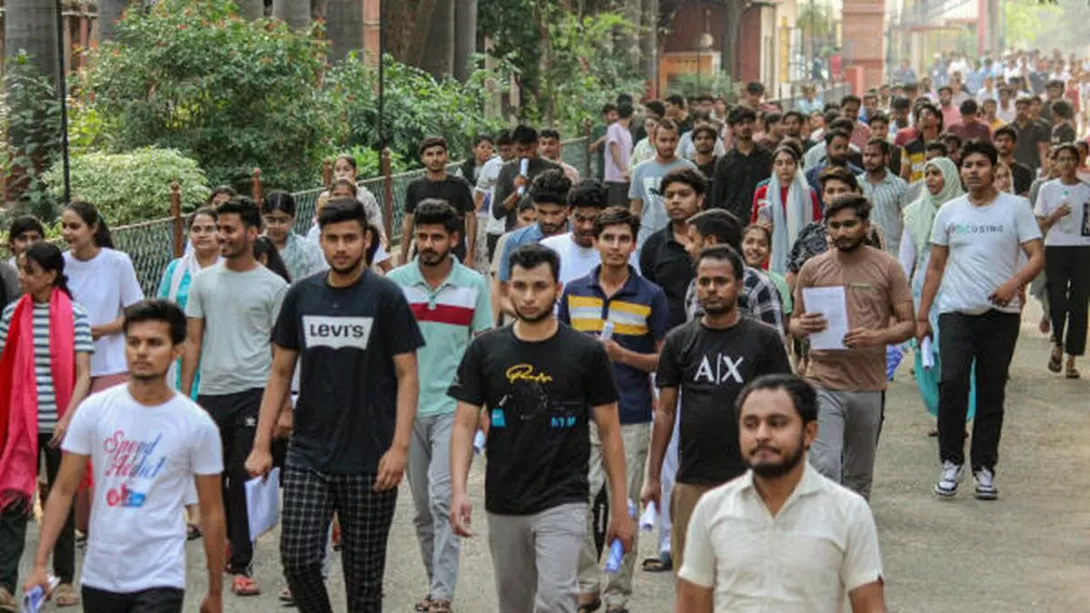
In 2025, more than 12 lakh students cleared India’s highly competitive NEET-UG examination, but with only 1.18 lakh MBBS seats available nationwide, the harsh reality is that over 90% of these aspirants may not find a place in domestic medical colleges. Despite government-led expansion of medical institutions and a doubling of seat availability since 2014, the demand-supply mismatch remains glaring. Affordability gaps between government and private colleges, regional disparities in seat distribution, and the high cost of private medical education compound the issue, forcing many to consider studying abroad or opting for allied health sciences.
An Ocean of Aspirants, a Drop of Opportunity
India’s ambition to expand healthcare access continues to collide with the scale of competition in its medical entrance landscape. In 2025, 22.09 lakh students appeared for the National Eligibility cum Entrance Test (NEET-UG), of whom 12.36 lakh qualified—slightly fewer than last year’s 13.15 lakh.
Yet qualifying for the exam is only the beginning. The availability of MBBS seats is disproportionately low, with only 1,18,190 undergraduate slots across 780 government and private colleges. This stark gap leaves nearly 12 lakh students in the lurch, forced to explore alternate academic or international avenues.
Where the Seats Are: India's Uneven Medical Map
India’s medical seat distribution varies widely across regions. According to the latest undergraduate seat matrix from the National Medical Commission (NMC), five states dominate the MBBS landscape:
- Tamil Nadu: 11,725 seats
- Uttar Pradesh: 11,225 seats
- Karnataka: 11,045 seats
- Maharashtra: 10,595 seats
- Telangana: 8,540 seats
Collectively, these states account for nearly 45% of all MBBS seats in the country.
At the other end of the spectrum, several states and union territories continue to grapple with poor medical infrastructure:
- Arunachal Pradesh: 50 seats
- Meghalaya: 50 seats
- Andaman & Nicobar Islands: 114 seats
- Dadra & Nagar Haveli: 177 seats
- Sikkim: 150 seats
For aspirants in these regions, limited local options often necessitate relocating to other states or turning to private colleges—both options with financial and logistical hurdles.
The Economics of a Medical Degree: Who Can Afford to Heal?
The cost of medical education in India varies dramatically between government-run institutions and private medical colleges.
Government Medical Colleges
- Annual tuition: Rs. 20,000 – Rs. 1,50,000
- Total cost (5.5 years): Rs. 1 lakh – Rs. 7 lakh
Private Medical Colleges
- Annual tuition: Rs. 10 lakh – Rs. 25 lakh
- Total cost (5.5 years): Rs. 50 lakh – Rs. 1.25 crore
Deemed Universities
Operating with greater autonomy, deemed universities often fall at the uppermost end of the fee spectrum, making them accessible only to those from high-income backgrounds.
Elite Institutions (AIIMS, JIPMER)
India’s most prestigious government institutions, such as AIIMS and JIPMER, offer some of the most affordable options, with tuition under Rs. 10,000 annually—a beacon of hope for merit-based aspirants from economically constrained families.
Steady Progress, But Is It Enough?
The Indian government has significantly expanded medical infrastructure over the past decade. In 2014, the country had 51,000 MBBS seats across 387 colleges. As of the 2024-25 academic year, that figure has more than doubled, reaching 1,18,190 seats spread across 780 colleges.
This growth includes the rollout of new AIIMS campuses under the Pradhan Mantri Swasthya Suraksha Yojana (PMSSY), alongside the addition of medical colleges in previously underserved districts. According to the Ministry of Health and Family Welfare, these efforts are aimed at improving India’s doctor-to-population ratio and addressing regional disparities in healthcare access.
However, the scale of the expansion still falls short of the ever-rising demand, with qualified students far outpacing available seats.
Counselling as the Final Gatekeeper
The final step in this high-stakes journey is the centralized counselling process, which will determine the allocation of seats based on rank, reservation categories, and institutional preferences.
For the majority of NEET qualifiers, this stage will decide whether they secure a seat, settle for an alternative path, or explore medical education abroad. Options may include studying in countries such as Russia, Ukraine, the Philippines, or Eastern Europe, where MBBS programs are often more accessible.
Conclusion: Bridging Aspiration and Access
India’s medical education system stands at a crossroads. While the government has made notable strides in expanding institutional capacity, a broader and more inclusive strategy is needed to align infrastructure growth with the surging aspirations of the country’s youth.
Addressing affordability, regional imbalances, and quality across both public and private institutions will be key to ensuring that talent—not economic privilege—determines who becomes the next generation of doctors.
Comments