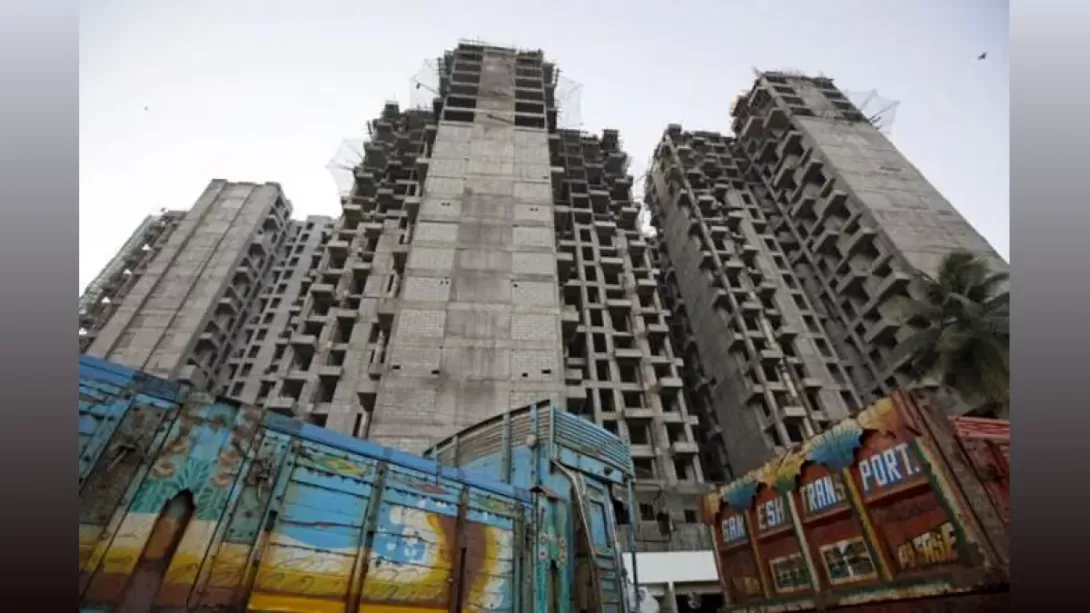
Amaravati, the long-anticipated capital city of Andhra Pradesh, is finally regaining momentum after a five-year political and developmental pause. With a staggering ₹65,000 crore blueprint, the project aims to transform the region into a thriving economic hub modeled after some of the world’s most advanced urban centers. Revived by the Chandrababu Naidu administration, Amaravati is poised to become a magnet for talent, investment, and innovation. Major global and domestic financial institutions are backing the initiative, while the government is positioning the city as a showcase for sustainable infrastructure, inclusive growth, and smart urbanization.
A Revival Rooted in Vision
Amaravati’s origins trace back to the post-bifurcation era of 2014 when Andhra Pradesh was left without a capital following the creation of Telangana. The ambitious master plan, crafted by renowned UK-based firm Foster + Partners, envisioned a sprawling 217-square-kilometer smart city nestled between Vijayawada and Guntur, along the banks of the Krishna River.
The city was designed not just as a seat of administration but as a self-sustaining ecosystem capable of generating 1.5 million jobs and accommodating 3.5 million residents. Its target GDP of $35 billion by 2050 signals its role as a future economic engine of South India.
However, the project stalled between 2019 and 2024 amid political transitions and policy ambiguity. That period of uncertainty ended when N. Chandrababu Naidu returned to power, reaffirming Amaravati’s central role in the state’s long-term development.
Infrastructure and Investment: Laying the Foundation
Phase 1 of Amaravati’s reactivated development focuses on essential urban infrastructure—transport, housing, education, healthcare, and sanitation. Estimated at ₹65,000 crore, this phase will be executed over the next three years.
The funding model is robust and multifaceted. The central government has pledged ₹15,000 crore, while multilateral lenders like the World Bank and the Asian Development Bank have committed $800 million each. HUDCO has signed on with ₹11,000 crore in loans, and negotiations with Germany’s KfW Bank for ₹5,000 crore are progressing.
The Andhra Pradesh Capital Region Development Authority (APCRDA) has initiated large-scale branding campaigns aimed at attracting anchor investors. The project structure also includes Public-Private Partnerships (PPPs) and the creation of a Special Purpose Vehicle (SPV) to bridge any viability gaps.
The Global Benchmark: A City Modeled on the Best
Drawing inspiration from modern global cities—Singapore, Tokyo, and Amsterdam—Amaravati is envisioned as a smart, inclusive, and climate-resilient metropolis. With mixed-use zoning, efficient public transport, green spaces, and digital infrastructure, it seeks to set a benchmark for next-generation cities in India.
What sets Amaravati apart is its focus on inclusivity and quality of life. By aiming to attract skilled migrants, global corporations, and knowledge-based industries, the city hopes to foster an environment conducive to innovation and economic dynamism.
The return of the project also comes at a time when India is undergoing rapid urbanization. Amaravati’s progress could serve as a model for how state-led, strategically financed, and globally integrated urban planning can unlock massive socio-economic gains.
Market Sentiment and Economic Implications
Though Amaravati is not a listed entity, the resumption of such a large-scale infrastructure project sends strong signals to capital markets. Real estate developers, construction firms, cement manufacturers, and infrastructure financiers with exposure to the region could see upward momentum in their stock performance.
Investor sentiment is also likely to improve as the project reduces regional uncertainty and revives long-term economic prospects. The government's commitment, along with foreign and domestic institutional support, suggests renewed confidence in Andhra Pradesh’s governance and investment climate.
Private sector players looking to capitalize on the Amaravati opportunity—particularly in construction, technology, and logistics—will be closely monitoring the project's roll-out for early engagement opportunities.
Conclusion: Amaravati’s Second Wind
Amaravati's resurgence represents more than just the rekindling of a paused infrastructure plan—it symbolizes India’s ambition to build world-class cities that can rival global benchmarks. If implemented successfully, it could mark a turning point in the country’s approach to urbanization, decentralization, and regional development.
This project, with its scale, vision, and international backing, is not just about creating a new capital—it’s about shaping a new chapter in India’s urban and economic narrative. The world will be watching closely.
Comments