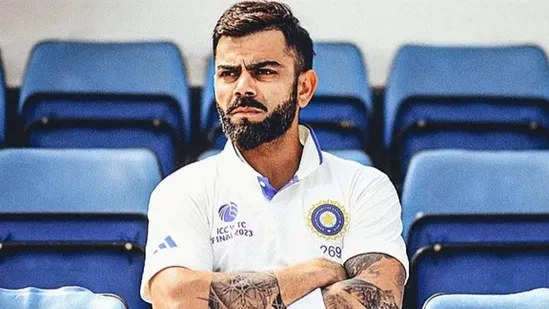
In the opening Test of the Anderson-Tendulkar Trophy at Headingley, India's bowling attack struggled to make early breakthroughs against a determined English opening pair. While conditions were ripe for seam bowling, the visitors lacked the aggression and spark once epitomized by Virat Kohli—both as a player and a personality. Former coach Ravi Shastri and ex-England captain Michael Atherton highlighted this absence, with Shastri suggesting India needed a designated on-field agitator to disrupt England’s rhythm. Kohli’s retirement from Test cricket in May 2025 has left a leadership and intensity vacuum that was clearly felt on a pivotal Day 5.
A Void in Leadership and Aggression
India’s bowlers faced a grueling Day 5 morning session at Headingley as England’s openers, Zak Crawley and Ben Duckett, played with composure and authority. Despite overcast conditions favorable for seam movement, the Indian pacers Jasprit Bumrah and Mohammed Siraj struggled to extract early wickets.
In the commentary box, former India head coach Ravi Shastri was quick to point out what was missing—not just in tactics, but in temperament. “India need someone to do a Kohli,” he remarked, referencing the emotional and psychological edge that Kohli often brought to the game. Known for his confrontational yet effective demeanor, Kohli often rattled batters into mistakes—a quality that India conspicuously lacked in this match.
Kohli’s Retirement Leaves an Intangible Gap
Virat Kohli, who announced his retirement from Test cricket in May 2025, was not only India’s most prolific batter but also its most vocally passionate on-field presence. He frequently engaged with opponents, stirred tensions, and energized his teammates—all of which contributed to his iconic stature.
Without Kohli, India lacked a psychological disruptor—someone who could shift momentum without necessarily taking a wicket. His ability to provoke, antagonize, and outwit opponents psychologically complemented India’s skill-based strategy.
Michael Atherton, commentating alongside Shastri, proposed that Mohammed Siraj had the temperament to assume this mantle. Siraj is known for his expressive style and occasional sledging, but on Day 5, even he seemed subdued. This restraint was notable and perhaps indicative of India’s broader strategic conservatism.
England’s Steady Start Exposes India’s Shortcomings
Resuming at 21/0, England’s Crawley and Duckett displayed resilience against India’s premier pacers. Their unbroken partnership frustrated the bowlers, and with each over, the Indian fielders' energy levels visibly waned. Duckett played particularly fluently, punishing loose deliveries from backup bowlers Prasidh Krishna and Shardul Thakur. He reached his half-century without much trouble, further consolidating England’s position.
India’s inability to pressure the English batters—neither through disciplined bowling nor aggressive field behavior—allowed the hosts to cruise past the 100-run mark in the first 90 minutes. While Bumrah remained threatening, the lack of consistency and intensity from the other end undermined India's defense of the 371-run target.
The Tactical and Emotional Edge Kohli Provided
Kohli’s impact transcended statistics. His mere presence lifted India’s fielding standards, influenced umpiring decisions with well-timed appeals, and often drove the team’s intensity during crunch moments. While the data-driven modern game focuses on technique and analytics, Kohli brought the invaluable element of controlled chaos—an energy that disrupted opposition strategy.
Ravi Shastri’s comments emphasized that cricket, particularly at the Test level, is as much mental as it is technical. "Kohli could do it for three people," he said—underscoring the role Kohli played in mentally occupying multiple players from the opposing side, giving India the upper hand in tightly contested scenarios.
Looking Ahead: Who Can Fill Kohli’s Shoes?
India’s current squad, while rich in talent, lacks a clear successor to Kohli’s confrontational leadership style. While Rohit Sharma leads with a more composed demeanor and KL Rahul anchors the batting with poise, neither replicates Kohli’s on-field verve.
For India to succeed in high-pressure situations—especially overseas—they will need someone to channel that combative spirit constructively. Siraj may grow into the role, but others will also need to step up, both vocally and emotionally, to ensure India does not lose its edge in tight contests.
Conclusion:
As India continues its Test campaign in England, the absence of Virat Kohli's firebrand persona is becoming increasingly evident. Beyond his batting prowess, it was his passion, provocation, and presence that often spurred India to dominate on foreign soil. To maintain its competitive edge, Team India must find new ways to instill that same psychological pressure—either through new leadership voices or a reimagined team dynamic. Until then, Kohli’s shadow will continue to loom large.
Comments