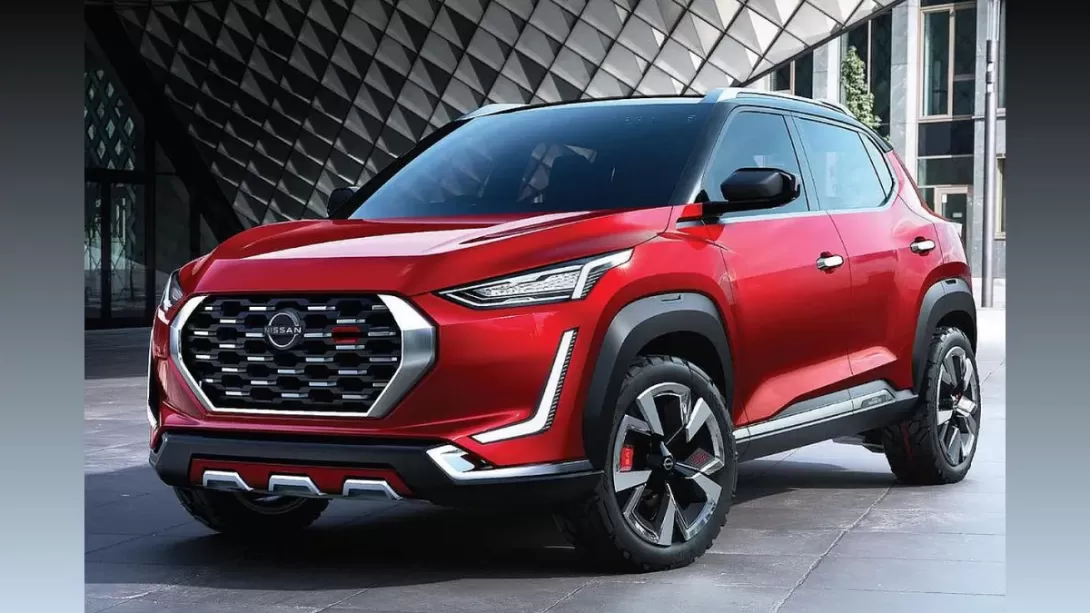
Nissan is making a bold move to solidify its position in India’s automotive market, with ambitious plans for new vehicle launches and strategic expansion. The company is set to introduce a seven-seater multi-purpose vehicle (MPV) in the last quarter of the 2025-26 fiscal year, followed by a five-seater compact SUV in 2026-27. In a market increasingly dominated by competition, Nissan’s new models, featuring cutting-edge Japanese technology, aim to differentiate themselves through design and functionality. Coupled with expansion of its network, Nissan aims to significantly boost both domestic sales and exports in the coming years.
A Bold Strategy for the Indian Market
India’s automotive market continues to evolve rapidly, with rising consumer demand for versatile vehicles like SUVs and MPVs. Japanese automaker Nissan, which has already established a presence with models like the Magnite, is now looking to build on its momentum with a series of well-timed product launches. The company recently confirmed its intention to launch a seven-seater multi-purpose vehicle (MPV) by the end of the 2025-26 fiscal year, followed by a five-seater compact SUV in the first quarter of 2026-27.
This move is part of a broader strategy to reshape Nissan’s product offerings in India, focusing exclusively on SUVs, a segment that continues to witness substantial growth. Nissan’s focus on SUVs, according to Managing Director Saurabh Vatsa, is intended to leverage the company’s "Japanese DNA" and strong technological capabilities. This clearly positions Nissan as a formidable contender in an increasingly crowded SUV market, where consumer preferences are shifting toward family-oriented, feature-rich vehicles.
New Models Set to Redefine Market Dynamics
The seven-seater B-MPV and the five-seater C-SUV will mark Nissan’s next major step in India, a market known for its sensitivity to price, design, and performance. In a landscape populated by global giants such as Hyundai, Toyota, and emerging local brands, Nissan’s entry into these segments is not just a bid for market share, but a challenge to competitors entrenched in these fast-growing categories.
Vatsa’s comments highlight Nissan’s strategy of creating "differentiated" offerings that stand out in design and feel. This design philosophy may prove crucial in a market where consumers are increasingly discerning about the features, comfort, and overall appeal of their vehicles. Nissan’s approach suggests a deliberate effort to cater to both urban and rural markets, with a focus on providing vehicles that are not only functional but also technologically advanced, offering a competitive edge over other brands that may not emphasize these aspects as strongly.
Manufacturing Plans and Network Expansion
Central to the successful rollout of these new models is Nissan’s robust manufacturing and distribution strategy. The company will be producing its upcoming vehicles at its joint-venture plant in Chennai, a strategic location that helps Nissan reduce costs and optimize supply chain operations. This move will not only support domestic sales but also bolster Nissan’s export strategy, which has seen impressive growth in recent years.
Currently, Nissan operates 282 touch points across India, including 159 showrooms and 123 workshops. The company plans to increase this network significantly, with plans to add around 35-40 new touch points in the current fiscal year and an additional 50 in the following one. This network expansion is crucial, as it aligns with the company’s goal to enhance customer accessibility and strengthen after-sales service, both of which are critical to maintaining customer loyalty in competitive markets.
In eastern India, Nissan has already made strides, with 46-47 touch points that cater to growing demand in the region. This regional focus complements Nissan’s broader vision of penetrating untapped markets, where increasing middle-class affluence is creating a new demand for automobiles, especially in the SUV and MPV segments.
Ambitious Sales and Export Targets
Nissan’s sales goals for the 2025-26 fiscal year reflect its growing confidence in the Indian market. The company aims to triple its domestic sales and exports, with ambitious targets of 1 lakh units each. In 2024-25, Nissan’s domestic sales were over 28,000 units, fueled in large part by the success of the new Magnite. This subcompact SUV, launched in October 2024, has played a significant role in the company’s ability to increase its footprint in India. On the export front, Nissan expanded its operations from 20 markets to 65, recording "unprecedented" sales of over 71,000 units.
These figures underscore Nissan’s aspirations to not only boost its domestic market share but also position itself as a significant player in global markets. With an eye on both domestic success and international expansion, Nissan’s approach is a testament to its long-term vision for India—a market that is quickly becoming one of the world’s largest automotive hubs.
Navigating Competitive Pressures
The SUV and MPV segments in India are intensely competitive, with established players like Hyundai, Tata, and Mahindra dominating the market. Nissan’s decision to focus on these segments is a calculated risk, acknowledging the fierce competition but also the significant opportunities for innovation. By leveraging its technological edge and focusing on vehicles that "look different, are designed different, and feel different," Nissan seeks to carve a niche for itself in a highly fragmented and price-sensitive market.
The company’s strategy emphasizes a deep understanding of consumer preferences in India—where vehicles must meet a balance of affordability, performance, and style. Nissan’s emphasis on high-quality manufacturing, supported by strong after-sales service, is likely to resonate with a growing number of customers looking for reliable and stylish SUVs that cater to their unique needs.
Outlook: A Growing Player in India’s Automotive Ecosystem
Looking ahead, Nissan’s aggressive push in the Indian market will be critical in determining its future in Asia’s third-largest economy. The company is positioning itself for growth, driven by strong product offerings, a growing network of touch points, and ambitious sales targets. India’s automotive market is expected to continue expanding, with rising consumer demand for SUVs, MPVs, and electric vehicles.
Nissan’s expansion plans and its commitment to delivering innovative, high-quality vehicles will play a key role in shaping its competitive strategy. With the expected launch of new models and a focus on manufacturing excellence, the company aims to not only increase its share of the Indian market but also solidify its status as a key player in the global automotive industry.
Conclusion: A Turning Point for Nissan in India
Nissan’s strategy in India represents a major turning point for the company, as it seeks to strengthen its position in a rapidly growing market. Through a combination of new product launches, a focus on SUVs, and strategic network expansion, Nissan is poised to capitalize on India’s expanding automotive market. As the company prepares to launch its latest vehicles, its ability to differentiate itself through design, technology, and customer service will be crucial in navigating the highly competitive landscape. The next few years will be decisive for Nissan’s long-term success in India, a market that is fast becoming a global automotive powerhouse.
Comments