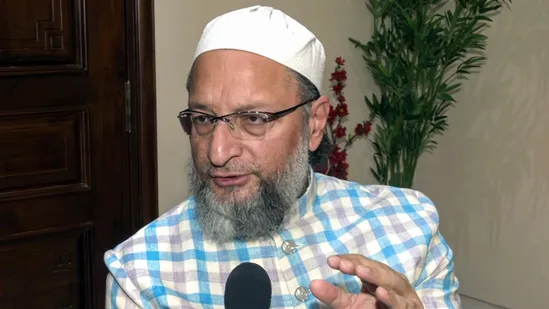
In a sharp accusation against the Election Commission of India (ECI), Asaduddin Owaisi, the president of the All India Majlis-e-Ittehadul Muslimeen (AIMIM), claims that the ECI is surreptitiously introducing the National Register of Citizens (NRC) in Bihar ahead of the state's upcoming elections. Owaisi highlights new voter registration rules that require citizens to provide detailed birth records for themselves and their parents, which he argues could disenfranchise the poor, particularly in flood-prone areas like Seemanchal. He also raised concerns about the short time frame for voter verification, calling the process impractical and unfair.
Owaisi's Concerns: NRC Undercover in Bihar?
As Bihar prepares for its crucial state elections later this year, a political storm is brewing over accusations that the Election Commission of India (ECI) is secretly implementing elements of the National Register of Citizens (NRC) in the state. Asaduddin Owaisi, the leader of the AIMIM, has accused the ECI of adopting a backdoor approach to NRC by introducing new voter verification requirements. According to Owaisi, these new rules mandate citizens to provide extensive documentation to prove both their own and their parents' birth details. This process, he claims, could exclude many rightful citizens from the voter rolls, particularly the impoverished communities in flood-affected areas of Bihar.
The New Voter Registration Rules: A Barrier for the Poor
Under the new voter registration guidelines, citizens are required to submit detailed documents proving their date and place of birth, as well as those of their parents. This includes several categories depending on the individual’s date of birth, adding a complex layer of documentation that Owaisi argues will disproportionately affect the poor.
For those born before July 1987, only one document is required to show the date and/or place of birth. However, those born between July 1987 and December 2004 must submit not only proof of their own birth details but also those of one parent. Those born after December 2004 will need proof of both parents’ birth details. If either parent is not an Indian citizen, additional documentation such as passports and visas from the time of birth are required.
Owaisi claims that these documentation requirements are particularly unfeasible in flood-prone regions like Seemanchal, where many people lack access to basic records due to economic hardship and the aftermath of recurring floods. For many, even a basic birth certificate is an unattainable document, making it near impossible for them to meet the ECI’s demands.
A Constitutional Right at Risk: Voter Exclusion in the Making?
Owaisi’s concern goes beyond logistical challenges. He warns that these new verification measures could lead to widespread disenfranchisement, particularly among Bihar's poorest citizens. Enrolling on the voter list is a constitutional right for every Indian citizen, and Owaisi points out that the Supreme Court had previously questioned such exclusionary processes in a 1995 ruling. The Court had emphasized that citizenship cannot be determined by a limited set of documents and that due process must be followed in any attempt to remove individuals from the voter rolls.
“Many rightful voters in Bihar, especially from the most vulnerable sections of society, will find themselves excluded from the electoral process because they lack the required documentation,” Owaisi wrote in his post on X (formerly Twitter). He believes this new exercise could significantly undermine public trust in the Election Commission, especially if it is seen as an attempt to covertly implement a process akin to NRC.
The Timing and Practicality of the Voter Verification Exercise
In addition to the onerous documentation requirements, Owaisi also criticizes the rushed timeline for voter verification. The ECI has reportedly set an ambitious deadline to complete door-to-door checks of every voter in Bihar within a single month, spanning June to July. Given Bihar's large population and its status as one of the least connected regions in India, Owaisi argues that it is not practically feasible to carry out such an extensive exercise fairly in such a short period.
Moreover, Owaisi references the 1995 Lal Babu Hussein case, where the Supreme Court ruled that voters could not be removed from the electoral list without due notice and an opportunity to prove their citizenship. He stresses that this principle should guide the ECI's actions, as the new voter verification requirements may unfairly penalize citizens without the necessary documentation.
Political Implications: A Strategy Ahead of the Bihar Elections?
Owaisi's accusations come at a time when the political atmosphere in Bihar is already charged, with the state elections expected to take place later this year, potentially in October or November. The timing of these new verification rules has raised concerns about the possibility of using them as a tool to disenfranchise certain groups ahead of the polls.
Bihar is home to a diverse population, including marginalized communities that may find it especially difficult to meet the documentation demands. These communities, which form a significant voting bloc, could face challenges in proving their citizenship, possibly leading to a reduction in their representation in the election process.
Legal and Constitutional Challenges: Will the Courts Intervene?
Given the serious implications of the new voter registration rules, the question arises as to whether the judiciary will step in to prevent what some see as an unfair process. The Supreme Court’s previous rulings on voter rights and citizenship could provide the legal framework for challenging the ECI’s actions if they are perceived to be discriminatory or in violation of constitutional rights.
Owaisi’s post underscores that the Election Commission’s actions could be challenged in the courts, especially if citizens are disenfranchised without due process. The potential legal battles could delay the voter verification process or even lead to a rethinking of the entire initiative.
Conclusion: A Critical Juncture for Bihar’s Elections
As Bihar’s state elections draw closer, the controversy surrounding the Election Commission’s voter verification process is likely to intensify. The new rules, which require citizens to provide detailed birth records for themselves and their parents, could inadvertently exclude large sections of the population from voting, especially in flood-affected and economically disadvantaged regions. While the ECI maintains that the exercise is necessary to ensure accurate voter rolls, Owaisi’s accusations highlight the potential for disenfranchisement. As the debate unfolds, it will be crucial to see whether the Election Commission will modify its approach or if the courts will intervene to protect citizens' rights.
Comments