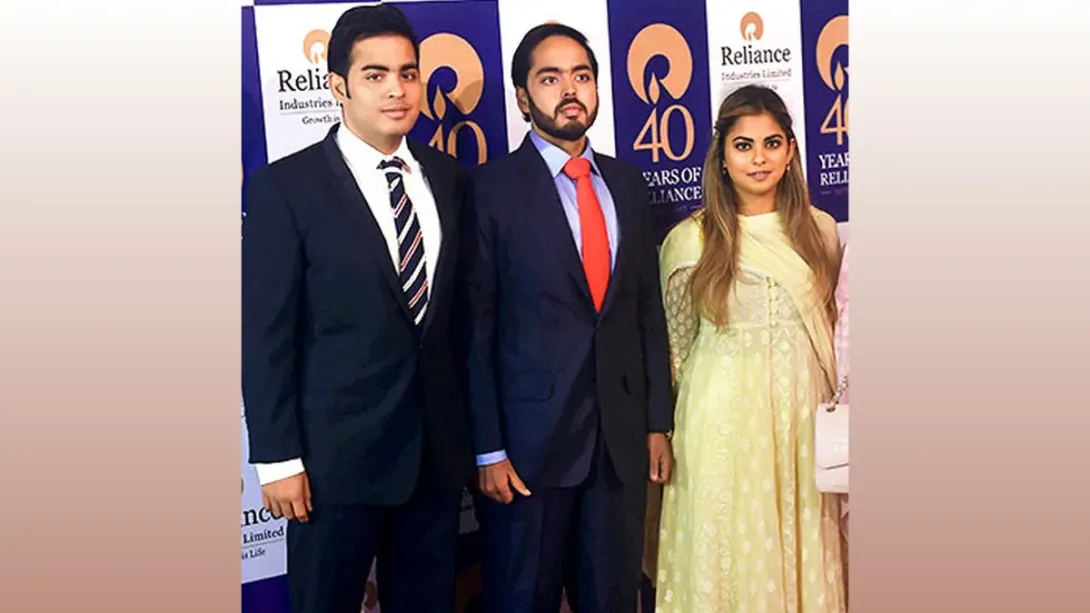
Anant Ambani, the youngest son of Mukesh Ambani, has been appointed as Executive Director of Reliance Industries Ltd (RIL), marking a pivotal step in the Ambani family’s corporate succession strategy. This elevation transitions Anant from a non-executive board position to an active leadership role within India’s most valuable conglomerate. His remuneration package ranges between Rs. 10 crore and Rs. 20 crore annually, alongside commissions and executive privileges. The move reflects Reliance’s commitment to a carefully structured generational leadership shift, balancing family legacy with professional governance across its sprawling empire of energy, telecom, retail, and new energy ventures.
A New Chapter in Reliance’s Leadership Playbook
Reliance Industries Ltd., India’s most valuable company by market capitalization, has initiated a significant transition in its leadership architecture. Anant Ambani, the youngest of Mukesh Ambani’s three children, has been appointed as an Executive Director, reflecting the formal beginning of operational succession within the conglomerate’s vast industrial footprint.
While all three Ambani siblings — Akash, Isha, and Anant — were inducted as non-executive directors in 2023, Anant is now the first to take on an executive role, underscoring his deepening involvement in Reliance’s materials, oil-to-chemicals (O2C), and renewable energy businesses. His appointment is currently under shareholder review through a postal ballot.
A Comprehensive Compensation Structure
According to Reliance’s shareholder communication, Anant Ambani will receive an annual remuneration in the range of Rs. 10 crore to Rs. 20 crore. The package includes fixed salary components, a wide array of perquisites, and performance-based profit commission.
Executive perks encompass furnished housing or housing allowance, utilities and maintenance reimbursements, travel concessions, medical expenses, and luxury-class travel accommodations. Additionally, the company will provide security services and vehicle support for official purposes.
This compensation structure reflects not just Reliance’s stature as a corporate behemoth, but also the significance attached to Anant's new operational responsibilities within the conglomerate's most strategic verticals.
Strategic Succession with Professional Oversight
The move is part of Mukesh Ambani’s broader effort to ensure a seamless and professionally guided succession—an area that historically triggered strife in Indian family-run enterprises. Unlike the posthumous succession conflict that followed the passing of Reliance founder Dhirubhai Ambani in 2002, this generational transition is being carefully orchestrated under Mukesh Ambani’s direct supervision.
Anant, a Brown University graduate, has been actively engaged with Reliance since 2015. His focus has largely remained on the company’s energy ventures, including legacy fossil fuels and emerging green energy sectors like solar and hydrogen. He has played a key role in project execution across the vinyl and specialty polyester chains and is central to the planning and build-out of the company’s New Energy Gigafactories.
The Role of the Ambani Siblings in Shaping Reliance’s Future
The executive appointment also throws light on the unique and clearly defined roles each sibling is carving out within the sprawling business empire.
- Akash Ambani, a Brown University alumnus, serves as Chairman of Reliance Jio Infocomm and has helped steer the telecom unit to market leadership. He also manages the IPL franchise Mumbai Indians.
- Isha Ambani, a Yale graduate, leads Reliance Retail and is a driving force behind its e-commerce and luxury retail strategy. Her initiatives have led to the formation of strategic alliances with top global fashion and luxury brands.
- Anant Ambani, now the Executive Director at RIL, is at the forefront of energy transition efforts, balancing the conglomerate’s legacy oil operations with its push toward renewable technologies.
All three siblings also hold board positions at Jio Platforms Ltd. and Reliance Retail Ventures Ltd., ensuring cross-functional insight into telecom, digital services, and retail.
Corporate Governance and Continuity
While the Ambani children have taken up operational roles, they work in tandem with an established cadre of professional executives—a hallmark of Mukesh Ambani’s governance model. This hybrid structure combines family stewardship with professional management to ensure stability, continuity, and agility in decision-making.
Importantly, Reliance’s ability to execute a seamless internal leadership transition sets a benchmark in India’s corporate landscape, especially for promoter-led conglomerates seeking intergenerational continuity without compromising on performance or governance standards.
A Broader Vision Beyond Business
Anant Ambani’s profile extends beyond boardrooms. He is an active participant in the group’s philanthropic and social ventures. He serves on the board of Reliance Foundation alongside his mother, Nita Ambani, and is also closely involved with the Sir H.N. Reliance Foundation Hospital and Vantara, a wildlife conservation initiative.
These efforts not only align with ESG (Environmental, Social, and Governance) trends but also reinforce the group's evolving identity—from a traditional industrial giant to a socially-conscious conglomerate.
Conclusion: A Calculated and Visionary Transition
Anant Ambani’s elevation to an executive role is not merely a familial appointment; it signals a meticulously crafted succession framework within Reliance Industries. At a time when many Indian business families continue to grapple with succession challenges, the Ambanis offer a rare case study in balancing legacy, professionalization, and generational renewal.
As Reliance continues to expand across digital, energy, and consumer domains, the leadership of the next generation—embedded within a professionally managed structure—will be critical in sustaining the group's unparalleled growth trajectory.
Comments