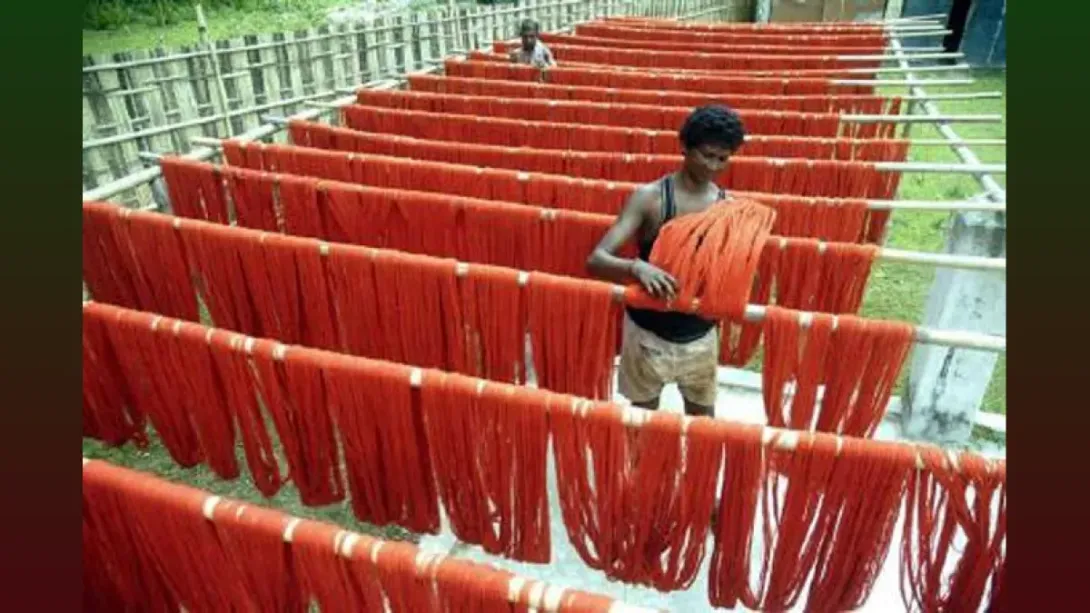
India’s textile and apparel sector is charting an ambitious growth trajectory, with export figures already crossing USD 34.4 billion in FY 2023–24 and a national target of reaching USD 100 billion by 2030. Inaugurating the 73rd India International Garment Fair, Union Minister Margherita emphasized the strategic role of trade agreements with the UK, EU, and US in unlocking premium markets. With micro, small, and medium enterprises (MSMEs) forming the backbone of this industry, government and industry leaders are now calling for innovation, improved productivity, and policy support to position India as a global leader in high-value textile exports.
India’s Textile Ambitions: From Volume to Value
India’s textile and apparel sector is undergoing a significant transformation, underpinned by rising export figures and a long-term vision aimed at enhancing value addition. In fiscal year 2023–24, the country exported textile goods worth USD 34.4 billion (approximately Rs. 2.85 lakh crore), with apparel accounting for 42% of the total. The government has now set an ambitious target of reaching USD 100 billion (roughly Rs. 8.3 lakh crore) in exports by 2030.
Union Minister Margherita, addressing stakeholders at the 73rd India International Garment Fair (IIGF), emphasized that the sector's contribution spans 2.3% of India’s GDP, 13% of industrial output, and 12% of total exports. This underscores its centrality to India’s broader economic strategy.
Strategic Trade Agreements to Drive Market Access
Minister Margherita highlighted that India’s ongoing trade negotiations with high-value markets such as the United Kingdom, the European Union, and the United States are crucial to expanding the reach of Indian textiles. These agreements, once finalized, are expected to ease tariff barriers and open premium markets for domestic exporters.
“These are quality-driven, compliance-heavy markets,” he said. “Our exporters must be equipped with robust standards and strategies to compete successfully.”
Such access would not only enhance India’s export figures but also solidify its standing in global value chains—particularly in segments demanding high levels of quality assurance, sustainability, and traceability.
The Role of MSMEs in India's Textile Ecosystem
With more than 80% of India’s textile industry being MSME-driven, the importance of supporting this segment cannot be overstated. Minister Margherita called for urgent attention to productivity enhancement, ensuring reliable raw material supply, and reducing dependence on imports.
As India pushes for scale and sophistication, MSMEs must be empowered through digitization, skill development, and access to global markets. The government's policy ecosystem, including production-linked incentives and export facilitation, will play a pivotal role in this journey.
India International Garment Fair: A Global Showcase
The 73rd edition of the India International Garment Fair, organized by the Apparel Export Promotion Council (AEPC), is Asia’s largest platform for the garment industry. Held at Yashobhoomi in New Delhi, the event features participation from over 360 exhibitors and buyers representing more than 80 countries across North America, Europe, Asia, Latin America, Africa, Oceania, and Eurasia.
The fair not only serves as a business-to-business marketplace but also celebrates India’s rich textile heritage, craftsmanship, and innovation. It underscores India’s capability to cater to a global clientele seeking quality, sustainability, and style.
Navigating Global Headwinds with Steady Growth
Despite global challenges—including the geopolitical instability in the Middle East, ongoing war in Ukraine, tariff uncertainties from the US, and global supply chain disruptions—India’s apparel export sector has demonstrated resilience.
According to AEPC Chairman Sudhir Sekhri, the sector posted a 12.8% cumulative growth in the first two months of FY 2025–26. He attributed this momentum to strategic reforms, improved logistics, and brand positioning of ‘Made in India’ products.
Sekhri emphasized that with sustained innovation, favorable policies, and stronger global partnerships, India is poised to shift from being a volume exporter to a value-added powerhouse in the coming decade.
Looking Ahead: A Decade of Opportunity
The pathway to USD 100 billion in textile exports by 2030 is both aspirational and achievable. Success will depend on how effectively India navigates complex trade environments, strengthens its domestic ecosystem, and aligns with evolving global consumer expectations—especially around sustainability, quality, and traceability.
Industry leaders and policymakers agree that this decade could mark India’s emergence as a global hub for high-value apparel exports. But reaching that milestone will require continuous investments in technology, compliance, branding, and human capital.
Comments