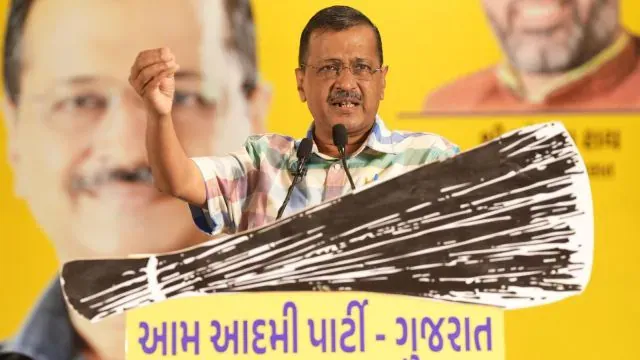
Aam Aadmi Party (AAP) national convener Arvind Kejriwal has announced that the party will enter the upcoming Bihar Assembly elections without forming any alliance with the Congress or the I.N.D.I.A. coalition. Emphasizing that the I.N.D.I.A. bloc was constituted solely for the Lok Sabha elections, Kejriwal clarified that AAP will chart its own course in Bihar, contesting solo. This decision marks a strategic departure from potential coalition politics in the state, underscoring AAP's ambition to carve out an independent political identity beyond national alliances. The move is poised to reshape the dynamics of Bihar’s electoral landscape.
AAP’s Strategic Stand in Bihar
Arvind Kejriwal, the former Delhi Chief Minister and national convener of Aam Aadmi Party, confirmed in a press briefing on Thursday in Ahmedabad that AAP will contest the forthcoming Bihar Assembly elections independently. He categorically stated that the party has no alliance plans with the Congress party or any other constituents of the I.N.D.I.A. coalition for the state polls.
Kejriwal emphasized that the I.N.D.I.A. alliance was designed specifically as a coalition for the Lok Sabha elections and does not extend to Bihar’s legislative assembly contests. By contesting solo, AAP aims to consolidate its presence and test its electoral strength in the politically significant state.
Political Implications of Going Solo
The decision to eschew alliances in Bihar signals AAP’s determination to assert its brand and policy agenda without compromises often necessitated by coalition politics. Bihar’s political arena, traditionally dominated by alliances, could witness a more fragmented contest, potentially altering vote shares and power equations.
By distancing itself from the Congress and the broader opposition bloc, AAP might appeal to voters seeking an alternative to entrenched party structures. However, this strategy also carries risks, including the challenge of mobilizing resources and voter bases independently in a highly competitive state.
Contextualizing AAP’s Broader Political Strategy
This move aligns with AAP’s broader ambition of expanding its footprint beyond Delhi and Punjab, where it has already established governance credentials. Contesting Bihar elections independently allows the party to showcase its governance model and policies directly to the electorate, reinforcing its narrative as a fresh alternative to established parties.
The party’s choice also reflects nuanced calculations regarding its relationship with the Congress and the I.N.D.I.A. alliance, balancing collaboration on national stages with autonomy in regional contexts.
Conclusion
Arvind Kejriwal’s declaration that AAP will contest the Bihar Assembly elections solo without alliances highlights the party’s evolving strategy to establish itself as a distinct political force in India’s complex electoral tapestry. This approach could potentially redefine voter alignments and coalition dynamics in Bihar, contributing to a more multifaceted and unpredictable electoral outcome.
Comments