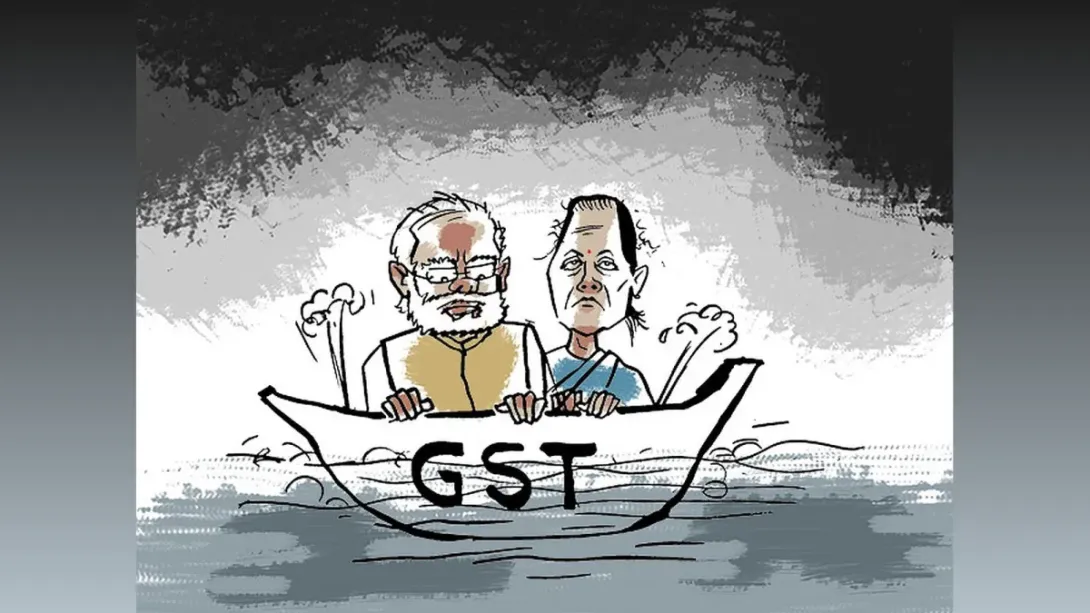
In a decisive crackdown against tax evasion, the Directorate General of GST Intelligence (DGGI) has unearthed a sophisticated scam involving fraudulent input tax credit (ITC) claims amounting to Rs. 48 crore. The investigation revealed a network of shell entities generating fake invoices to siphon off GST credits without actual supply of goods or services. This operation underscores the persistent challenge authorities face in policing indirect tax fraud, even years after GST’s rollout. The bust not only safeguards government revenues but also sends a strong deterrent signal to those exploiting systemic loopholes for illicit gains.
A Deepening Menace of Bogus Invoicing
The DGGI’s recent investigation highlights how tax fraudsters continue to exploit vulnerabilities in India’s GST framework by creating elaborate webs of fictitious firms. These entities, often operating with dummy directors and fabricated documentation, issue invoices for non-existent transactions. By doing so, they enable beneficiaries to claim input tax credits illegitimately, reducing their net tax liabilities at the cost of exchequer losses.
Officials disclosed that in this particular case, over a dozen shell companies were floated to circulate invoices worth several crores, despite no actual movement of goods or rendering of services. This allowed multiple parties to unjustifiably set off their GST liabilities, bleeding public coffers.
Intelligence-Driven Enforcement Yields Results
Acting on specific intelligence inputs, DGGI teams carried out simultaneous searches across multiple locations linked to the suspected entities. The raids led to the seizure of incriminating digital and physical records, including forged invoices and fake statutory filings.
Preliminary questioning of the alleged masterminds revealed that they charged commissions for issuing bogus invoices, thereby facilitating illicit tax credits for their clients. Investigators are now expanding the probe to trace the ultimate beneficiaries who availed these fake ITCs, indicating that more arrests and recovery actions are likely.
Broader Impact on Tax Compliance and Industry Ethics
While the Rs. 48 crore figure is substantial, the real significance of such crackdowns lies in reinforcing the culture of tax compliance. The GST regime, designed to bring transparency and curb cascading taxes, can only be effective if fraudulent practices are swiftly identified and penalized.
Industry bodies have lauded the enforcement action, noting that such measures protect honest taxpayers from being undercut by unscrupulous competitors who manipulate tax liabilities through deceptive means. Strengthening audit trails and tightening e-invoicing norms are now being discussed to further plug loopholes.
Looking Ahead: A More Robust GST Ecosystem
This case underlines the need for continuous technological upgrades in GST oversight, including advanced data analytics and cross-agency intelligence sharing. As the government sharpens its tools to detect anomalies in tax filings and invoice matching, experts believe that deterrent actions like these will discourage future attempts to defraud the system.
Moreover, with the authorities signaling zero tolerance for GST malpractices, businesses are likely to exercise greater caution in verifying vendor credentials and maintaining robust compliance records.
Conclusion: A Clear Warning to Tax Evaders
The DGGI’s uncovering of this Rs. 48 crore fake ITC scam serves as a timely reminder that despite sophisticated attempts at deceit, regulatory vigilance is evolving to meet the challenge. By dismantling such fraudulent networks, the agency not only recovers crucial revenue but also fortifies the credibility of India’s GST framework—an essential pillar for sustainable economic growth.
Comments