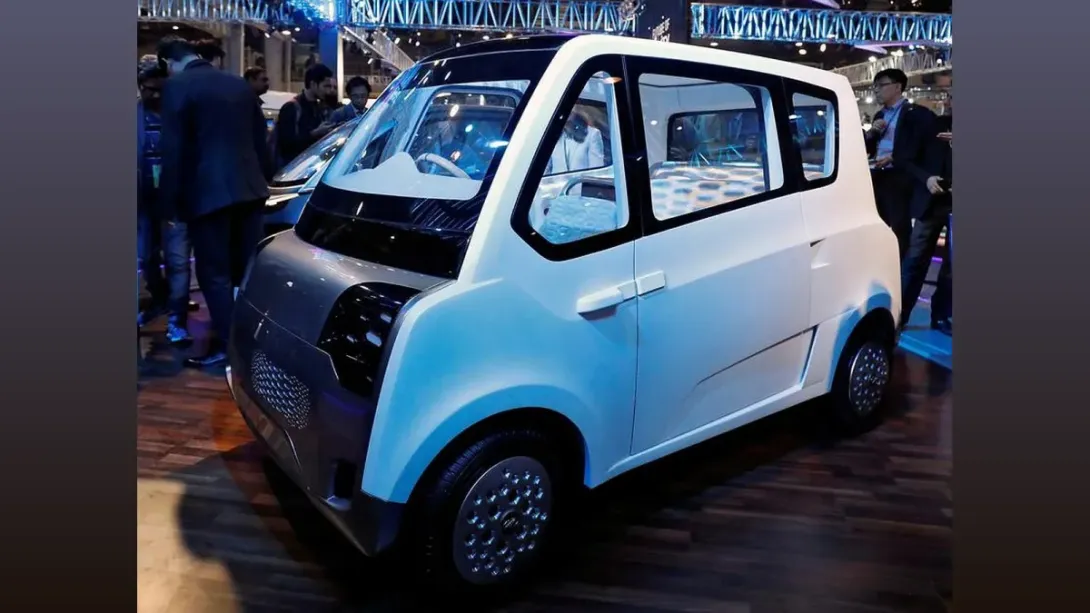
In a strategic move to bolster India’s electric vehicle (EV) manufacturing ecosystem, the International Finance Corporation (IFC) has committed a Rs. 167 crore (approximately $20 million) equity investment in Transvolt Mobility, a subsidiary of battery maker Everest Fleet. The funds will support the construction of a cutting-edge lithium-ion battery and EV assembly facility in the state of Uttar Pradesh. This investment aligns with IFC’s broader climate goals while strengthening India’s growing push for clean energy adoption, domestic manufacturing, and mobility electrification. The partnership aims to address supply chain gaps and stimulate private-sector participation in the EV value chain.
---
A Strategic Partnership to Power India's EV Future
Transvolt Mobility is emerging as a key player in India’s electric mobility sector, backed by its parent company, Everest Fleet. With IFC’s Rs. 167 crore equity infusion, the company plans to build an integrated manufacturing plant for lithium-ion batteries and electric vehicles. The facility, to be located in Uttar Pradesh, is expected to become operational within the next 18 to 24 months.
The project is designed not only to manufacture EVs but also to localize the production of high-value components, including battery packs—an area that remains heavily dependent on imports. This will likely boost self-reliance in the EV ecosystem while reducing costs and improving supply stability for domestic automakers.
---
IFC's Climate-Aligned Investment Strategy
The investment reflects IFC’s increasing focus on financing sustainable and climate-friendly infrastructure across emerging markets. As part of the World Bank Group, IFC has pledged to significantly scale its climate-related investments in line with global net-zero targets. The decision to back Transvolt Mobility underscores IFC’s belief in India’s potential to become a global hub for electric vehicle production.
Beyond capital, IFC’s participation is expected to bring in global governance standards, technical expertise, and enhanced environmental and social safeguards to ensure responsible scaling of operations.
---
Catalyzing Domestic Innovation and Job Creation
The upcoming facility in Uttar Pradesh is projected to generate hundreds of skilled jobs during the construction and operational phases. More importantly, it is positioned to act as a nucleus for ancillary industries—especially component manufacturing, battery recycling, and charging infrastructure.
By fostering backward integration in battery production and EV assembly, Transvolt Mobility could significantly reduce the sector’s reliance on imported parts, especially from East Asia. This aligns with the Indian government’s production-linked incentive (PLI) schemes and green mobility targets under the FAME initiative.
---
Market Timing and Sectoral Significance
India’s EV market, projected to be worth over Rs. 4 lakh crore by 2030, is witnessing aggressive growth led by two-wheelers, three-wheelers, and electric fleets. Yet challenges persist: inadequate battery production, weak charging infrastructure, and limited financing solutions for startups.
Transvolt’s entry, bolstered by IFC’s funding, comes at a time when the industry is transitioning from policy-driven pilots to commercial scalability. With its focus on in-house manufacturing, the company is well-positioned to serve both consumer and fleet segments, offering a blend of affordability and performance.
---
A Broader Signal for Investors
IFC’s backing is likely to boost investor confidence in India's clean tech and EV sector, sending a signal that global financial institutions view the country's electrification strategy as both credible and bankable. The deal could open doors for further fundraising rounds by Transvolt and spur similar investments in the broader ecosystem, from battery startups to EV logistics platforms.
This investment also reflects a growing trend: climate finance is shifting from purely policy-driven grants to market-led equity participation, particularly in scalable and commercially viable ventures.
---
Conclusion:
IFC’s Rs. 167 crore investment in Transvolt Mobility is not merely a financial transaction—it is a catalyst for transformation. It reaffirms India’s position as a frontier market for clean mobility and sustainable manufacturing, while highlighting the rising confidence of global capital in the country’s green industrial agenda. As Transvolt gears up to build next-generation EV and battery technology, this partnership could become a defining moment in India’s transition to a low-carbon transport future.
Comments