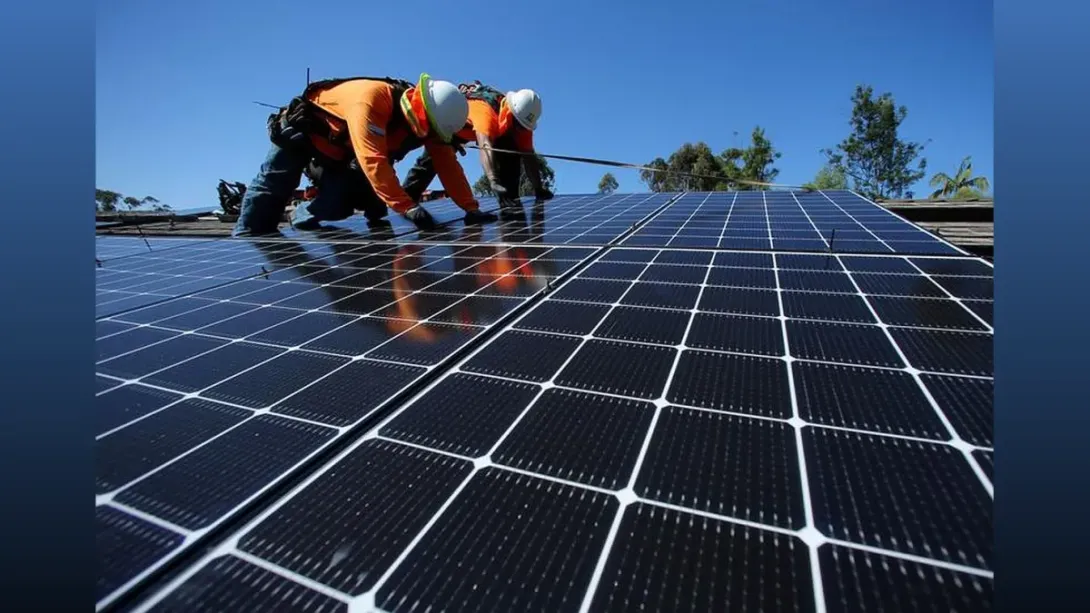
India’s accelerating transition to renewable energy has delivered a substantial economic dividend in 2024, with estimated savings of Rs. 4 lakh crore. Driven by a strategic pivot away from expensive fossil fuel imports and a surge in domestic clean energy production, the country has not only reduced its energy bill but also advanced its decarbonization agenda. Key drivers include expanded solar and wind capacity, increased grid integration, policy incentives, and improved efficiency. This development positions India as a global model for sustainable growth while reinforcing its commitment to energy independence and climate responsibility.
A Strategic Turn Towards Clean Energy
India's pivot toward renewables is no longer just an environmental imperative—it has become an economic masterstroke. The country’s energy transformation, once seen as aspirational, is now delivering tangible fiscal benefits. In 2024 alone, the nation recorded savings of Rs. 4 lakh crore by scaling back dependence on imported coal, oil, and natural gas, replacing them with domestically generated solar, wind, and hydro power.
This milestone reflects years of strategic planning, investment in clean technologies, and forward-looking policy frameworks that aligned financial prudence with climate goals.
Solar and Wind Power: The Economic Engine
At the heart of this shift is India’s exponential growth in renewable capacity. Solar power now forms the backbone of this transformation, with large-scale photovoltaic parks and rooftop installations multiplying across the country. Wind energy has also gained traction, particularly in southern and western states where wind corridors are being harnessed more efficiently.
The cost of generating electricity from renewables has consistently declined due to technological advances and economies of scale. In many regions, solar and wind power have undercut the cost of coal-generated electricity, making renewables not only greener but cheaper.
Reducing the Fossil Fuel Burden
A large portion of India’s savings stems from slashing its fossil fuel import bill. With volatile global energy markets and rising prices, India had been spending vast sums on coal, crude oil, and liquefied natural gas to meet its growing energy demands. However, greater reliance on renewables has curtailed this outflow.
Additionally, India's enhanced grid storage capabilities and improved transmission infrastructure have enabled better load balancing, reducing the need for costly thermal backup.
In parallel, states have begun integrating time-of-day tariffs and dynamic pricing to incentivize renewable consumption, further aligning economic behavior with ecological targets.
Government Policy as a Catalyst
This financial windfall would not have been possible without consistent policy support. Programs such as the Production-Linked Incentive (PLI) scheme for solar module manufacturing, accelerated depreciation benefits, green energy open access regulations, and renewable purchase obligations have played a central role.
Furthermore, public sector undertakings and private players alike have been incentivized to invest in clean energy projects. Major financial institutions, both domestic and international, are increasingly backing green infrastructure, de-risking capital and accelerating deployment.
Broader Implications for Energy Security and Jobs
India’s renewable momentum also has long-term strategic implications. By reducing energy imports, the country has enhanced its energy security—a vital priority amid global geopolitical uncertainties.
Moreover, the renewable sector has become a job creation engine. From panel manufacturing to project development and maintenance, green energy is generating employment at scale, particularly in rural and semi-urban areas.
This dual dividend—economic and social—is helping India strike a rare balance between high growth and sustainability, something few emerging economies have achieved.
Looking Ahead: Challenges and Opportunity
While 2024’s savings are a milestone, the path ahead remains complex. Grid integration, battery storage, and intermittency management continue to pose challenges. Investment in smart grids, domestic manufacturing of storage technologies, and skilled workforce development will be critical in sustaining momentum.
Nonetheless, India’s renewable strategy is increasingly being seen as a case study in smart governance. As global economies struggle with the trade-offs between development and decarbonization, India offers a blueprint: economic logic and environmental logic can indeed converge.
Conclusion
India’s Rs. 4 lakh crore saving in 2024 marks more than just an accounting win—it is a testament to the transformative power of clean energy when paired with sound policy, innovation, and vision. By proving that sustainability can drive economic resilience, India is charting a new course for emerging markets navigating the climate crisis without compromising growth.
Comments