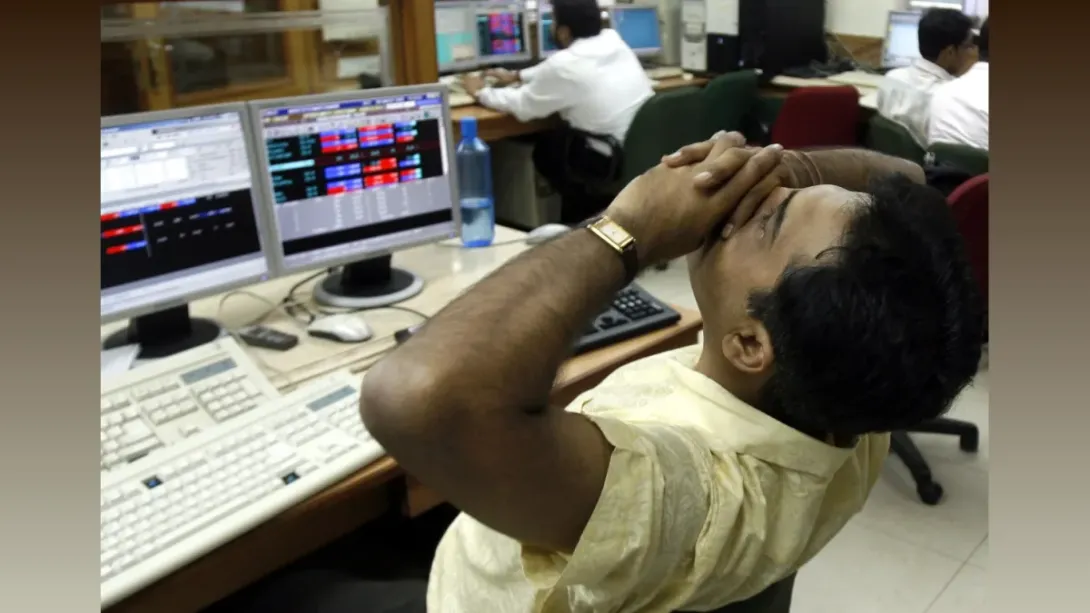
In a staggering turn of events, Indian equity markets witnessed an erosion of Rs. 8.67 lakh crore in investor wealth over the span of just two trading sessions. Triggered by a confluence of global uncertainties, profit booking, and sectoral headwinds, the market rout saw benchmark indices slide sharply, rattling investor sentiment across large-cap, mid-cap, and small-cap segments. While the broader economic fundamentals remain intact, near-term volatility has returned with full force. The correction reflects heightened sensitivity to external triggers, monetary policy outlooks, and institutional rebalancing. Analysts urge caution, while long-term investors look for value amid the bloodbath.
Benchmark Indices Under Pressure
The BSE Sensex and NSE Nifty faced significant declines over two consecutive trading days, with both indices slipping sharply under selling pressure. The Sensex dropped over 1,500 points, while the Nifty lost more than 400 points during the same period, wiping out investor gains built up over recent weeks.
The correction was broad-based, with heavyweights from sectors such as banking, information technology, and FMCG leading the downturn. Mid-cap and small-cap indices, which had outperformed in previous months, bore the brunt of the selloff, further amplifying the impact on retail portfolios.
Rs. 8.67 Lakh Crore Wealth Wiped Out
The total market capitalization of companies listed on the BSE plunged by an estimated Rs. 8.67 lakh crore over the two-day period. This dramatic decline reflects not only profit booking but also a rapid shift in investor sentiment, driven by a mix of domestic and global cues.
Such a massive erosion in wealth, while not unprecedented, has prompted retail investors to reevaluate their short-term positions. High-beta stocks—those more sensitive to market volatility—faced intense liquidation, contributing to the steep valuation cuts across the board.
Global Cues and Risk-Off Sentiment
The selloff aligns with renewed fears in global markets around interest rate policies, geopolitical tensions, and slowing economic data from major economies. Concerns over U.S. Federal Reserve's next moves on rate cuts have injected uncertainty into emerging markets, including India, as foreign institutional investors (FIIs) reassess their risk appetite.
Simultaneously, weakening Chinese demand and signs of economic fatigue in Europe have compounded anxiety among global investors. In this context, Indian equities—despite strong long-term fundamentals—were not immune to the sudden shift to risk aversion.
Domestic Triggers Add to the Turbulence
While external cues played a primary role, domestic factors have also contributed to the bearish sentiment. Quarterly earnings for several companies have failed to meet market expectations, particularly in consumption and tech segments. Additionally, valuation concerns following a prolonged market rally may have prompted institutional investors to lock in profits.
Investors are also closely monitoring upcoming policy signals from the Reserve Bank of India, especially as inflation remains a key concern and monsoon-related uncertainties continue to loom over rural demand recovery.
Institutional Activity and Sectoral Performance
FIIs were net sellers during the crash, pulling out significant capital, especially from financials and technology. In contrast, domestic institutional investors (DIIs) attempted to cushion the fall, but their buying was insufficient to reverse the trend.
Sectors such as banking, metals, and real estate posted notable losses, while defensives like pharmaceuticals and utilities saw relatively limited damage. The volatility index (VIX), often referred to as the “fear gauge,” spiked sharply, indicating elevated uncertainty and nervousness among traders.
What Lies Ahead: Caution, Correction, or Opportunity?
While the scale of the selloff has been alarming, market experts believe the correction may offer long-term investors selective opportunities, particularly in sectors with strong balance sheets and earnings visibility. Historical data suggests that sharp corrections, though painful, often set the stage for more sustainable rallies when macro stability returns.
However, short-term volatility is expected to persist, and market participants are advised to adopt a cautious, disciplined approach. Active portfolio rebalancing, sector rotation strategies, and a focus on fundamentals will likely guide investor decisions in the weeks to come.
Conclusion
The Rs. 8.67 lakh crore wealth erosion in just two days serves as a sobering reminder of the fragility of market confidence in the face of global and domestic uncertainty. While the correction is steep, it is also part of the market’s cyclical nature. For seasoned investors, it may represent a necessary recalibration—a pause before the next phase of growth. For others, it’s a call to reassess risk tolerance and investment horizon.
Comments