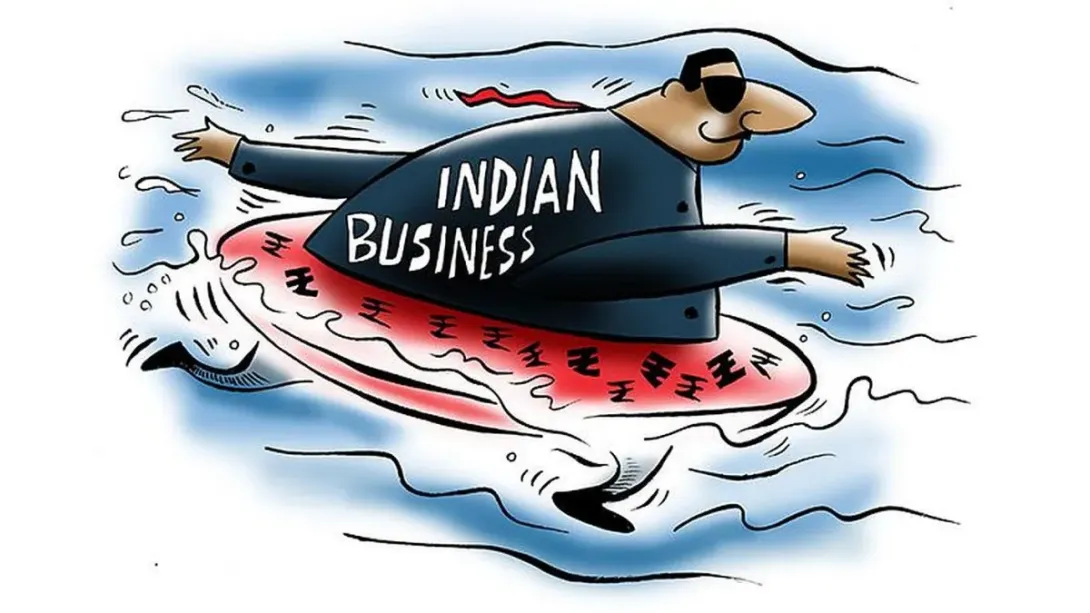
Corporate India is expected to post a modest revenue increase of 4–6% in the first quarter of FY25, weighed down by weak global demand, a high base from the previous year, and sector-specific slowdowns. While a few consumption-driven and financial sectors show resilience, overall topline expansion remains muted. Despite sluggish revenue growth, operating profitability is forecast to improve due to softening input costs and improved operational efficiencies. However, the benefits of margin expansion may not be uniform across sectors. These early trends suggest a cautious but steady start to FY25 for India’s listed companies.
Tepid Topline Growth in Q1 FY25
India Inc’s revenue growth in the April–June quarter of FY25 is anticipated to be in the range of 4–6%, reflecting the impact of a high base, uneven demand recovery, and subdued export performance. While the broader economy has shown signs of robustness, sector-specific headwinds have tempered the pace of expansion, especially in commodity-driven industries and discretionary consumption segments.
The industrial sector has faced challenges due to volatile input prices and tighter liquidity, while rural demand remains patchy, limiting the upside for FMCG and agri-linked businesses. Meanwhile, segments such as automobiles, banking, and capital goods have demonstrated more stable growth patterns, supported by domestic consumption and government-led infrastructure spending.
Margin Expansion Amid Cost Easing
Despite the muted revenue trajectory, the quarter is expected to deliver healthier earnings before interest, taxes, depreciation, and amortization (EBITDA) margins. Companies have benefited from cooling commodity prices, supply chain normalization, and better capacity utilization, leading to improved cost efficiencies.
Core sectors such as cement, metals, and chemicals are likely to see sequential recovery in margins, although the pace may vary. Cement producers, for instance, have gained from lower fuel and power costs, while certain metal and mining companies have seen margin compression due to weak pricing power in export markets.
Consumer-oriented businesses continue to face mixed signals, as elevated competition and promotional spending offset the relief from input deflation.
Financial Services and Automobiles Lead the Pack
Among the outperformers this quarter are expected to be financial services and the automotive sector. Banks and non-banking financial companies (NBFCs) have shown robust credit growth, healthy net interest margins, and controlled asset quality, contributing to double-digit profit growth. A resilient retail loan book, buoyed by festive and wedding season demand, further aided earnings momentum.
The automotive industry, particularly in the passenger vehicle and premium two-wheeler categories, benefited from steady demand and new product launches. Commercial vehicle sales, although cyclical, have held firm due to infra spending and last-mile connectivity requirements.
Drag from Commodities and IT Services
On the flip side, commodity-linked sectors such as oil and gas, steel, and fertilizers are expected to post subdued revenue growth or even a year-on-year contraction, primarily due to falling realization and inventory normalization. The ongoing correction in global commodity prices has exerted downward pressure on top lines despite relatively steady volumes.
The information technology sector, traditionally a bellwether of corporate performance, has faced slower client decision-making, project deferrals, and a cautious stance by global enterprises. This has led to flat-to-marginal revenue growth in constant currency terms, with some impact on profitability despite efforts to optimize costs and rebalance headcount.
Outlook: Guarded Optimism Amid Structural Shifts
The early signals from Q1 indicate that India Inc is navigating a landscape shaped by a blend of caution and adaptation. While topline growth has moderated, the ability of companies to protect and expand margins suggests stronger internal resilience. The divergence in performance across sectors underscores the importance of strategic repositioning and operational discipline.
As India progresses deeper into FY25, the focus will increasingly shift to demand revival, rural income stabilization, monsoon patterns, and global macroeconomic cues. Policy tailwinds in infrastructure, manufacturing, and digital ecosystems continue to provide medium-term support, even as short-term volatility persists.
For investors and analysts alike, Q1 serves as a barometer—not of exuberance, but of cautious forward movement in a transitioning economy.
Comments