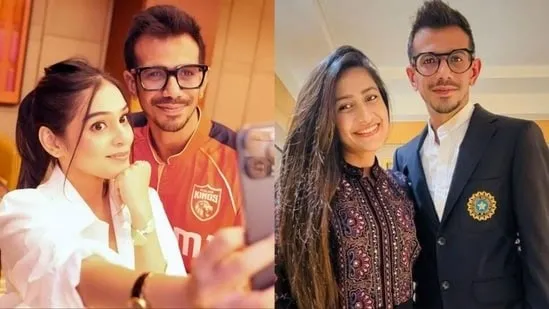
Radio jockey and digital influencer Mahvash Amu has hit back at a social media user who accused her of disrupting cricketer Yuzvendra Chahal’s marriage with Dhanashree Verma. In a sharp rebuttal, Mahvash questioned the baseless nature of the allegation, sarcastically asking if the troll had personally witnessed such an event. The episode is part of a growing pattern where public figures are subjected to unsolicited and often intrusive comments on their private lives. Mahvash’s firm stance underscores the need to draw boundaries between public interest and personal dignity in the digital age.
---
The Accusation and Response
Mahvash Amu, widely known for her candid content and charismatic presence on social media, recently responded to a troll who alleged that she had “stolen” Yuzvendra Chahal from his ex-wife, choreographer Dhanashree Verma. The user’s comment, though vague and unsupported, attempted to tie Mahvash to Chahal’s personal affairs.
Mahvash, never one to shy away from confronting negativity, responded with wit and sarcasm, stating, “Inhone dekha hai churate hue kya?” (Did they actually see me stealing him?). Her remark quickly drew attention online, garnering support from followers who applauded her poise and refusal to entertain speculative gossip.
---
Context Behind the Controversy
Speculation around Chahal’s personal life has intensified ever since rumors of his separation from Dhanashree began circulating. While neither party has publicly confirmed the exact circumstances of their reported separation, the silence has led to a vacuum filled with conjecture—often at the expense of unrelated individuals.
RJ Mahvash’s growing popularity and occasional interactions with public figures like Chahal have led some users to jump to conclusions, despite no credible evidence linking her to the cricketer in a romantic capacity.
---
The Problem with Online Vigilantism
Mahvash’s case is emblematic of a larger trend where celebrities and influencers are routinely dragged into unverified controversies based purely on appearances or assumptions. Social media has enabled a culture where anyone can become the target of character attacks, often without any factual basis.
Her response, while assertive, also serves as a reminder that public figures, too, deserve the presumption of innocence and the right to personal boundaries. In an era where digital commentary can escalate into full-blown narratives, the line between accountability and online harassment has become dangerously thin.
---
Public Reaction and the Role of Influencers
Following her response, many of Mahvash’s supporters rallied behind her, praising her for standing her ground and calling out baseless accusations. Others highlighted the broader issue of trolling, particularly against women in media and entertainment, who are frequently targeted for their personal choices—real or imagined.
This moment has also opened up a space for influencers to reflect on how they navigate public scrutiny. By taking a firm yet composed stance, Mahvash has set an example of how to assert one’s voice without resorting to hostility or retreat.
---
Conclusion: Privacy, Perception, and the Price of Fame
As parasocial relationships between fans and celebrities intensify, so does the tendency to overstep personal boundaries. While curiosity is natural, it must not come at the cost of respect and truth.
Mahvash Amu’s sharp but dignified reply reflects a growing sentiment among public figures who are choosing to push back against internet-fueled slander. The takeaway is clear: being in the public eye does not make one public property. And while influencers may choose to share parts of their lives, they, like everyone else, are entitled to privacy, respect, and fairness.
Comments