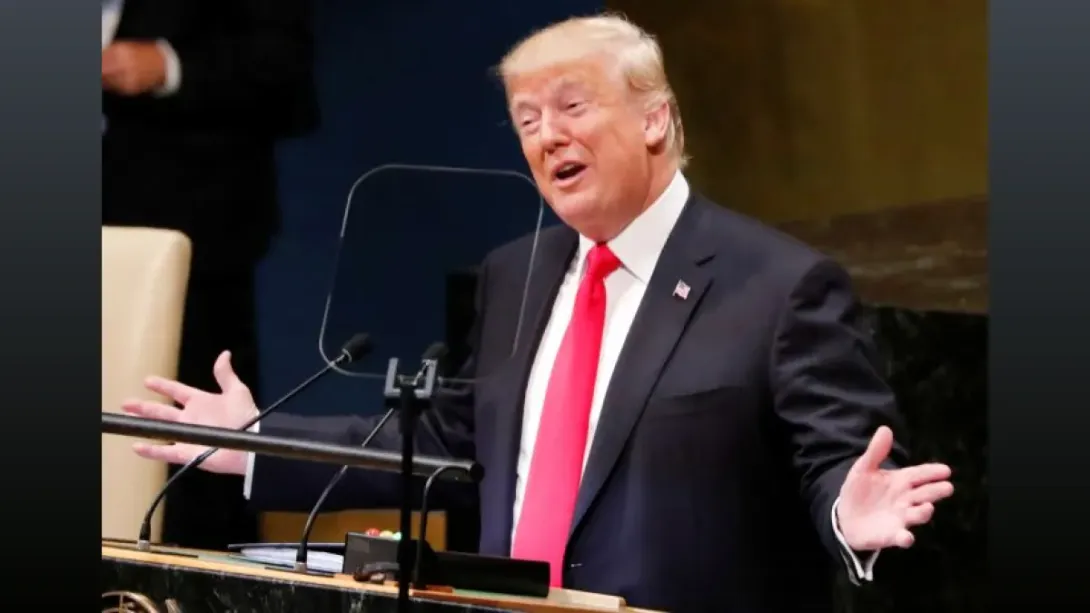
Former U.S. President Donald Trump has clarified that no final trade agreement with India was reached during his administration, and longstanding concerns over high Indian tariffs remain unresolved. Despite earlier negotiations aimed at bridging trade imbalances and reducing market entry barriers for American goods, talks ultimately stalled over key differences. Trump criticized India’s tariff regime as among the highest in the world, underscoring persistent friction in bilateral trade relations. His remarks come amid renewed scrutiny of U.S.-India economic ties and their strategic importance in the global supply chain and geopolitical alignment.
Background: Stalled Trade Negotiations Between Two Democracies
During his term, Trump consistently pushed for more favorable trade terms with India, citing a substantial trade deficit and limited market access for American businesses. Multiple rounds of dialogue were held to address concerns ranging from tariffs on agricultural products to data localization rules affecting U.S. tech firms.
India, in response, sought restoration of its preferential trade benefits under the Generalized System of Preferences (GSP), which the U.S. revoked in 2019. However, negotiations failed to produce a comprehensive trade deal, with both sides sticking to entrenched positions on tariffs and regulatory frameworks.
High Tariffs: A Central Sticking Point
Trump reiterated his administration’s longstanding complaint that India maintains some of the highest tariff rates globally, particularly on imported U.S. goods such as motorcycles, medical devices, and agricultural commodities.
For instance, Harley-Davidson motorcycles faced an import duty of 50%—even after India halved it from the original 100% following direct pressure from Washington. American producers of almonds, apples, and dairy also faced steep tariffs, limiting their competitiveness in the Indian market.
Despite some concessions, India has maintained that its tariff policies are aligned with World Trade Organization (WTO) norms and reflect the needs of a developing economy with millions of small-scale producers.
Strategic Partnership vs. Commercial Friction
While the two countries continue to deepen their strategic and defense ties, trade remains a sore spot. Even as India and the U.S. align on broader geopolitical interests—particularly in the Indo-Pacific—economic frictions have been slow to resolve.
Trump’s comments underline the often complex interplay between diplomacy and domestic economic policy. His "America First" stance emphasized reducing deficits and protecting American jobs, a vision that at times clashed with India’s push for self-reliance and local manufacturing under its “Atmanirbhar Bharat” policy.
This divergence limited the scope of any trade deal, which ultimately never materialized despite recurring optimism from both sides.
Implications for Future U.S.-India Trade Relations
Trump’s remarks serve as a reminder that bilateral trade issues remain unresolved, even as both nations explore deeper economic cooperation under the current U.S. administration. The absence of a finalized deal leaves room for future engagement, but also underscores the difficulty of reconciling two large and complex economies with differing priorities.
If Trump were to return to office, it remains uncertain whether he would re-engage in trade talks or adopt a more aggressive stance. Meanwhile, ongoing conversations under current leadership could pave the way for incremental agreements on digital trade, labor mobility, and critical supply chains.
Conclusion: Unfinished Business in a Critical Partnership
The failure to conclude a trade deal between the United States and India during Trump’s presidency reflects deeper structural differences, rather than temporary political misalignment. As global economic paradigms shift and supply chains realign, the U.S.-India trade relationship will continue to be a crucial yet contested axis in international commerce.
While strategic ties flourish, the road to a balanced, mutually beneficial trade pact remains long—fraught with political sensitivities, protectionist instincts, and divergent economic models. For now, the promise of a transformative deal remains on hold.
Comments