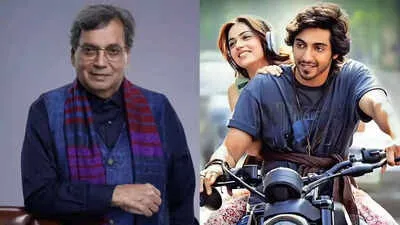
Veteran filmmaker Subhash Ghai has called upon the Hindi film industry to introspect in light of the recent success of Saiyaara, a film that has garnered widespread acclaim despite the absence of major stars. Ghai emphasized that the industry often forgets the timeless lesson that meaningful narratives, not just marquee names, drive audience engagement. Citing Saiyaara’s unexpected popularity, he urged producers to focus on content-rich cinema that resonates emotionally rather than relying heavily on celebrity-driven marketing. His comments reignite a long-standing debate about the balance between substance and stardom in India’s evolving cinematic landscape.
The Wake-Up Call from Saiyaara
In an industry increasingly governed by box office equations and star-led strategies, Saiyaara has emerged as a quiet disruptor. The film’s modest budget and relatively unknown cast have not hindered its commercial and critical triumph. This anomaly, as Subhash Ghai points out, should serve as a reminder that audiences continue to value authenticity, originality, and emotional depth—elements that sometimes get overshadowed by high-profile casting.
According to Ghai, this isn’t a new revelation but a recurring oversight. “We all forget every time,” he remarked, reflecting on the industry's cyclical tendency to sideline narrative integrity in pursuit of celebrity-driven spectacles.
A Cautionary Note to Producers
Ghai's remarks carry weight not only because of his legendary status in Indian cinema but also due to his track record of crafting both commercially successful and emotionally resonant films. His warning to producers is grounded in both creative and economic logic. When studios invest heavily in star salaries, the pressure to perform commercially can overshadow the freedom to experiment with meaningful themes.
He pointed out that while stars can deliver initial footfalls, sustained success is almost always tied to how strongly the story connects with the audience. In today’s era—dominated by streaming platforms and increasingly discerning viewers—the demand for thoughtful, layered storytelling is at an all-time high.
The Shifting Sands of Audience Taste
The audience landscape has evolved dramatically over the past decade. With the rise of regional cinema, independent productions, and global streaming content, Indian viewers have become more selective and less swayed by conventional formulas. Saiyaara is just one example in a growing list of smaller films that have captured public imagination without relying on headline names.
This trend poses both a challenge and an opportunity for Bollywood. On one hand, it threatens the dominance of traditional star vehicles. On the other, it opens the door for a new generation of actors, writers, and directors who prioritize substance over glamour.
Reimagining Bollywood’s Creative Compass
Ghai’s critique is not a rejection of stardom but a call for balance. Stars and spectacle have their place, but they should not come at the expense of story. For an industry facing competition not only from within India but from global entertainment ecosystems, originality and emotional resonance are becoming non-negotiable assets.
The enduring relevance of films like Saiyaara signals a shift in the collective cinematic consciousness. It’s a shift that could redefine what success means in Bollywood—less about opening weekend numbers and more about lasting cultural impact.
Conclusion
Subhash Ghai’s reflections on Saiyaara’s success are a timely nudge for an industry caught between tradition and transformation. His message is clear: Bollywood must not forget the power of storytelling. As audience preferences continue to diversify, content will increasingly become the cornerstone of cinematic longevity. In a landscape brimming with potential but also in flux, perhaps it’s time for producers to bet less on stars and more on stories that truly shine.
Comments