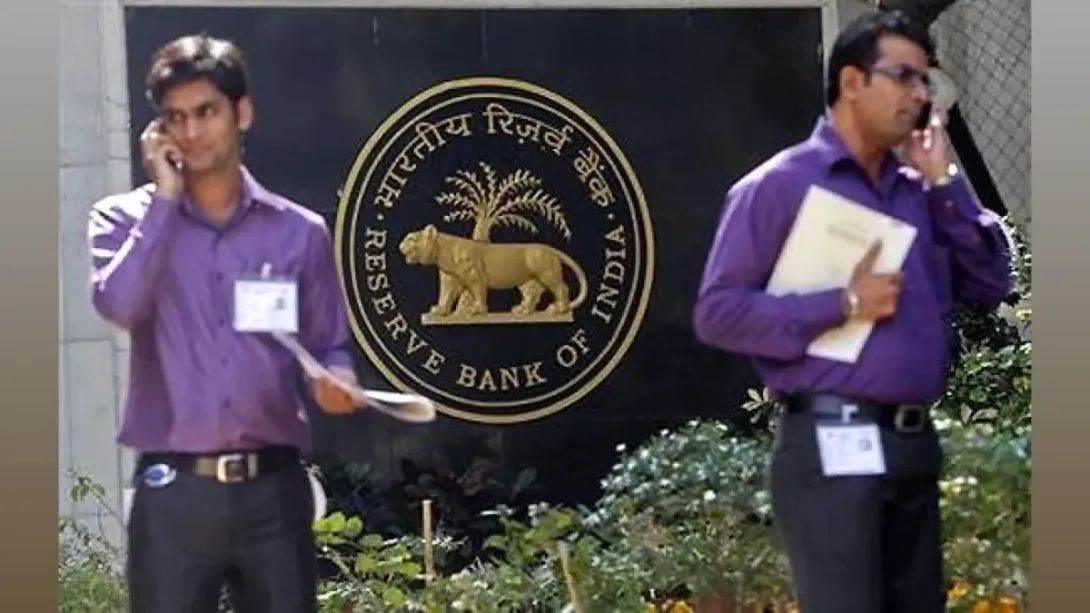
As the Reserve Bank of India (RBI) approaches its upcoming monetary policy review, financial markets and analysts are widely expecting the central bank to keep the benchmark repo rate unchanged at 5.5%. This anticipated pause reflects a cautious approach amid evolving macroeconomic conditions, including moderating inflation, global interest rate trends, and domestic growth metrics. Industry experts suggest that while the RBI is unlikely to pivot toward easing in the near term, it will closely monitor both domestic inflation expectations and global central bank actions before considering any rate adjustment. Stability, it appears, is the operative word for now.
Status Quo Likely: Analysts Predict a Policy Hold
Amid ongoing geopolitical risks, uneven global demand recovery, and persistent price stickiness in key sectors, the RBI is expected to retain the repo rate at 5.5%. Most economists believe that the current rate level strikes a delicate balance between supporting economic activity and anchoring inflationary expectations.
Given that headline inflation has remained broadly within the central bank’s tolerance band of 2–6%, the urgency for a rate cut has diminished. At the same time, concerns about core inflation and food price volatility persist, discouraging any premature loosening of policy.
Inflation, Growth, and the Global Context
India’s recent inflation readings—especially in food and energy segments—remain a source of concern. The RBI’s stance is further complicated by global economic uncertainty, particularly from the US Federal Reserve and European Central Bank, both of which have signaled a prolonged tightening cycle.
Domestically, India’s GDP growth remains robust, underpinned by government spending and improved urban demand. However, uneven rural recovery and tight global financial conditions leave the economy vulnerable. These crosswinds have prompted the central bank to opt for a calibrated approach rather than making sudden policy shifts.
What the Experts Say
Leading economists and market strategists are nearly unanimous in their forecast that the RBI will continue its rate pause in the upcoming policy meeting. The consensus is that the Monetary Policy Committee (MPC) will maintain its current stance until more clarity emerges on the inflation trajectory, especially with the festive season approaching and supply-side uncertainties lingering.
Some experts believe that a pivot to rate cuts could begin in early 2026, contingent on softening global yields and a sustained decline in domestic inflationary pressures. However, until wage inflation, food prices, and energy costs stabilize more convincingly, a cautious pause seems the most likely course.
Implications for Borrowers and Businesses
For borrowers, the unchanged repo rate offers a measure of relief. Lending rates across home, auto, and corporate loans are expected to remain stable in the near term, supporting continued credit growth. Banks, which have seen healthy net interest margins in recent quarters, are likely to maintain their current rate structure.
For businesses, especially MSMEs and capex-heavy sectors, the policy continuity provides predictability, enabling better planning and investment decisions. However, any sustained delay in easing monetary conditions may weigh on highly leveraged sectors that are sensitive to borrowing costs.
Conclusion: A Wait-and-Watch Playbook
In a world increasingly shaped by unpredictable shocks—from commodity price swings to geopolitical realignments—the RBI appears to be adopting a prudent and data-dependent stance. By keeping the repo rate steady at 5.5%, the central bank aims to strike a balance between macroeconomic stability and growth support.
While the door to rate cuts is not closed, it remains conditional on a clearer disinflationary trend. Until then, the RBI is likely to stay the course—deliberate, patient, and vigilant.
Comments