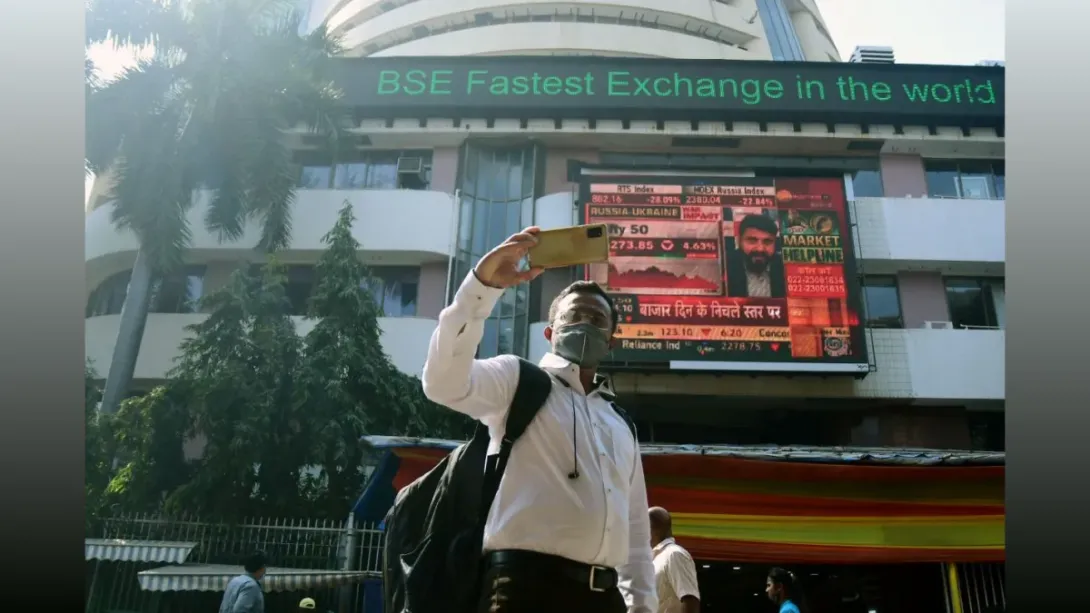
Indian stock markets witnessed a broad-based decline, driven primarily by sharp losses in oil and gas stocks and a sustained exodus of foreign institutional capital. Energy companies bore the brunt of the downturn as global crude price fluctuations and sector-specific pressures eroded investor confidence. Simultaneously, persistent foreign outflows—triggered by global risk aversion, rising bond yields, and a stronger dollar—intensified selling pressure across key indices. The decline reflects a convergence of global headwinds and domestic sectoral concerns, as investors brace for near-term volatility across asset classes.
Energy Sector Under Pressure
Oil and gas stocks led the sell-off as investors reacted to volatility in global crude prices and concerns over declining margins in both upstream and downstream operations. With Brent crude fluctuating around the $85 per barrel mark, energy companies faced renewed pressure on profitability, particularly amid subdued refining margins and inventory risk.
Public sector undertakings and large-cap private players in the oil marketing space saw notable declines, reflecting investor unease over input cost volatility and muted demand forecasts. The sector’s underperformance significantly dragged down benchmark indices and set the tone for a risk-off session.
Foreign Capital Continues to Exit
Foreign institutional investors (FIIs) remained net sellers for yet another session, accelerating the outflow trend that has persisted over the past several weeks. Rising U.S. bond yields, a firming dollar, and expectations of prolonged tight monetary policy globally have contributed to capital flight from emerging markets, including India.
In addition to macroeconomic triggers, sector-specific valuations—particularly in energy, financials, and infrastructure—have prompted portfolio rebalancing. The outflows have not only impacted market breadth but also weighed on the Indian rupee, which weakened marginally against the U.S. dollar.
Broader Market Sentiment Turns Cautious
The decline was not confined to a handful of sectors. Broader indices, including mid-cap and small-cap segments, also closed in negative territory, although losses were less steep compared to large-cap heavyweights. Traders adopted a defensive stance ahead of upcoming domestic macroeconomic data releases and global central bank commentary.
Consumer-facing sectors such as FMCG and pharmaceuticals showed relative strength, supported by stable demand and defensive characteristics. However, profit-booking and liquidity concerns continued to exert downward pressure across most segments.
Global Headwinds Compound the Slide
The weakness in Indian equities echoed similar sentiment across global markets. Investors grappled with fears of an extended high-interest-rate environment, geopolitical tensions in oil-producing regions, and mixed economic signals from China. As risk appetite diminished, global equity markets saw a rotation out of cyclical assets and into safer havens, such as U.S. Treasuries and gold.
These developments amplified pressure on emerging markets, particularly those with significant exposure to imported energy, such as India. Market participants are now closely monitoring crude inventory data, inflation reports, and central bank guidance for near-term cues.
Outlook: Near-Term Volatility Likely to Persist
With global macroeconomic conditions in flux and domestic uncertainties adding to the mix, analysts anticipate continued volatility in the days ahead. The focus will remain on inflation prints, currency movement, foreign fund behavior, and sectoral earnings guidance.
Long-term fundamentals for India remain strong—supported by structural reforms, resilient consumption, and policy support—but short-term headwinds could continue to test market resilience. Investors are advised to adopt a selective approach, favoring quality names with robust balance sheets and sustainable cash flows.
Conclusion: A Market at the Crossroads
The recent correction in equity markets is a confluence of global anxieties and domestic sectoral dynamics. While energy stocks and foreign outflows have taken center stage in this decline, the broader narrative is one of recalibration. As investors adjust their expectations amid shifting global trends, the Indian market’s ability to withstand external shocks and sustain its growth trajectory will be closely watched.
In the interim, risk management, portfolio discipline, and patience will be essential tools for navigating the evolving landscape.
Comments