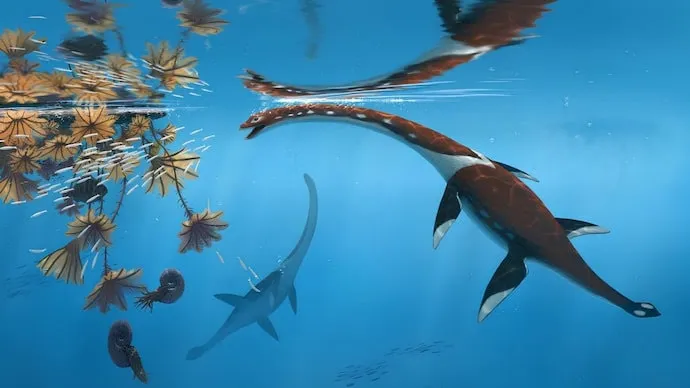
A remarkably preserved marine reptile fossil, believed to be over 150 million years old, has been discovered in Germany’s famed Jurassic limestone beds, shedding new light on the biodiversity of prehistoric oceans. The specimen, an ichthyosaur—a dolphin-like creature that ruled the seas during the Mesozoic Era—was found with soft tissues, stomach contents, and even remnants of internal organs intact. This rare level of preservation is providing paleontologists with invaluable insights into the anatomy, diet, and evolutionary biology of ancient marine reptiles. The discovery underscores the scientific significance of Germany’s fossil-rich Solnhofen region, already celebrated for its exceptional paleontological record.
Unearthing a Prehistoric Predator
In a discovery hailed as one of the most significant paleontological finds in recent years, scientists have recovered the fossilized remains of a marine reptile from Germany’s Jurassic period. Identified as an ichthyosaur, the specimen lived approximately 150 million years ago and likely occupied the apex of the food chain in its time.
The fossil was unearthed from the Solnhofen limestone beds in Bavaria—an area globally renowned for yielding exquisitely preserved fossils, including the iconic Archaeopteryx. What sets this ichthyosaur apart, however, is not just its rarity but its astonishing state of preservation.
A Glimpse Into the Jurassic Ocean
Unlike typical fossil finds that preserve only bones, this ichthyosaur specimen includes imprints of soft tissues, the outlines of internal organs, and even traces of its last meal. These features open an unprecedented window into the daily life and physiology of a creature that swam Earth’s oceans long before the rise of mammals or flowering plants.
Analysis of its stomach contents suggests a diet rich in smaller marine organisms—possibly squid or fish—aligning with existing theories about ichthyosaur feeding behavior. The well-preserved eye sockets and rib cage have also allowed researchers to reconstruct the creature’s sensory and respiratory capabilities with surprising accuracy.
Why This Discovery Matters
This find is not just a triumph of paleontology; it has far-reaching implications for evolutionary biology and the understanding of marine ecosystems in the Mesozoic Era. Soft tissue fossils are exceptionally rare, especially for marine reptiles, whose remains are often degraded by environmental factors over millions of years.
The specimen enables researchers to study ancient proteins, muscle structures, and possibly even cellular details. Such information could lead to groundbreaking revelations about how marine reptiles adapted to different climates, navigated prehistoric seas, and evolved over time before their extinction.
The Solnhofen Legacy
The limestone quarries of Solnhofen have long been a treasure trove for fossil hunters. This region, once a tranquil lagoon, created an ideal environment for fossilization. The absence of oxygen in its sedimentary layers minimized decay, allowing fine details to be preserved in remarkable clarity.
Past discoveries from Solnhofen have already helped rewrite chapters of evolutionary history, and this latest find only deepens the region's scientific importance. With each new fossil, the bedrock of Solnhofen reveals not just individual stories of ancient life but entire ecosystems that once thrived beneath the waves.
Future Prospects and Scientific Collaboration
The ichthyosaur specimen is currently undergoing further examination by an interdisciplinary team of scientists, including paleontologists, geochemists, and evolutionary biologists. Advanced imaging techniques such as synchrotron scanning and isotopic analysis are expected to reveal even more about the creature’s biology and its environment.
Collaborative international efforts will likely follow, as experts seek to cross-reference this specimen with similar fossils found in other parts of the world. Such research could help trace migratory patterns, climate shifts, and even extinction events with greater precision.
Final Thought
This extraordinary fossil is more than a relic—it is a portal to a lost world. It offers tangible proof of life forms that once navigated the primeval seas with grace and power, and it continues to enrich our understanding of Earth's ancient past. As paleontological technology evolves, discoveries like this remind us that the fossil record is not static, but a living archive waiting to be read more deeply with each passing decade.
Comments