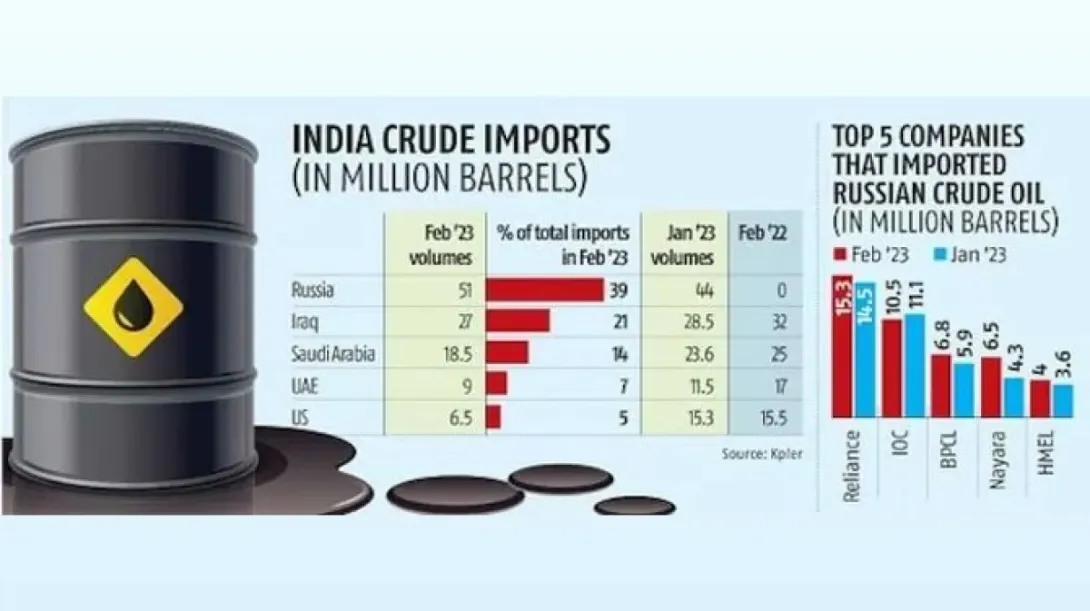
Former U.S. President Donald Trump’s latest remarks suggesting a 50% tariff on countries importing Russian oil have raised geopolitical and economic concerns for India, one of the largest buyers of discounted Russian crude. While not an official policy yet, the proposal underscores the growing complexities of global energy trade in an era of heightened geopolitical rivalry. For India, such a move could drastically alter procurement economics, potentially strain bilateral trade dynamics, and force a reevaluation of its energy diversification strategy. The development marks a critical moment for policymakers navigating between diplomatic autonomy and economic pragmatism.
---
Geopolitical Shockwaves: A Tariff That Could Redraw Oil Trade Maps
Donald Trump’s comment proposing a 50% tariff on nations continuing to purchase Russian oil has sent ripples across global diplomatic and energy circles. Although not yet formalized policy, the statement is viewed as a signal of intent, especially if Trump returns to power. For India, which ramped up Russian oil imports following Western sanctions in 2022, this represents a potential economic curveball.
Russia currently accounts for a significant share of India’s crude basket, largely due to its discounted pricing structure. A punitive tariff imposed by the U.S. on such imports—or on countries benefiting from them—could disrupt established supply chains and force India to reconsider its energy sourcing blueprint.
---
India’s Oil Strategy: A Delicate Balance of Economics and Diplomacy
India’s decision to purchase Russian oil has been guided by pragmatic economics rather than ideology. With a heavy dependence on imports to meet over 85% of its crude requirements, the nation has strategically sourced cheaper oil from Russia to cushion its fiscal and current account deficits. In FY2024, Russian crude accounted for nearly 35% of India’s total oil imports—up from less than 2% before the Ukraine conflict.
Any imposition of external tariffs could push up the landed cost of this oil, making it less attractive compared to Middle Eastern or U.S. shale alternatives. This shift would not only affect energy affordability but could also ripple into inflation, fuel subsidies, and broader macroeconomic stability.
---
Trade Repercussions: Tensions Between Washington and New Delhi?
While India and the U.S. continue to deepen strategic ties across defense, technology, and clean energy, a unilateral tariff move targeting India's trade with Russia could inject fresh tensions into the bilateral relationship. Washington has thus far tolerated India’s oil diplomacy as part of its broader Indo-Pacific engagement. However, the tone of Trump’s statement suggests a more transactional and pressure-based approach to foreign policy may return.
Should the U.S. adopt an aggressive tariff regime, New Delhi may be compelled to negotiate carve-outs or explore counterbalancing measures within multilateral platforms. India’s diplomatic agility will be tested as it tries to uphold strategic autonomy while maintaining favorable terms with both East and West.
---
Economic Fallout: Potential Strain on Budget and Growth
From a purely fiscal standpoint, a 50% tariff on Russian oil—or a retaliatory mechanism affecting importers—could have cascading consequences. An increase in crude procurement costs would likely raise pump prices, strain subsidy burdens, and contribute to inflationary pressure. It could also impact India’s industrial cost structure, particularly in energy-intensive sectors like transport, logistics, and manufacturing.
Additionally, the Reserve Bank of India’s inflation targeting framework may face renewed challenges if crude prices rise sharply. A persistent spike could force monetary tightening, which would weigh on investment and domestic consumption, the two key pillars of India’s ongoing growth narrative.
---
Diversification Imperative: Rethinking the Energy Playbook
The latest tariff threat underscores the need for India to accelerate its efforts toward energy diversification and resilience. This includes not only securing alternate crude sources but also investing heavily in renewable infrastructure, refining capacity, and strategic oil reserves.
India has already begun exploring long-term contracts with Middle Eastern suppliers, expanding ties with Latin American exporters, and boosting domestic ethanol blending programs. A potential geopolitical squeeze on Russian oil could serve as the catalyst for faster transition and reduced reliance on a single-source supply model.
---
Conclusion: Navigating a Tectonic Shift in Global Energy Politics
The possibility of a steep U.S. tariff on Russian oil buyers, as flagged by Donald Trump, represents more than just a policy threat—it is emblematic of a shifting global order where energy, diplomacy, and economic power are deeply intertwined. For India, the challenge will be to insulate its growth trajectory from these external shocks while safeguarding its sovereign right to strategic economic decisions.
As global power centers jostle for leverage, India finds itself at the crossroads of geopolitical realignment and domestic imperatives. How it responds could shape not just its energy future but also its standing in the evolving architecture of international trade and diplomacy.
Comments