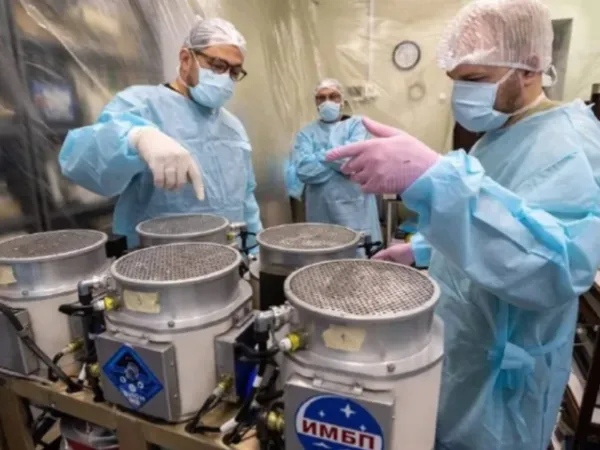
Russia’s upcoming Bion-M No. 2 biosatellite mission is set to carry mice and fruit flies into orbit, marking a significant stride in space-based biological research. The mission aims to investigate the effects of microgravity and cosmic radiation on living organisms, providing crucial insights for long-duration human spaceflight. By studying these model organisms, scientists hope to better understand physiological, genetic, and cellular responses to space conditions. The Bion-M No. 2 mission underscores Russia’s commitment to advancing space biology and contributes to the broader global effort of preparing for extended interplanetary missions.
Mission Overview and Objectives
The Bion-M No. 2 biosatellite is designed to host a controlled population of mice and fruit flies in orbit for several weeks. Researchers will monitor their health, behavior, and biological responses under microgravity, aiming to identify how prolonged exposure to space impacts genetic expression, metabolism, and overall physiology.
Importance of Model Organisms
Mice and fruit flies are standard model organisms in biomedical research due to their genetic similarity to humans and short life cycles. Insights from these studies are expected to inform countermeasures for human spaceflight, addressing challenges such as muscle atrophy, bone density loss, and immune system alterations.
Russian Space Research Leadership
The mission highlights Russia’s ongoing leadership in biosatellite programs, building on decades of expertise in space biology. By combining advanced life-support systems with precise scientific instrumentation, Bion-M No. 2 is poised to yield valuable data for both national and international space agencies.
Implications for Future Exploration
Data collected from the Bion-M No. 2 mission will inform the design of long-duration space habitats, astronaut health protocols, and interplanetary mission planning. Understanding biological adaptation to microgravity and radiation is critical as nations prepare for lunar bases and Mars expeditions.
Conclusion
With the Bion-M No. 2 mission, Russian space research takes a decisive step toward unraveling the biological challenges of extended space travel. The findings from mice and fruit flies are expected to directly influence human spaceflight safety and mission design, reinforcing the essential role of biosatellites in the future of interplanetary exploration.
Comments