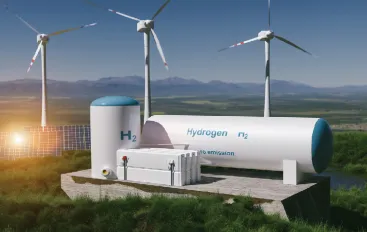
India has unveiled an ambitious vision to emerge as a leading exporter of green hydrogen by 2030, aligning its climate goals with global energy transition strategies. The initiative seeks to reduce dependence on fossil fuels, promote renewable energy adoption, and position India as a competitive player in the global clean energy market. Backed by policy incentives, technological investments, and strategic partnerships, the green hydrogen roadmap underscores the nation’s determination to not only meet domestic decarbonization needs but also supply sustainable fuel alternatives to international markets.
Green Hydrogen as a Strategic Priority
Green hydrogen, produced through electrolysis powered by renewable energy, is regarded as a key enabler in achieving net-zero carbon emissions. India’s focus on scaling up this sector reflects its dual objective: enhancing energy security while fulfilling international climate commitments. By 2030, the country aims to leverage its abundant solar and wind resources to establish itself as a cost-efficient exporter of green hydrogen.
Export Potential and Global Demand
The demand for clean hydrogen is expected to surge across Europe, Japan, and South Korea, regions that are actively pursuing decarbonization in heavy industries and transport sectors. India’s strategy to capture a significant share of this market rests on competitive production costs, growing renewable capacity, and supportive government policies. Early estimates suggest that with large-scale projects, India could position itself as one of the lowest-cost suppliers globally.
Policy and Investment Framework
To achieve its export target, India is rolling out production-linked incentives, offering financial support for electrolyzer manufacturing, and enabling infrastructure development for storage and transportation. Public sector enterprises and private players are collaborating on pilot projects, with investments directed toward scaling technology and building supply chains. The establishment of dedicated hydrogen hubs and ports for export is also under consideration.
Challenges on the Road Ahead
While the outlook is promising, challenges such as high capital costs, limited electrolyzer availability, and the need for advanced storage solutions must be addressed. Furthermore, global competition from established players like Australia and the Middle East will require India to balance speed, innovation, and cost-efficiency. Policy clarity and international partnerships will be crucial in overcoming these hurdles.
Outlook
India’s green hydrogen export target for 2030 symbolizes more than just an energy initiative; it represents the country’s aspiration to lead in the global clean energy revolution. With coordinated efforts across government, industry, and research institutions, India has the potential to transition from being an energy importer to a sustainable energy exporter. Success in this endeavor could redefine the nation’s position in global trade and climate diplomacy.
Comments