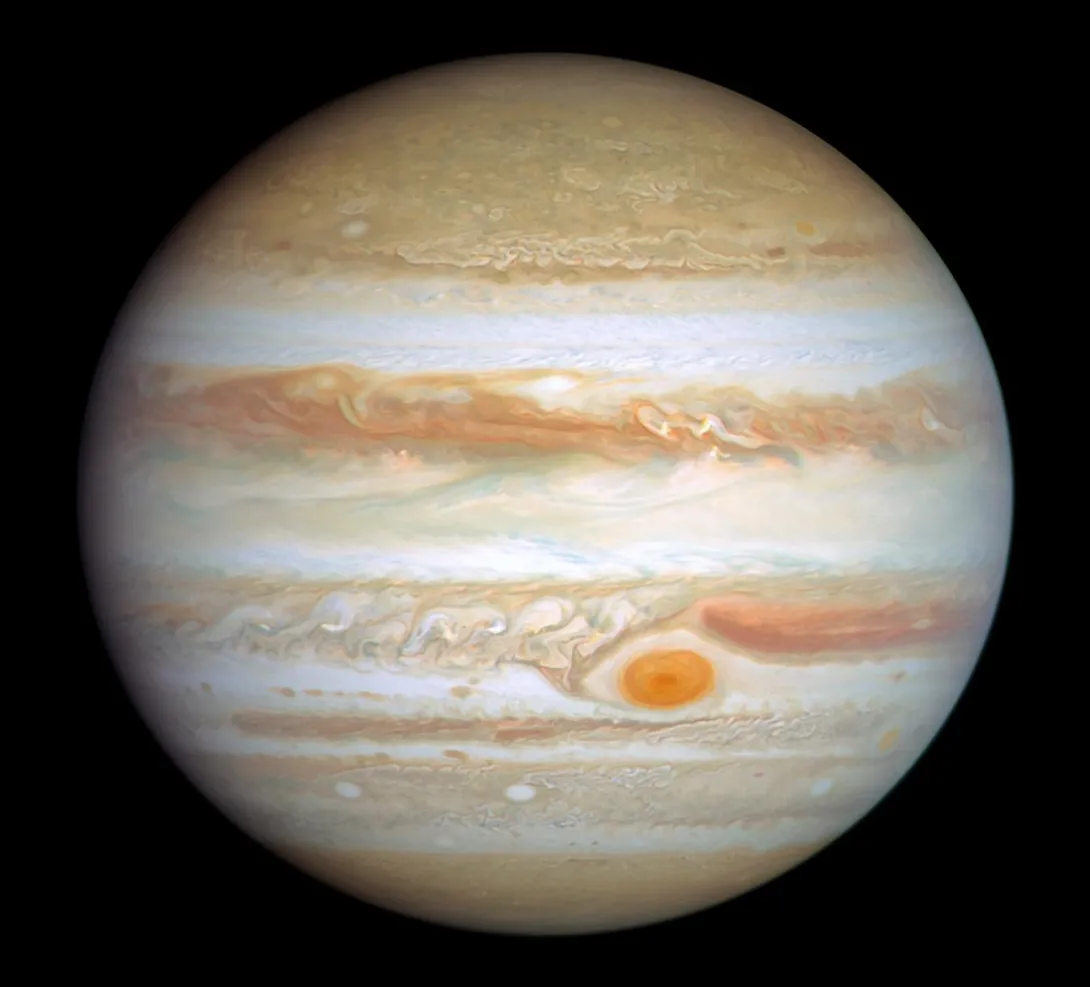
A recent study has cast doubt on the long-standing giant impact theory of Jupiter, suggesting that the gas giant’s formation and internal structure may have evolved differently than previously believed. Traditionally, scientists theorized that Jupiter underwent massive collisions with planetary bodies early in the solar system’s history, shaping its current composition and core. However, advanced simulations and observational data indicate alternative formation pathways that do not require such colossal impacts. This revelation could reshape our understanding of gas giant evolution, planetary system dynamics, and the processes governing planet formation, prompting a reevaluation of existing models for both Jupiter and other large planets.
Revisiting the Giant Impact Hypothesis
For decades, astronomers have proposed that Jupiter’s early development involved a massive collision with a planetary-sized object, which was thought to influence its core composition and density. This hypothesis aimed to explain the unusual distribution of heavy elements and the planet’s gravitational field. The new study, however, suggests that Jupiter’s structure may be explained without invoking such catastrophic events, pointing to more gradual accretion and internal mixing processes.
Methodology and Findings
Researchers employed sophisticated computer simulations combined with updated observational data from space missions and telescopic surveys. The models indicate that Jupiter’s current composition, including its layered core and metallic hydrogen envelope, could have formed through slow accumulation of gas and planetesimals. The findings challenge the notion that a singular, massive impact was necessary to achieve the planet’s observed characteristics.
Implications for Planetary Science
If Jupiter did not experience a giant impact, prevailing theories about the formation of gas giants and their role in shaping the solar system must be reconsidered. This insight also impacts the study of exoplanets, as astronomers apply lessons from Jupiter to interpret observations of distant gas giants in other star systems. Understanding gradual accretion mechanisms provides a more nuanced view of planetary system evolution and stability.
Future Research Directions
Scientists plan to refine these models further with data from upcoming missions and high-resolution spectroscopy. Continued exploration of Jupiter’s atmosphere and gravitational field will help validate alternative formation scenarios, offering deeper insight into the mechanisms governing gas giant development.
Conclusion
The new study reshapes our understanding of Jupiter’s origins, questioning the necessity of catastrophic impacts in gas giant formation. By highlighting gradual accretion and complex internal processes, this research opens avenues for reexamining planetary evolution models, with implications extending across the solar system and beyond.
Comments