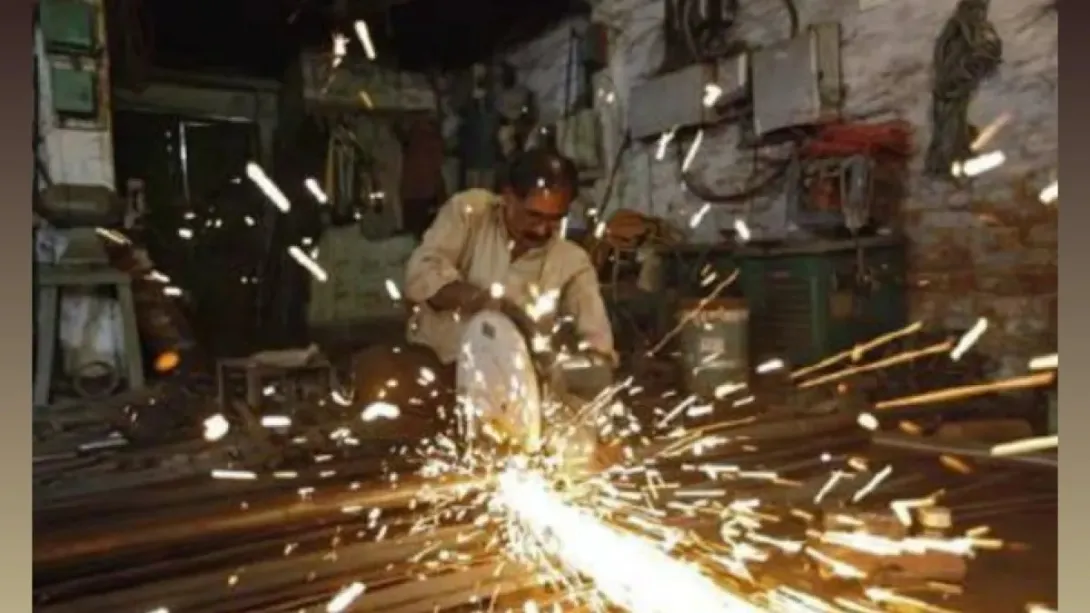
India’s industrial output grew 3.5% year-on-year in July, reflecting a moderate recovery in manufacturing and energy production despite persistent global and domestic challenges. The latest data, released under the Index of Industrial Production (IIP), indicates resilience in consumer demand and infrastructure-related sectors, even as external headwinds such as trade tensions, volatile commodity prices, and weak export demand weigh on momentum. Economists note that while the growth rate is slower compared with earlier months, it still reflects a steadying of industrial activity that could support broader economic expansion in the second half of the fiscal year.
Manufacturing Drives Output
The manufacturing sector, which constitutes nearly 78% of the IIP, recorded modest gains in July. Key contributors included capital goods, consumer durables, and select segments of infrastructure-oriented industries. Analysts pointed out that increased government spending on infrastructure projects and resilient domestic consumption helped offset weaker export orders.
However, growth remains uneven across industries. While sectors such as pharmaceuticals and automobiles reported strong demand, traditional heavy industries such as metals and textiles showed only marginal improvement, reflecting global market pressures.
Energy and Mining Performance
Electricity generation continued its upward trend, supported by heightened demand from both households and industries during peak summer months. Renewable energy integration also contributed to improved generation capacity. Mining output, on the other hand, grew at a slower pace due to supply chain constraints and weather-related disruptions, limiting its contribution to overall growth.
Economists caution that continued volatility in global energy prices and input costs could impact production costs for energy-intensive sectors in the months ahead.
Broader Economic Implications
The July figure of 3.5% growth underscores the challenges of sustaining industrial momentum in the face of external headwinds. Global demand remains tepid as advanced economies grapple with slower growth and high interest rates. At the same time, domestic inflationary pressures have kept input costs elevated, restricting profit margins for manufacturers.
Despite these hurdles, India’s industrial activity has shown resilience compared with many emerging economies. Supportive government policies, rising urban demand, and continued infrastructure spending are expected to provide a buffer against global uncertainties.
Outlook for Coming Months
Looking ahead, industry experts believe industrial growth will likely improve in the upcoming quarters, buoyed by festive-season demand and the government’s sustained capex push. Sectors such as consumer durables, automobiles, and construction-related goods are expected to benefit the most.
However, risks remain from global trade tensions, currency fluctuations, and the potential spillover of slowing growth in major economies. Policymakers may need to ensure supportive credit flows and maintain a stable inflation outlook to sustain industrial expansion.
Conclusion
India’s industrial output growth of 3.5% in July reflects cautious optimism for the broader economy. While the pace is modest, it demonstrates the resilience of domestic demand and policy support amid challenging global conditions. For sustained momentum, the economy will require stronger private investment, deeper integration of technology in manufacturing, and continued government commitment to infrastructure development. The coming months will be critical in determining whether this modest rebound translates into durable industrial growth.
Comments