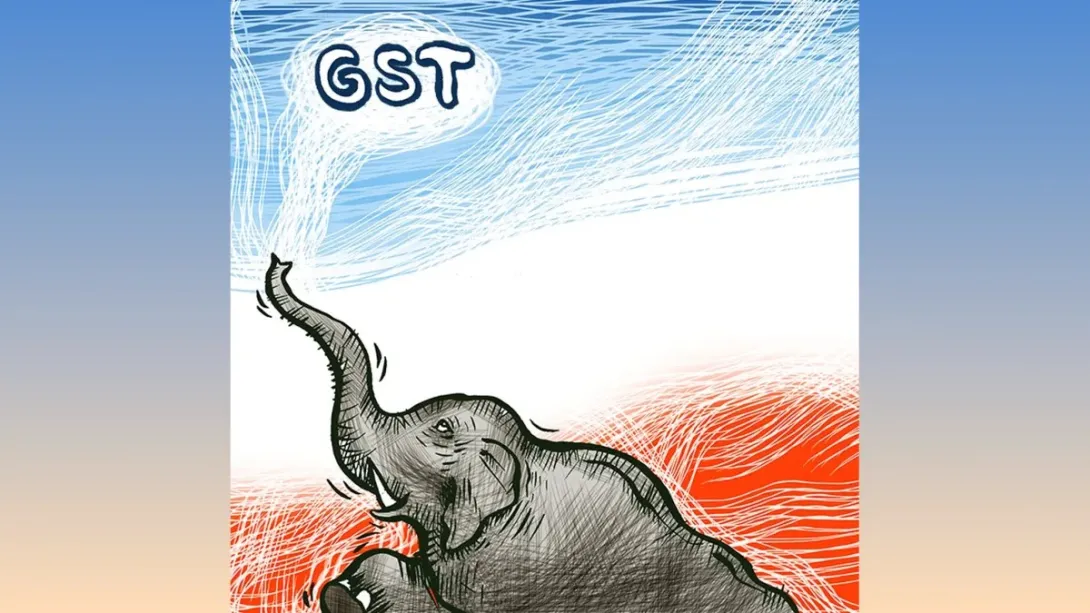
India’s Goods and Services Tax (GST) revenue surged to Rs. 1.86 lakh crore in August, underscoring continued resilience in consumption and business activity despite global uncertainties. The figure reflects a notable year-on-year growth, driven by higher compliance, stronger manufacturing output, and a robust services sector. Economists view this as an encouraging indicator of sustained domestic demand and fiscal health. With the government’s emphasis on tightening compliance and curbing tax evasion, the rising trend in GST receipts strengthens the fiscal cushion, positioning India favorably as it navigates global headwinds and prepares for upcoming expenditure commitments.
A Strong Monthly Performance
The August collection of Rs. 1.86 lakh crore reinforces the positive trajectory in indirect tax receipts, consolidating GST’s role as a critical revenue stream for both the Union and state governments. This uptick is attributed to steady growth in the domestic economy, supported by rising consumption levels, infrastructure spending, and digital compliance tools that have streamlined tax administration.
Analysts suggest that the continued buoyancy in collections reflects underlying economic momentum, offering confidence ahead of the festive season when consumption traditionally spikes.
Sector-Wise and Regional Drivers
Manufacturing, services, and trade sectors played a pivotal role in boosting GST inflows during August. The steady rise in e-invoicing and digital compliance has further minimized leakages, ensuring more accurate reporting of transactions.
Regionally, states with strong industrial and services bases contributed disproportionately to the overall collections. Tier-2 and tier-3 cities are also emerging as significant contributors, a sign of broad-based economic participation beyond metropolitan centers.
Implications for Fiscal Management
The robust GST receipts provide the government with greater fiscal flexibility. Higher tax revenues help offset subsidy burdens and finance capital expenditure without significantly widening the fiscal deficit. Economists note that consistent inflows of this scale could allow the government to maintain its capex-led growth strategy while managing inflationary pressures.
Moreover, stable GST collections serve as a barometer of economic health, offering policymakers valuable insights into consumption patterns and industrial activity across the country.
Outlook: Sustaining the Growth Momentum
If the upward trajectory in GST collections continues through the festive quarter, India may see an annual revenue surplus, further strengthening fiscal resilience. The government’s ongoing efforts to enhance compliance—such as expanding e-invoicing, deploying AI-driven fraud detection, and tightening return filing norms—are expected to sustain revenue buoyancy in the coming months.
In the broader context, August’s collection of Rs. 1.86 lakh crore highlights not only the vibrancy of India’s economy but also the maturing efficiency of its tax system. As consumption accelerates and businesses scale up ahead of the festive season, GST inflows are likely to remain robust, fortifying India’s fiscal outlook.
Comments