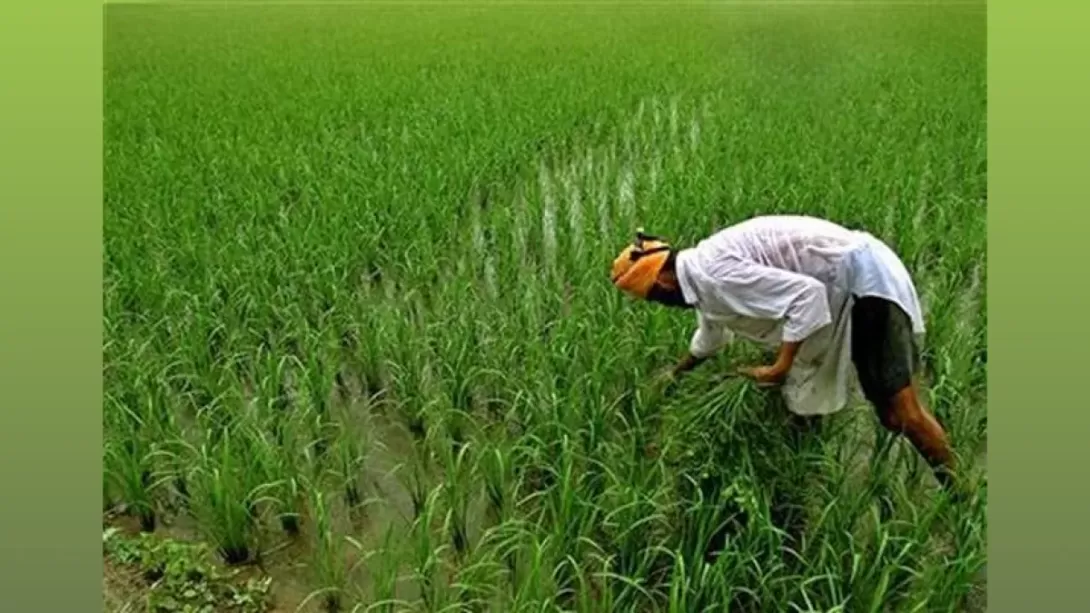
In a bold bid to combat soil degradation and toxic metal contamination in agriculture, the Uttar Pradesh government has launched a comprehensive Rs. 2,500 crore initiative to transition more than 2.5 lakh farmers to natural farming methods. The program, covering 282 blocks and over 2,100 gram panchayats, is part of a broader push to promote chemical-free, sustainable agriculture. Spearheaded by the Yogi Adityanath administration and aligned with Prime Minister Narendra Modi’s vision for a climate-resilient India, the initiative addresses environmental concerns while empowering rural communities. The plan includes farmer training, local bio-input production, and financial support to strengthen grassroots-level adoption.
A Strategic Shift Towards Sustainable Agriculture
The government of Uttar Pradesh has announced a large-scale investment plan to drive the adoption of natural farming across the state. Over the next two years, an estimated Rs. 2,500 crore will be allocated to transition approximately 2.5 lakh farmers away from chemical-intensive practices to environmentally sustainable and toxin-free methods. The initiative will span 282 administrative blocks and 2,144 gram panchayats, structured through 50-hectare clusters to optimize implementation and monitoring.
This strategic shift comes amid growing global concerns about the harmful accumulation of heavy metals in agricultural soil—a crisis that threatens food safety and ecological balance.
The Soil Contamination Crisis: A Global and Local Challenge
A recent international study reveals that nearly 15% of the world’s cultivable land is polluted by toxic heavy metals such as arsenic, cadmium, cobalt, chromium, copper, nickel, and lead. These elements enter the food chain through soil, water, and air, posing serious health risks to humans and livestock alike. The state government acknowledged that this emerging threat is undermining long-term agricultural productivity and food security.
Biologists from the University of York emphasize that contamination from industrial waste, improper waste disposal, and excessive agrochemical use is accelerating the crisis—necessitating urgent reform.
Natural Farming: A Scalable, Sustainable Alternative
To counter this threat, the Uttar Pradesh government is promoting natural farming—a method rooted in indigenous practices that eliminates synthetic inputs. Unlike conventional methods, natural farming uses biological formulations such as Jeevamrit, Beejamrit, and Ghanjeevamrit, derived from cow dung and urine. These serve as natural fertilizers and pest repellents, significantly improving soil health while reducing dependence on chemical inputs.
The approach, successfully piloted in the Bundelkhand region and along stretches of the Ganga, is now being expanded to include tributary regions and other high-risk zones.
Empowering Farmers Through Training and Grassroots Mobilization
To ensure effective implementation, the state has introduced the Krishi Sakhi program—training local women farmers as community facilitators. These women, supported by a monthly honorarium of Rs. 5,000, will undergo technical training from Krishi Vigyan Kendras (KVKs) to guide farmers in adopting and maintaining natural farming techniques.
Additionally, two Bio-Input Research Centers (BRCs) will be established in every district. These centers will serve as hubs for knowledge dissemination, input production, and technical assistance—enhancing regional self-sufficiency in sustainable agricultural practices.
Bundelkhand Pilot Shows Promise
The Bundelkhand pilot project, covering seven districts—Jhansi, Lalitpur, Jalaun, Hamirpur, Mahoba, Banda, and Chitrakoot—has already yielded encouraging results. More than 470 clusters have been formed, reaching nearly 22,000 farmers. The government has supported the development of 50-hectare clusters in each gram panchayat, offering financial aid to those cultivating up to two hectares.
Under the mission, over 2,535 Farmers’ Field School sessions have been conducted, facilitating hands-on training and peer learning. In total, Rs. 13.16 crore has been allocated in the first and second phases of the program, laying a strong foundation for statewide expansion.
Outlook: From Crisis Response to Agricultural Resilience
The Uttar Pradesh government’s natural farming initiative is a forward-looking policy intervention at the intersection of environmental conservation, public health, and agricultural resilience. By addressing soil toxicity while empowering farmers through knowledge and financial incentives, the state is setting a benchmark for sustainable development.
If executed at scale and with consistent oversight, this program could become a model for other states grappling with similar agro-ecological challenges. In the long run, natural farming may not just preserve India’s soil, but also rejuvenate its agricultural economy through healthier, low-cost, and ecologically sound practices.
Comments