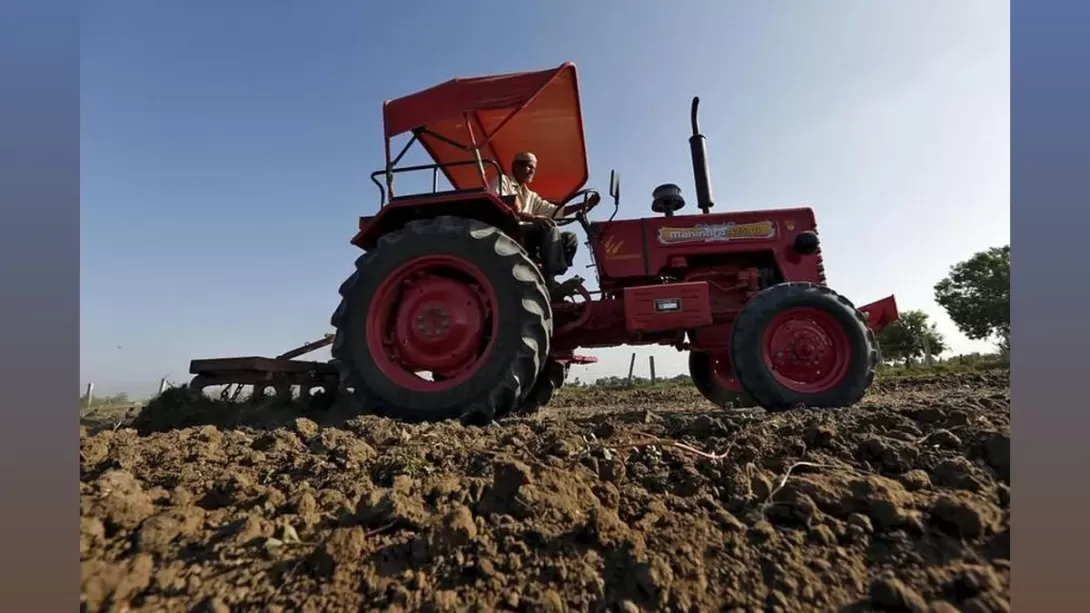
India’s tractor industry is poised for a historic high in fiscal 2025-26, with domestic sales projected to reach around 9.75 lakh units, a 3–5% year-on-year growth. This anticipated surge is underpinned by favorable monsoon forecasts, rising minimum support prices (MSPs) for key cash crops, robust rural sentiment, and increased infrastructure activity. Simultaneously, manufacturers are preparing for the implementation of stringent emission norms (TREM V) by April 2026, prompting a Rs. 4,000 crore capex cycle. While the outlook remains optimistic, risks tied to monsoon variability, commodity prices, and policy execution could impact momentum in the medium term.
Monsoon, MSPs, and Infrastructure to Propel Tractor Demand
A convergence of rural and policy-driven factors is expected to power India’s tractor market to a new record in FY26. According to CRISIL Ratings, a strong agricultural outlook — supported by the Indian Meteorological Department’s forecast of an above-normal monsoon — is likely to reinforce farmer sentiment and spending. This is further complemented by an anticipated rise in MSPs for cash crops, which typically enhances liquidity in the hands of farmers.
Adding to this rural thrust, increased construction demand, particularly in road building, is expected to drive replacement demand and utility-based tractor use. The government’s sizable infrastructure allocations in the Union Budget have already catalyzed project momentum in rural India, improving utilization of tractors beyond agriculture.
A New Capex Cycle as Industry Nears Capacity Limits
Tractor manufacturers are nearing optimal capacity utilization, with current operations running at approximately 75–80%. This tight operating bandwidth, coupled with the push for adopting cleaner technologies under the forthcoming TREM V norms, is expected to trigger a Rs. 4,000 crore capital expenditure cycle.
Poonam Upadhyay, Director at CRISIL Ratings, highlighted that this impending investment wave will focus on capacity expansion and technological upgrades. With stronger balance sheets, low debt levels, and stable cash flows, tractor OEMs are well-equipped to undertake these strategic investments.
TREM V Emission Norms and Pre-Buying Incentives
India’s move toward stricter emissions regulation under the TREM V regime — set to be implemented from April 1, 2026 — is a significant regulatory milestone. The new standards will apply across all horsepower (HP) categories, with CRISIL estimating price hikes of 10–20%, depending on engine size.
Anticipating this cost burden, a wave of pre-buying is expected in the latter part of FY26. This behavior mirrors the market response to TREM IV, which came into force in January 2023. Following that update, demand for above-50 HP tractors fell, with buyers gravitating toward 41–50 HP units — the current dominant segment, accounting for 64% of total sales.
Financial Outlook: Stable Margins and Strong Liquidity
Despite rising volumes, tractor manufacturers are expected to maintain stable operating margins in the 13.0–13.5% range in FY26. Lower input costs and operating leverage from higher sales volumes will contribute to margin preservation, in line with performance over the past two years.
The financial health of most players in the sector remains robust. Strong cash positions and manageable leverage levels provide sufficient headroom for firms to invest in R&D, emission control upgrades, and production capacity expansion, enhancing long-term competitiveness.
Monitorables: Monsoon Patterns, Commodity Prices, and Interest Rates
While the outlook remains broadly positive, CRISIL Ratings cautions that the spatial and temporal distribution of monsoons will be critical. Uneven rainfall could dent rural incomes and agricultural output, thereby affecting tractor sales.
Additionally, fluctuations in global commodity prices and domestic interest rates could influence input costs and financing availability. The successful implementation of TREM V across the industry will also require close monitoring, given its implications for pricing and consumer demand patterns.
Conclusion: Growth Driven by Opportunity and Regulation
India’s tractor industry is entering a transformative phase, driven by favorable market conditions and regulatory shifts. With rising rural optimism, infrastructure development, and a strategic pivot to cleaner technologies, the sector is well-positioned to achieve record volumes in FY26. However, as with any sector deeply tied to agriculture and rural dynamics, resilience will depend on how well manufacturers and policymakers navigate the complex interplay of weather, regulation, and global economic pressures.
Comments