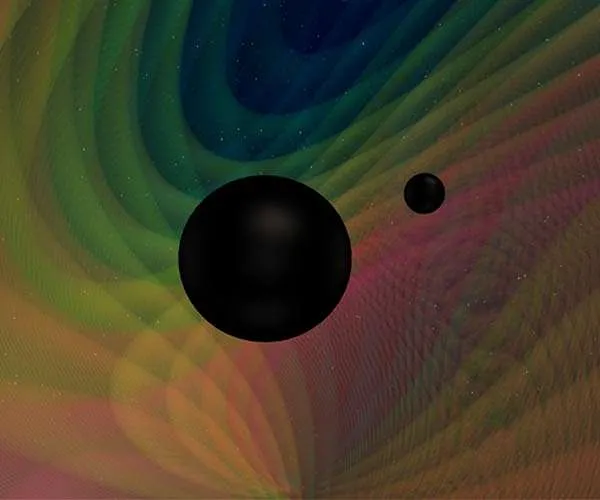
The discovery and subsequent study of gravitational waves stand as one of the most profound scientific milestones of the modern era—an achievement that owes much to the intellectual contributions of the late physicist Stephen Hawking. While Albert Einstein first predicted gravitational waves in 1916 under his theory of general relativity, it was Hawking’s groundbreaking work that deepened the world’s understanding of how these ripples in spacetime could illuminate the mysteries of black holes, the origins of the universe, and the very fabric of reality itself. His theories not only reshaped cosmology but also opened pathways for global investments in cutting-edge astrophysical research.
The Foundation of Gravitational Waves
Gravitational waves are distortions in spacetime, produced by some of the most violent events in the universe—collisions of black holes, mergers of neutron stars, or cosmic explosions. These waves carry information about phenomena previously hidden from traditional telescopes. Einstein predicted their existence, but for decades, scientists lacked the instruments to confirm them.
Stephen Hawking advanced this frontier by exploring the relationship between black holes and gravitational waves. His theoretical insights on Hawking radiation—where black holes emit energy—and the behavior of singularities enriched the scientific rationale behind why gravitational waves should exist and how they could be detected.
Hawking’s Intellectual Contributions
Hawking’s work in the 1970s and 1980s, particularly on black hole thermodynamics, provided a framework for understanding gravitational waves as more than just theoretical constructs. He proposed that black holes are not entirely invisible; rather, they interact with their surroundings in ways that could, under extreme conditions, generate detectable signals.
These contributions built the foundation for institutions such as LIGO (Laser Interferometer Gravitational-Wave Observatory) and VIRGO to eventually confirm the existence of gravitational waves in 2015. The detection validated both Einstein’s prediction and the deeper theoretical frameworks advanced by Hawking and his contemporaries.
Economic and Research Implications
The confirmation of gravitational waves is not merely a triumph for physics; it is a catalyst for economic and technological innovation. Governments and research consortia worldwide have allocated billions of rupees to expand observatories and improve detection infrastructure. The data harvested from these waves could revolutionize industries ranging from aerospace engineering to data science, as advanced algorithms are developed to process and interpret cosmic signals.
Private-sector investment in astrophysical research is also rising, with global technology firms contributing to the development of quantum sensors and high-precision instruments inspired by gravitational wave science. For emerging economies, participation in such projects positions them as stakeholders in the future of space exploration and high-tech industries.
Challenges and the Road Ahead
Despite the breakthroughs, significant challenges persist. Detecting gravitational waves requires instruments so sensitive that they can measure distortions thousands of times smaller than a proton. Maintaining precision across international collaborations demands massive funding, technological upgrades, and global coordination.
At the same time, the study of gravitational waves raises philosophical and scientific questions: Can these cosmic ripples help us understand the Big Bang itself? Could they provide clues about the unification of quantum mechanics and general relativity—a question Hawking pursued throughout his career?
A Lasting Legacy
Stephen Hawking’s role in shaping humanity’s understanding of gravitational waves ensures his place in scientific history alongside Einstein. His intellectual courage and pursuit of the unknown have not only advanced theoretical physics but also sparked investments in research that could drive future industries.
Gravitational wave science is no longer confined to textbooks; it is now an expanding frontier with practical, economic, and technological implications. And at its heart lies Hawking’s enduring vision—that the universe, with all its enigmas, is waiting to be understood.
Comments