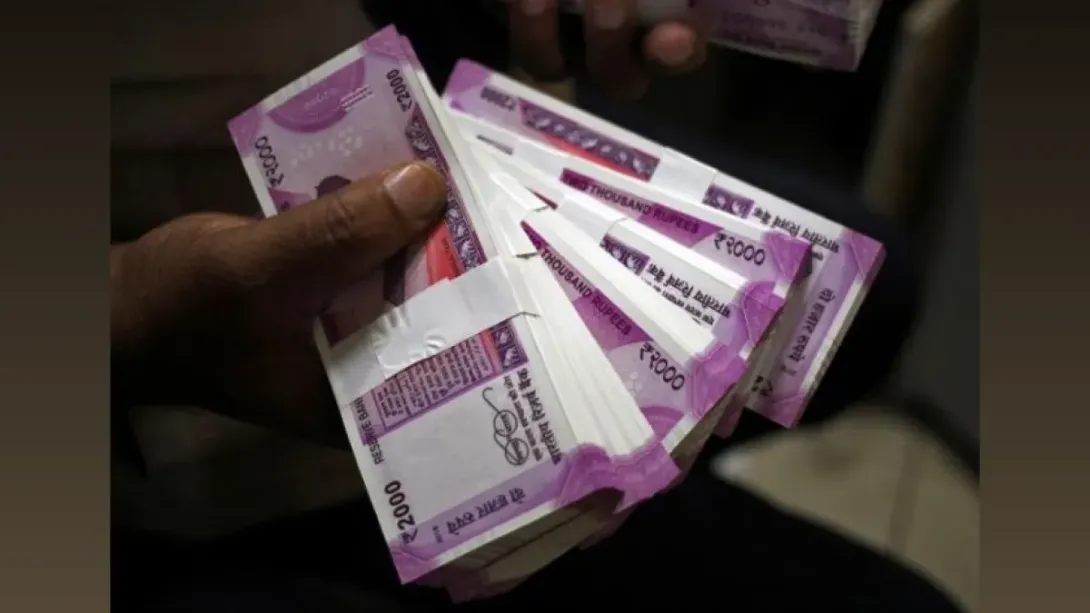
The Indian rupee extended its decline against the U.S. dollar, reflecting heightened global uncertainty, firm crude oil prices, and sustained demand for the greenback by importers. Currency markets remained volatile as investors digested signals from major central banks, while foreign portfolio flows showed uneven momentum. Although India’s macroeconomic fundamentals remain relatively resilient, external headwinds continue to weigh on the rupee’s near-term trajectory. Analysts suggest that while the currency may face short-term pressure, underlying stability in domestic growth and robust forex reserves provide some comfort against excessive depreciation.
Current Market Movement
The rupee slipped further against the U.S. dollar in Thursday’s trade, trading near multi-week lows. Persistent dollar strength in global markets, driven by expectations of prolonged tight monetary policy in the U.S., added downward pressure on emerging-market currencies, including the rupee. Market participants also noted strong dollar demand from oil importers, compounding the weakness.
Key Drivers Behind the Decline
- Strength of the U.S. Dollar: A stronger greenback, supported by safe-haven demand and firm U.S. economic data, has placed emerging market currencies under stress.
- Crude Oil Prices: Rising international oil prices have raised concerns about India’s current account balance and inflation outlook, leading to increased dollar demand from energy companies.
- Foreign Portfolio Flows: Uneven foreign portfolio inflows into equities and debt markets have added to volatility, with investors preferring safer assets amid global uncertainties.
- Global Monetary Policy: Persistent hawkish tones from the Federal Reserve signal higher-for-longer interest rates, drawing capital flows away from emerging markets.
Domestic Economic Context
Despite currency weakness, India’s underlying economic conditions remain relatively sound. Robust foreign exchange reserves, steady GST collections, and resilient domestic consumption provide a buffer against extreme volatility. The Reserve Bank of India (RBI) has also been active in managing liquidity and curbing excessive fluctuations in the currency through strategic interventions.
Broader Impact on Economy
- Import Costs: A weaker rupee raises the cost of imports, particularly crude oil, which could worsen inflationary pressures and affect corporate margins in energy-intensive sectors.
- Exports: On the positive side, a softer rupee may enhance competitiveness for Indian exporters, particularly in IT services, textiles, and pharmaceuticals.
- Investors: Currency volatility could dampen foreign investor sentiment in the short term, though India’s long-term growth story remains intact.
- Consumers: Higher fuel and commodity prices, if passed on, may squeeze household budgets and alter consumption patterns.
Outlook and Expert Views
Analysts expect the rupee to remain range-bound with a mild depreciating bias, influenced largely by global factors such as oil price trends and U.S. interest rate expectations. However, India’s robust forex reserves and resilient economic fundamentals are likely to prevent a sharp decline. Currency strategists recommend that businesses and investors adopt hedging strategies to mitigate risks arising from exchange-rate fluctuations.
Conclusion
The rupee’s latest dip underscores the complex interplay between domestic resilience and external pressures. While near-term challenges such as oil price volatility and dollar strength remain, India’s stable economic footing offers confidence that the currency will avoid severe disruptions. For policymakers, the focus will be on balancing inflation management with growth support, while investors will watch closely for signals from both global and domestic fronts to gauge the rupee’s trajectory.
Comments