Recent advancements in geophysical research have unveiled significant changes within Earth's inner core, detected through satellite-based observations. Utilizing data from the Gravity Recovery and Climate Experiment (GRACE) mission, scientists have identified a 10-centimeter shift in the core's dynamics beneath the Atlantic Ocean. This anomaly suggests unprecedented internal changes, potentially linked to interactions between Earth's magnetic field and gravitational forces. These findings offer new insights into the planet's deep processes, challenging previous assumptions about the stability of the inner core and highlighting the importance of satellite monitoring in geophysical studies.
Introduction
For centuries, Earth's inner core remained an enigma, its activities inferred through seismic waves and magnetic field observations. However, recent technological advancements have allowed scientists to probe deeper into the planet's interior. Notably, data from the Gravity Recovery and Climate Experiment (GRACE) satellites have provided unprecedented insights into the core's behavior, revealing shifts that challenge longstanding geological assumptions.
The GRACE Satellite Mission: A Leap in Geophysical Observation
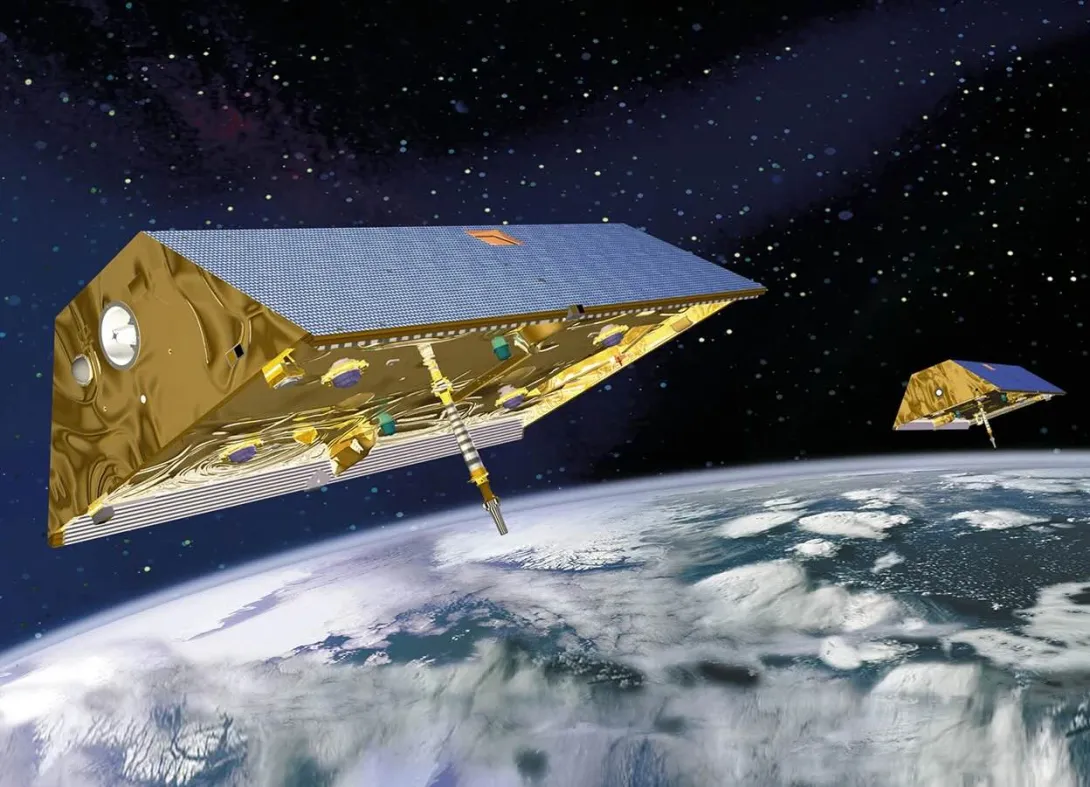
Launched as a joint mission by NASA and the German Aerospace Center, the GRACE satellites were designed to measure Earth's gravity field with high precision. By detecting minute variations in the distance between two satellites flying in tandem, GRACE could identify changes in mass distribution within the planet. This capability has proven invaluable in studying phenomena such as ice sheet movements, ocean currents, and, as recent findings suggest, alterations in the Earth's inner core.
Detecting the Core's Shift: A 10-Centimeter Anomaly
In a groundbreaking study, researchers analyzed GRACE data and discovered a 10-centimeter shift in Earth's inner core beneath the Atlantic Ocean. This movement, though seemingly minuscule, signifies a profound change in the core's dynamics. Such a shift suggests that the core's rotational behavior and possibly its shape are undergoing alterations, pointing to complex interactions between the core, mantle, and overlying structures.
Implications of the Core's Changes
The observed changes in the inner core could have far-reaching implications for our understanding of Earth's geophysical processes. The core plays a crucial role in generating the planet's magnetic field through the dynamo effect. Alterations in its rotation or structure might influence this magnetic field, potentially affecting satellite communications, navigation systems, and even the planet's climate over extended periods.
Furthermore, these findings challenge previous models that depicted the inner core as a relatively stable and uniform entity. The new data suggest that the core is more dynamic and responsive to internal and external forces than previously thought.
The Role of Satellite Monitoring in Geophysical Research
The detection of such subtle changes in the Earth's interior underscores the importance of satellite-based monitoring in modern geophysical research. Traditional methods, while invaluable, often lack the sensitivity required to detect minute variations deep within the planet. Satellites like GRACE offer a non-invasive means to observe and measure these changes, providing a clearer picture of Earth's internal processes.
Conclusion
The recent discovery of shifts in Earth's inner core, detected through satellite data, marks a significant advancement in our understanding of the planet's interior dynamics. As research continues, these findings may lead to a reevaluation of geological models and a deeper appreciation of the complex forces shaping our planet. Continued investment in satellite technology and geophysical research will be essential in unraveling the mysteries of Earth's inner workings.
Comments