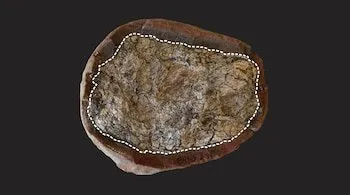
A groundbreaking study has unveiled remarkable insights into ancient ecosystems by analyzing fossilized feces, or coprolites, offering a unique window into the diets, behaviors, and environments of prehistoric species. Researchers used advanced chemical and microscopic techniques to decode these preserved biological remnants, reconstructing feeding habits and ecological interactions that conventional fossils cannot provide. The findings not only deepen understanding of extinct organisms but also illuminate broader evolutionary and environmental patterns. By examining these ancient traces, scientists are uncovering intricate details about species’ roles within ecosystems, shedding light on evolutionary adaptations and the complex web of life millions of years ago.
---
The Significance of Coprolites
Fossilized feces, often overlooked in paleontology, serve as direct evidence of ancient diets and digestive processes. Unlike skeletal remains, coprolites provide chemical and biological data that reveal what prehistoric animals consumed, their digestive efficiency, and even the microbial communities that existed within them. This information allows researchers to reconstruct food chains and understand ecological dynamics with unprecedented accuracy.
---
Methods of Analysis
The study employed state-of-the-art analytical techniques, including scanning electron microscopy and mass spectrometry, to investigate the composition of the coprolites. These methods enabled the detection of plant fibers, bone fragments, and other undigested materials, revealing dietary preferences of herbivorous, carnivorous, and omnivorous species. Additionally, isotopic analysis offered clues about environmental conditions and seasonal variations in ancient habitats.
---
Insights into Ancient Diets and Behavior
Analysis of coprolites has uncovered surprising dietary habits, such as omnivorous tendencies in species previously classified as strictly herbivores. The findings also provide evidence of predator-prey relationships, foraging behaviors, and migration patterns. Such insights allow scientists to create a more nuanced picture of ancient ecosystems and the interactions that shaped evolutionary trajectories.
---
Implications for Modern Science
Understanding the dietary and ecological dynamics of extinct species enhances knowledge of evolutionary biology, climate adaptation, and biodiversity changes over time. These insights can inform modern conservation strategies by illustrating how ecosystems respond to environmental stressors, species competition, and resource scarcity.
---
Conclusion
By unlocking the secrets preserved in fossilized feces, researchers are revolutionizing the study of ancient life. Coprolites serve as invaluable archives of ecological, dietary, and evolutionary information, offering a multidimensional view of prehistoric species and their environments. This research underscores the importance of looking beyond conventional fossil evidence to uncover the intricate dynamics that have shaped life on Earth across millions of years.
Comments