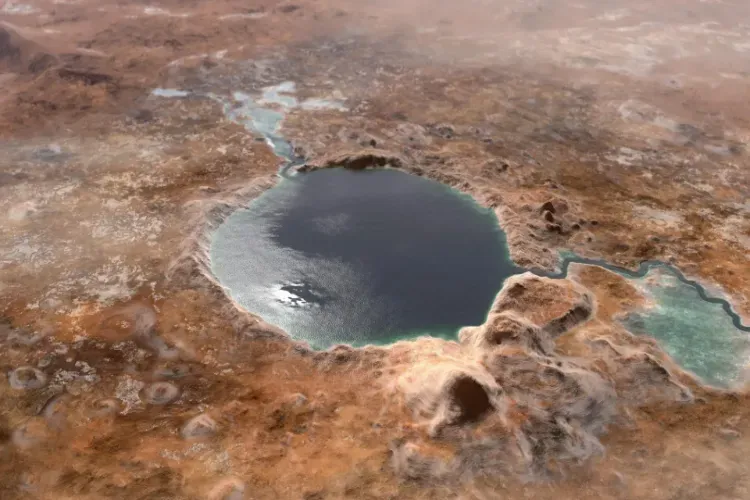
In a landmark development for planetary science, researchers have announced evidence suggesting the presence of life on Mars, reshaping our understanding of the Red Planet. The discovery, derived from advanced rover analyses and high-resolution imaging, points to microbial activity in subsurface environments, where conditions could have supported life over millennia. This finding not only ignites scientific curiosity but also opens new avenues for astrobiology, planetary exploration, and the search for extraterrestrial life. Experts emphasize that the discovery is a critical step toward understanding Mars’ habitability and could inform future missions aimed at unraveling the planet’s biological and geological history.
The Discovery and Scientific Analysis
The breakthrough stems from meticulous analysis of Martian rock formations, soil samples, and chemical signatures:
- Researchers detected complex organic molecules and unusual isotopic ratios indicative of biological processes.
- Microscopic imaging revealed structures resembling fossilized microbial colonies, suggesting life may have existed in past Martian environments.
- Subsurface ice deposits and mineral-rich sediments were identified as potential habitats capable of sustaining microbial life over extended periods.
These findings have been corroborated through independent laboratory simulations on Earth, strengthening the credibility of the results and fueling excitement in the global scientific community.
Implications for Astrobiology and Space Exploration
The evidence of life on Mars has profound implications for planetary science:
- Validates theories that Mars may have harbored habitable environments in its ancient past.
- Provides a framework for designing future missions to search for living organisms or preserved biological material.
- Enhances understanding of planetary evolution and the factors required to sustain life beyond Earth.
Leading space agencies are expected to integrate these insights into upcoming rover and sample-return missions, further expanding humanity’s quest for knowledge about life in the universe.
Global Scientific and Public Reaction
The announcement has ignited a surge of interest among researchers, policy-makers, and the public:
- Astrobiologists highlight the discovery as a pivotal moment in understanding extraterrestrial biology.
- Space agencies are considering collaborative initiatives to analyze Martian samples and verify the findings.
- The broader public is captivated by the potential for life beyond Earth, spurring debates on philosophical, ethical, and scientific fronts.
The discovery underscores humanity’s enduring fascination with the cosmos and the drive to explore planetary frontiers.
Conclusion
The evidence of life on Mars marks a historic milestone in space exploration and astrobiology. While further research is essential to confirm the presence of past or present life forms, the discovery opens transformative possibilities for science, exploration, and understanding humanity’s place in the universe. As missions continue to probe Mars’ subsurface and atmosphere, scientists remain hopeful that these revelations will ultimately unravel the mysteries of life beyond our planet.
Comments