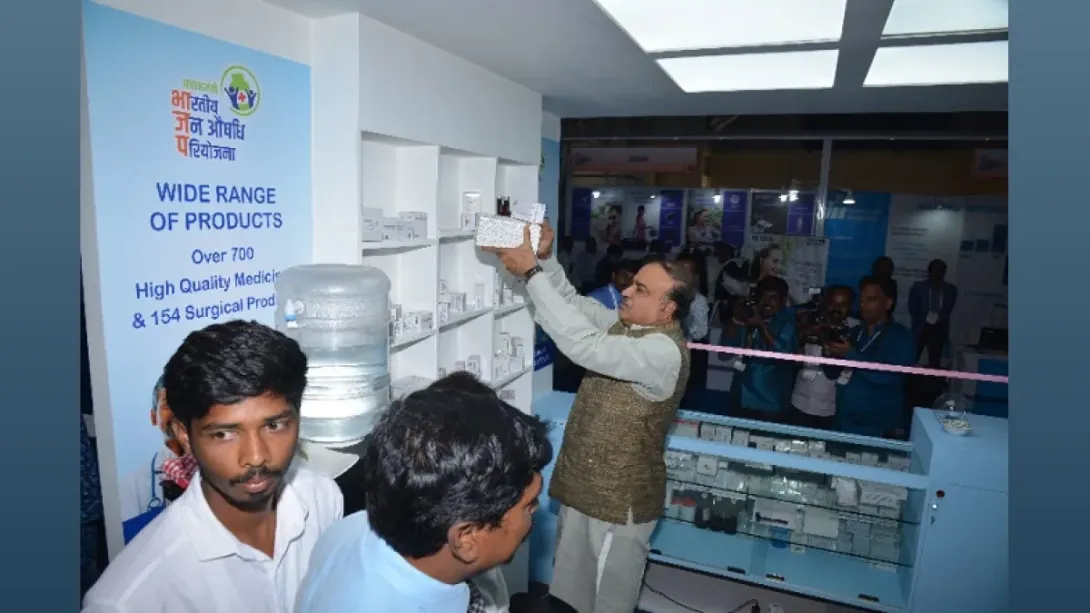
Jan Aushadhi stores across India are calling for the reinstatement of the mandatory distance rule, which regulates the spacing between outlets to prevent oversaturation and ensure operational viability. Retailers argue that removing or relaxing the distance norm has intensified competition, reduced individual store revenues, and strained supply chains. The network, aimed at providing affordable generic medicines to the public, relies on a balanced distribution system to maintain profitability and accessibility. Stakeholders are advocating for a policy review to protect smaller retailers while sustaining the government’s vision of affordable healthcare, emphasizing that thoughtful regulation is crucial for long-term network efficiency and public benefit.
1. Background: The Distance Rule and Its Importance
The distance rule mandated that Jan Aushadhi outlets maintain a minimum separation between stores to prevent overlapping territories and ensure each retailer receives sufficient customer traffic. This policy historically allowed smaller retailers to sustain operations and maintain equitable market access.
Since its relaxation in certain regions, several retailers have reported challenges in sustaining revenue, citing increased competition and the entry of multiple stores in close proximity. They contend that the original distance rule was crucial in balancing supply and demand across the Jan Aushadhi network.
2. Impact on Retailers and Operations
Retailers argue that the removal of the distance restriction has created uneven market dynamics, particularly affecting smaller or newer outlets. With multiple stores operating in close proximity, individual outlets face diminished footfall, reduced sales volumes, and higher operational costs relative to revenue.
This trend threatens the long-term sustainability of the Jan Aushadhi scheme at the grassroots level, as financially strained retailers may be forced to exit, undermining the program’s objective of providing affordable medicines in underserved areas.
3. Calls for Policy Intervention
Retailer associations have formally requested that authorities restore or revise the distance rule, ensuring adequate spacing between stores while still allowing expansion into underserved regions. They emphasize that a balanced regulatory approach could enhance overall network efficiency, protect small businesses, and maintain public access to low-cost generic medicines.
Industry experts note that structured expansion with clear geographic guidelines would prevent market cannibalization, support equitable revenue distribution, and reinforce the government’s goal of universal healthcare accessibility.
4. Broader Implications for Affordable Healthcare
The debate over the distance rule highlights the tension between rapid network expansion and operational sustainability. While increasing the number of outlets can enhance accessibility, unregulated growth risks compromising service quality, inventory management, and retailer viability.
Restoring or revising the rule would not only stabilize retailer operations but also ensure that affordable medicine distribution remains efficient, widespread, and reliable, strengthening public trust in the Jan Aushadhi initiative.
5. Path Forward
Stakeholders advocate a data-driven policy review, leveraging footfall analytics, geographic mapping, and market demand assessments to determine optimal outlet spacing. This approach could balance network expansion with retailer sustainability, allowing the Jan Aushadhi program to grow responsibly while continuing to meet India’s healthcare needs.
Authorities are expected to engage with retailer associations to explore viable solutions that protect small businesses, ensure equitable access, and maintain the initiative’s social impact.
Conclusion
Jan Aushadhi retailers’ demand to restore the distance rule underscores the critical need for thoughtful regulation in public healthcare initiatives. Balancing expansion with sustainability will be key to safeguarding the financial health of retailers and ensuring uninterrupted access to affordable medicines for millions of Indians. A careful policy recalibration could strengthen the Jan Aushadhi network, reinforcing its mission of delivering accessible, cost-effective healthcare nationwide.
Comments