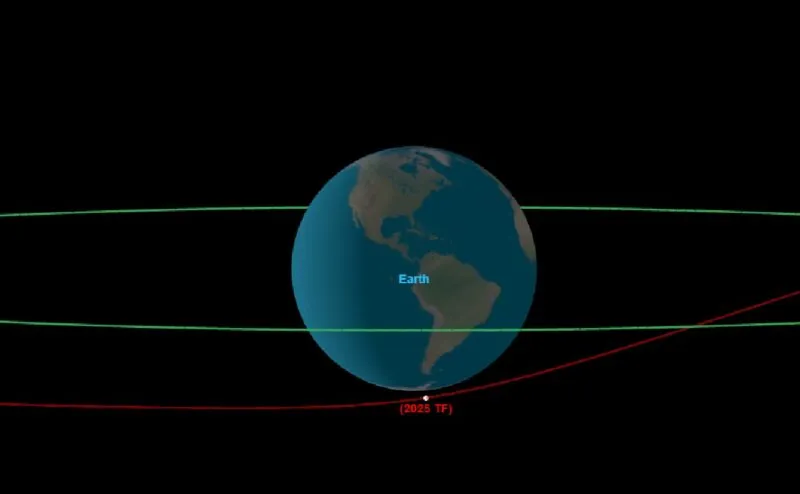
Astronomers have identified four asteroids scheduled to pass close to Earth within the next 48 hours, prompting observation and monitoring by global space agencies. While none pose a direct threat, these near-Earth objects (NEOs) provide valuable opportunities for scientists to study their size, composition, and orbital trajectories. The close approaches highlight the importance of ongoing asteroid tracking and planetary defense initiatives. Experts emphasize that monitoring such celestial objects not only enhances understanding of solar system dynamics but also informs strategies to mitigate potential future impacts, ensuring Earth’s safety while advancing research in asteroid science and planetary protection.
Near-Earth Asteroid Flybys
Over the coming two days, four asteroids, ranging in size from 15 to 80 meters, will pass within varying distances of Earth. Space agencies and observatories are closely monitoring their trajectories to ensure accurate predictions and to gather data on their speed, composition, and orbital characteristics.
Scientific Opportunities
These close encounters allow astronomers to use telescopes and radar systems to analyze the asteroids’ reflectivity, shape, and surface properties. Studying NEOs enhances understanding of the solar system’s formation and evolution and provides insight into the materials that may have contributed to the development of planets, including Earth.
Planetary Defense and Monitoring
Although these asteroids do not pose immediate risks, tracking near-Earth objects is crucial for planetary defense. Programs like NASA’s Planetary Defense Coordination Office use such flybys to refine detection methods, assess potential threats, and develop mitigation strategies for larger objects that could impact Earth in the future.
Public Engagement and Awareness
Close asteroid flybys also serve as an opportunity to engage the public in astronomy and space science. Live streams, skywatching events, and educational outreach allow enthusiasts to observe these celestial visitors while raising awareness about the importance of monitoring space hazards.
Comments