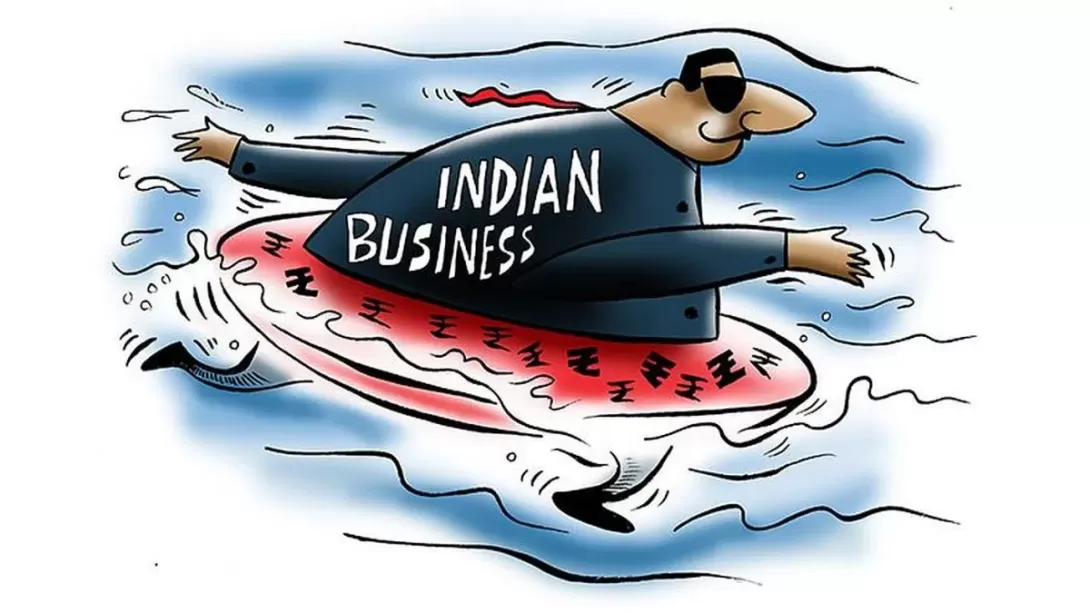
India’s corporate sector demonstrated a mixed financial performance in the March 2025 quarter, with overall revenue growth stagnating at 5–6%, while profitability widened due to sector-specific tailwinds and operational efficiencies. According to a detailed assessment by Crisil Ratings, EBITDA margins improved by up to 60 basis points, led by gains in telecom, pharmaceuticals, and consumer discretionary sectors. Meanwhile, staple-driven FMCG, IT services, and auto sectors experienced margin compression. The analysis, which covered over 400 companies representing half of NSE’s market capitalization, provides a nuanced view of India Inc’s evolving post-pandemic resilience, despite macroeconomic headwinds and global volatility.
Topline Growth: A Modest Climb Amid Mixed Sectoral Performance
India Inc reported muted revenue growth of 5–6% in the final quarter of FY25, indicating a plateauing in topline expansion. This growth was primarily driven by consumer-facing sectors, excluding staples, and strong performances from telecom and retail.
The telecom industry emerged as a standout contributor with an estimated 15% revenue jump, driven by tariff hikes and premium 5G rollouts. Similarly, retail companies saw 17% growth, supported by demand in value fashion, food, grocery segments, and a notable expansion in store footprints.
Conversely, construction-linked sectors and steel faced headwinds, with growth limited to just 1–2%, largely due to low-cost imports that kept prices subdued. While steel prices have recovered slightly following safeguard duty measures, the impact on revenue remained modest within the quarter.
Sectoral Snapshot: Discretionary Strong, Staples Struggle
- Consumer Discretionary & Services: Expected to see 8–9% revenue growth, with strong tailwinds from urban demand for telecom and lifestyle-related spending.
- Automotive Sector: Posted 6% growth, backed by increased passenger vehicle sales, better product mix, and a rise in export contributions.
- FMCG Segment: Revenue growth stayed modest at 4–6%, driven more by price hikes than volume. Urban demand lagged, while rural demand remained steady.
- Pharmaceutical Sector: Contributed with a robust 8% growth in export revenues, reflecting global demand recovery and pricing power in generics.
- IT Services: Registered a 2–3% uptick, aided by gradual demand revival and selective project reactivation.
- Agriculture and Fertilizers: Experienced 17–19% growth, thanks to higher consumption, good kharif yields, and improved farmer incomes.
Profitability Trends: EBITDA Margins Expand Selectively
Despite lackluster revenue growth, companies delivered a marginal improvement in profitability, with overall operating margins rising to approximately 8%, a 0.60% increase year-on-year.
Elizabeth Master, Associate Director at Crisil Ratings, highlighted a divergence in EBITDA trends among sectors:
- Margin Gainers: Sectors such as telecom, pharmaceuticals, power, and consumer discretionary led the way.
- Margin Losers: Segments including automobiles, FMCG, cement, and steel saw contraction in operating margins.
Key Margin Pressures
- Automobiles: Margins fell by 1 percentage point due to a 25% surge in aluminium prices, exacerbated by global inventory shortages.
- IT Services: Margins compressed by up to 0.40%, driven by higher marketing and travel budgets.
- FMCG: Witnessed a 0.50–1% erosion in profitability owing to rising input costs—notably palm oil, tea, and coconut kernels.
Current Stock Market Sentiment
In the broader market, investor sentiment remains cautiously optimistic. While sector rotation is evident, defensive stocks in telecom, healthcare, and select consumer segments have attracted interest due to their resilient earnings and margin protection strategies.
Market participants are closely monitoring corporate earnings momentum, especially in the context of geopolitical uncertainties, commodity price volatility, and domestic policy cues ahead of general elections. Companies that can manage cost inflation while sustaining demand are expected to outperform in the medium term.
Conclusion: Resilience Over Growth in FY25 Close
The March 2025 quarter has underlined a critical shift in India Inc’s performance metrics: profitability, not revenue, drove the story. Amid economic uncertainties, companies displayed strategic restraint and operational efficiency, protecting bottom lines even as top-line growth faltered.
This earnings season reflects a transitional phase for corporate India—where supply chain recalibrations, sector-specific inflation, and digital transformations are redefining value creation. As businesses gear up for the next fiscal year, stakeholders will be keen to see whether these incremental gains in margins can be sustained—or even scaled—amid evolving global dynamics.
Comments