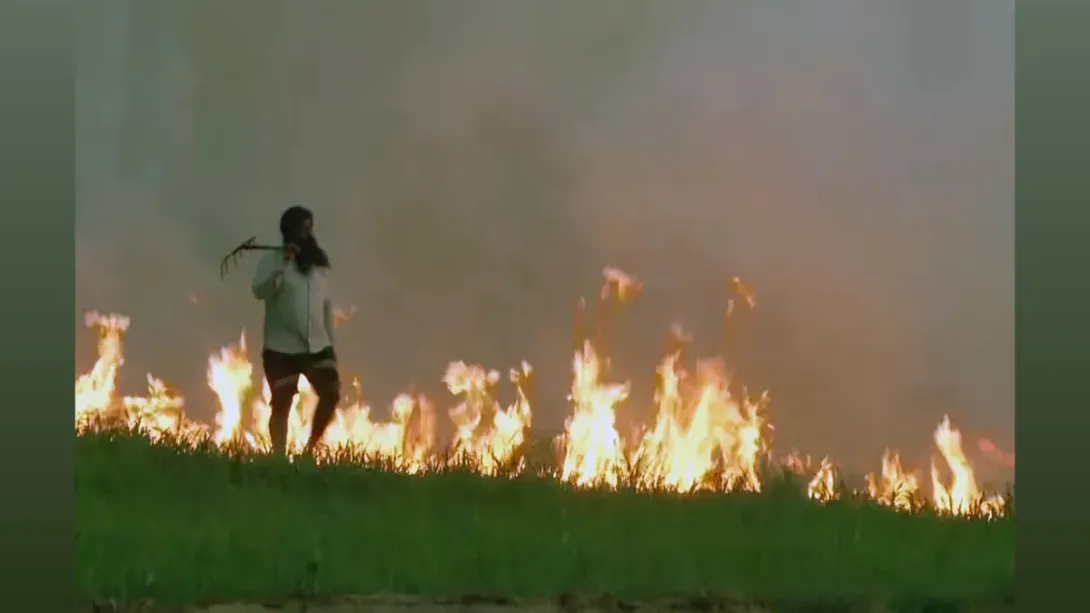
Northern India faces a persistent environmental challenge with paddy residue burning, contributing significantly to air pollution and seasonal smog. Innovative solutions are now emerging as companies and policymakers explore paddy waste-to-energy initiatives, converting agricultural residue into bioenergy and sustainable fuel. This approach not only mitigates pollution but also provides economic incentives for farmers, reduces dependency on fossil fuels, and aligns with India’s green energy targets. Analysts highlight that scaling such technologies could redefine rural energy ecosystems while addressing public health concerns, positioning bioenergy as a practical, environmentally responsible alternative for crop residue management.
Paddy Residue Burning: The Environmental Challenge
Each year, millions of tons of paddy straw in Punjab, Haryana, and Uttar Pradesh are incinerated, releasing particulate matter (PM2.5), carbon monoxide, and greenhouse gases. This practice:
- Exacerbates air quality deterioration, causing severe smog episodes.
- Impacts public health, increasing respiratory ailments in urban and rural populations.
- Contradicts India’s climate commitments, contributing to regional and global emissions.
Traditional disposal methods have proven inefficient and environmentally harmful, prompting the need for innovative interventions.
Paddy-to-Energy Conversion: A Sustainable Alternative
Companies and energy startups are introducing biomass-based solutions to convert paddy straw into electricity, pellets, and biofuels. Key benefits include:
- Reduction in air pollution by preventing open-field burning.
- Revenue generation for farmers through sale of agricultural residue.
- Contribution to renewable energy targets, supporting India’s decarbonization goals.
Technologies such as gasification, anaerobic digestion, and biomass pelletization are being adopted to efficiently transform waste into marketable energy products.
Policy Support and Market Potential
Government incentives and schemes aim to accelerate adoption of residue-to-energy projects:
- Subsidies for biomass-based power plants and machinery.
- Mandates for agro-waste collection and utilization.
- Collaboration between private enterprises, state agencies, and rural cooperatives.
Analysts predict that scaling these solutions could create a robust bioenergy ecosystem, mitigate pollution crises, and foster sustainable rural livelihoods.
Conclusion
Paddy waste-to-energy initiatives represent a win-win strategy, addressing environmental, economic, and energy challenges simultaneously. As North India grapples with annual smog crises, the convergence of technology, policy, and entrepreneurship offers a transformative pathway toward cleaner air and sustainable rural economies.
Comments