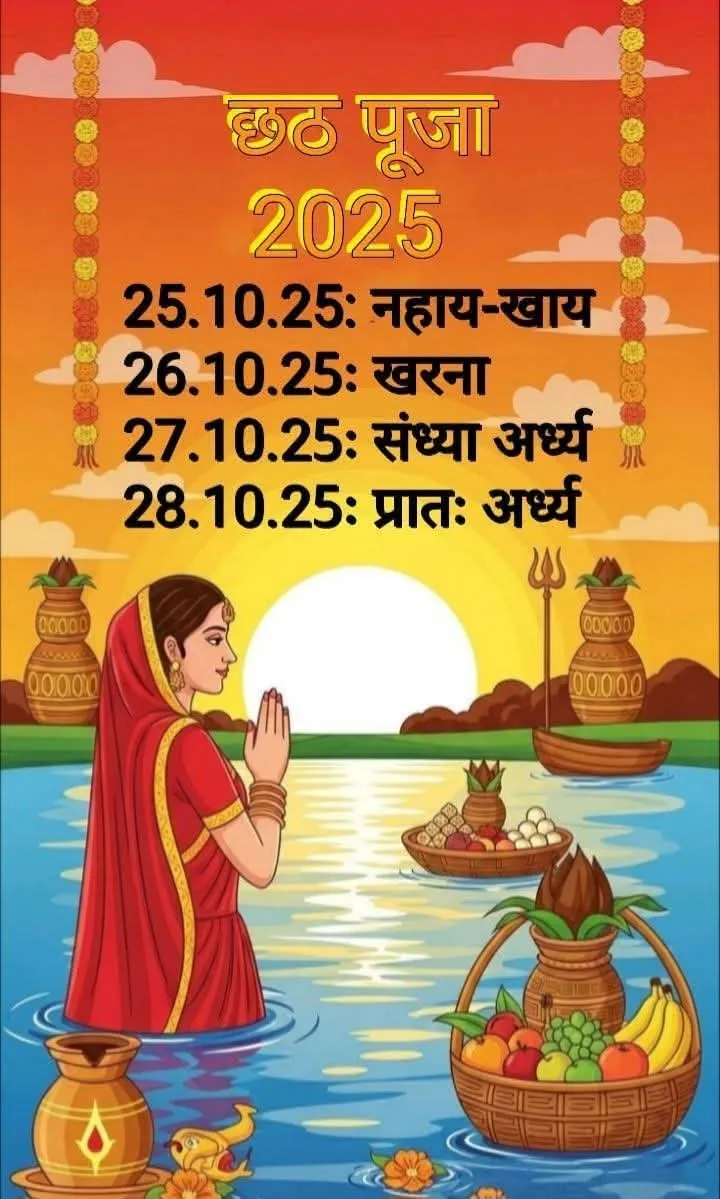
Chhath Puja 2025 begins with the sacred Nahay Khay ritual today, signaling the start of the four-day festival dedicated to the Sun God and Chhathi Maiya. Observed primarily in Bihar, Jharkhand, Uttar Pradesh, and parts of Nepal, the festival emphasizes purification, devotion, and gratitude for sustaining life. Devotees take holy dips in rivers or water bodies, prepare traditional offerings, and follow strict fasting and rituals to honor the Sun deity. The festival’s timing is guided by precise sunrise and sunset schedules, ensuring the observance aligns with auspicious muhurats. Nahay Khay sets the spiritual tone for the subsequent rituals and community celebrations.
---
Nahay Khay: The First Day of Devotion
Nahay Khay, literally meaning “to bathe and eat,” marks the commencement of Chhath Puja. Devotees begin their observance with ritualistic bathing in sacred rivers, ponds, or other water bodies, symbolizing physical and spiritual purification. This is followed by preparing a simple, sattvic meal devoid of onion and garlic, consumed before sunset. The act of fasting and cleansing is believed to invoke blessings of health, prosperity, and longevity.
Sunrise and sunset timings play a critical role in determining the auspicious period for the rituals. This year, devotees are advised to perform Nahay Khay in alignment with the calculated muhurat to maximize spiritual merit.
---
Significance of Chhath Puja
Chhath Puja is a festival of gratitude and reverence for the Sun God (Surya) and Chhathi Maiya, the goddess of life and well-being. It is rooted in the belief that sunlight sustains life and that observing strict rituals brings prosperity and removes obstacles. The festival is unique in its emphasis on purity, with participants abstaining from alcohol, meat, and certain grains while observing rigorous fasting and cleanliness.
Chhath also has ecological significance, as rituals are often conducted near clean water bodies, promoting environmental consciousness and community cooperation.
---
Rituals and Muhurats
The four-day Chhath Puja observance comprises:
1. Nahay Khay (Day 1) – Ritual bathing and consumption of a simple meal.
2. Lohanda and Kharna (Day 2) – Devotees observe a day-long fast, ending with a sweet offering prepared from jaggery and rice.
3. Sandhya Arghya (Day 3) – Evening offerings to the setting sun, performed on riverbanks or water bodies with arghya plates containing fruits, sugarcane, and other symbolic items.
4. Usha Arghya (Day 4) – Early morning offerings to the rising sun, concluding the festival with prayers for family welfare and prosperity.
Auspicious timings or muhurats are meticulously observed for each ritual to ensure maximum spiritual benefit, with precise calculations for local sunrise and sunset guiding devotees in performing each rite.
---
Observance Practices
Devotees often maintain strict physical and mental discipline throughout the festival. Many observe a nirjala fast (without water) on certain days, while others prepare traditional foods like thekua, a wheat-jaggery delicacy, as offerings. Community participation, devotion, and adherence to ritual purity are integral, making Chhath Puja both a personal and social celebration.
The festival’s simplicity and emphasis on natural elements highlight a spiritual philosophy deeply intertwined with the rhythms of nature. Families come together, cleaning homes, decorating riverbanks, and supporting each other in ritual performance, reinforcing social bonds alongside religious devotion.
---
Modern Relevance and Cultural Importance
While rooted in tradition, Chhath Puja continues to adapt to contemporary urban life. Observances in cities involve temporary pandals near lakes or artificial water bodies to accommodate devotees who may be away from natural rivers. Despite modernization, the essence remains unchanged—gratitude to the Sun for sustaining life, purification of body and mind, and fostering communal harmony.
Environmental and health awareness is increasingly integrated into practices, with emphasis on using eco-friendly offerings and reducing pollution during riverbank rituals. The festival thus balances devotion, ecological responsibility, and social cohesion.
---
Conclusion
Nahay Khay, the first day of Chhath Puja 2025, sets the spiritual foundation for one of India’s most revered festivals. By adhering to traditional practices, precise timings, and ritual purity, devotees express gratitude to the Sun God while reinforcing cultural and ecological consciousness. Beyond ritual, Chhath Puja exemplifies how religious observances can cultivate discipline, community solidarity, and reverence for nature—values that remain relevant across generations.
Comments