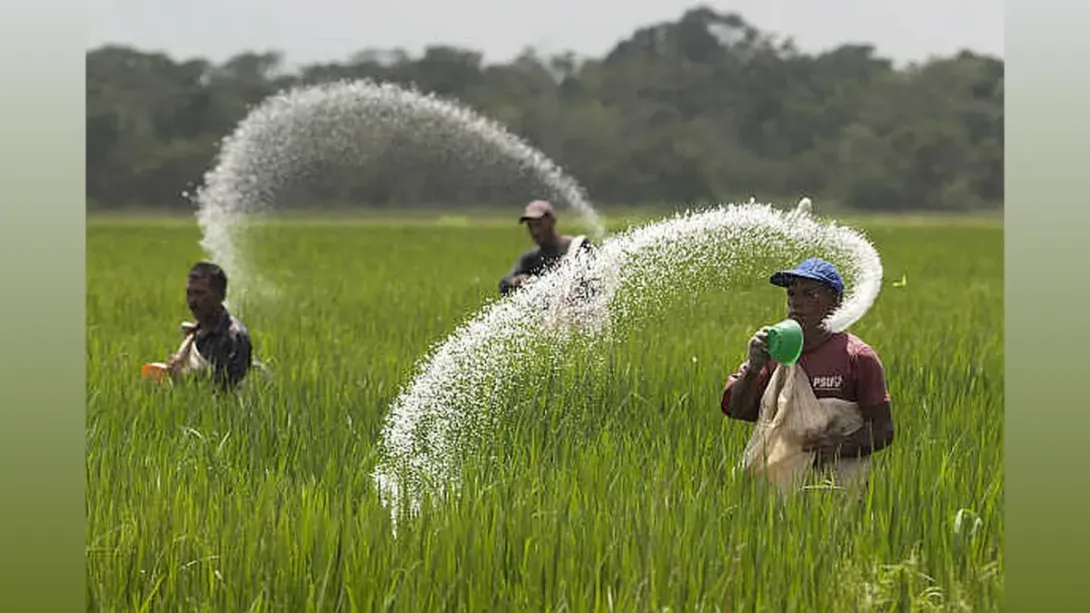
In a move aimed at ensuring affordability and timely availability of fertilisers during the upcoming Rabi season, the Union Government has approved the continuation of the fertiliser subsidy scheme for 2025. The decision will help maintain stable input costs for farmers amid global price fluctuations in natural gas and raw materials. The allocation under the Nutrient-Based Subsidy (NBS) scheme and Urea Subsidy is expected to exceed Rs. 1.6 lakh crore, reaffirming the government’s commitment to agricultural sustainability and food security. The step also aligns with efforts to balance fiscal prudence and farmer welfare ahead of the crucial sowing season.
Government Greenlights Fertiliser Subsidy Continuation
The Cabinet Committee on Economic Affairs (CCEA), chaired by the Prime Minister, has approved the fertiliser subsidy for the 2025 Rabi season (October 2025–March 2026). The decision ensures that farmers continue to access essential nutrients such as urea, di-ammonium phosphate (DAP), muriate of potash (MOP), and complex fertilisers at affordable prices despite rising global commodity costs.
Under the Nutrient-Based Subsidy (NBS) framework, the government fixes per kilogram subsidy rates for nitrogen (N), phosphorus (P), potassium (K), and sulphur (S) annually. These rates are adjusted based on international prices of raw materials and exchange rate movements. The move guarantees price stability in agricultural inputs, a critical factor for sustaining productivity in India’s major food-producing regions.
Fiscal Outlay and Subsidy Details
The fertiliser subsidy bill for FY2025–26 is projected to be over Rs. 1.6 lakh crore, including Rs. 90,000 crore for urea and Rs. 70,000 crore under the NBS scheme. This substantial allocation reflects the government’s intent to absorb cost pressures rather than passing them on to farmers.
The NBS rates for the Rabi season have been aligned with global fertiliser price trends, which have shown moderate volatility due to fluctuating energy markets and geopolitical disruptions. The subsidy ensures that the retail prices of DAP, MOP, and NPK complexes remain largely unchanged, safeguarding farmers from cost shocks during the sowing season.
The government’s intervention also supports domestic manufacturers and importers by offering predictable subsidy rates, encouraging timely supply and preventing hoarding or artificial shortages.
Ensuring Fertiliser Availability and Distribution
Alongside financial support, the government has intensified efforts to streamline fertiliser distribution through the Integrated Fertiliser Management System (iFMS) and the One Nation, One Fertiliser initiative. These measures enhance transparency, prevent leakages, and ensure equitable access across states.
Additionally, the introduction of nano-fertilisers and bio-based alternatives is being promoted to reduce import dependence and improve soil health. Companies like IFFCO and NFL are expected to play a key role in scaling up nano-urea and nano-DAP production, offering cost-efficient and environmentally sustainable options.
The Ministry of Chemicals and Fertilisers has also been closely monitoring buffer stocks to prevent regional supply disruptions during peak sowing months, especially in northern and central India where wheat, mustard, and pulses dominate the Rabi crop cycle.
Economic and Policy Implications
While the fertiliser subsidy continues to be one of the largest components of India’s agricultural expenditure, experts note that it remains essential for rural stability and inflation management. Fertilisers account for nearly 15–20% of input costs in staple crops such as wheat and rice, making affordability a key determinant of farmers’ profitability.
Economists estimate that maintaining the subsidy at current levels could marginally increase fiscal pressure in FY2025–26 but would also stabilize food prices, a critical factor for controlling consumer inflation. Furthermore, by ensuring input availability, the move supports the government’s broader goals of achieving food self-sufficiency and doubling farmers’ income.
Analysts also expect the continued subsidy to positively influence rural demand for agri-inputs, machinery, and allied goods, providing an indirect boost to India’s manufacturing and logistics sectors.
Balancing Reform and Support
The Centre continues to explore long-term reform measures in fertiliser policy, including direct benefit transfer (DBT) of subsidies to farmers and rationalisation of nutrient use. However, officials maintain that immediate support is necessary to protect farmers from external price volatility and ensure food security.
In parallel, the government is encouraging domestic production expansion through investments in new fertiliser plants and reviving closed urea units under public-sector enterprises. Such initiatives are expected to gradually reduce the import bill and make India more self-reliant in key agricultural inputs.
Conclusion
The approval of the fertiliser subsidy for the 2025 Rabi season reaffirms the government’s twin focus on agricultural sustainability and fiscal balance. By maintaining stable input prices and guaranteeing fertiliser availability, the decision provides crucial support to millions of farmers ahead of the sowing season.
As India navigates global supply uncertainties and strives for food security, this proactive subsidy policy ensures that the backbone of its economy—the farming community—remains protected, productive, and resilient.
Comments