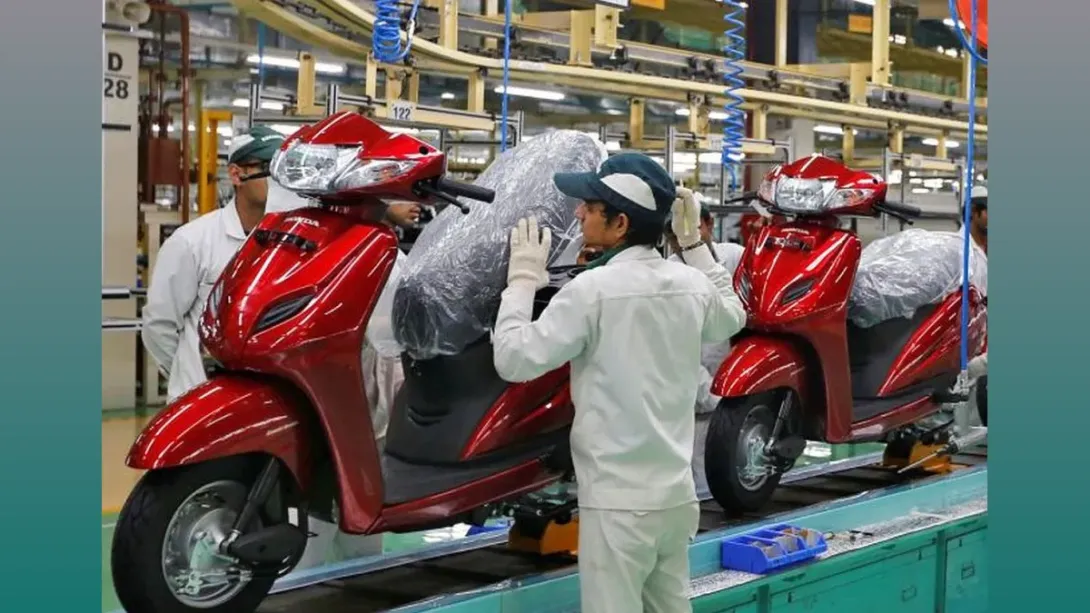
Honda Motor Co. is doubling down on its commitment to India, identifying the country as a cornerstone of its global growth agenda. With India’s two-wheeler market expanding rapidly and consumer preferences shifting toward advanced mobility solutions, Honda aims to boost its market share from 27% to 30% by 2030. The Japanese automaker plans to deepen localisation, enhance exports, and expand production capacity through significant capital investments. Simultaneously, it is laying the groundwork for electric mobility, even as it continues to drive strong sales in traditional segments. India’s youthful demographics and rising middle class are central to Honda’s long-term strategic vision.
India Becomes a Core Pillar in Honda’s Global Strategy
Honda’s evolving business narrative positions India not merely as a sales destination but as an integral manufacturing and innovation hub within its global operations. The company views the Indian market as essential to achieving sustainable growth and scale efficiencies amid slowing demand in mature economies.
Over the years, Honda Motorcycle & Scooter India (HMSI) has built an expansive production network, supported by a robust supplier ecosystem and advanced localised manufacturing capabilities. This shift represents a strategic recalibration—from focusing solely on market presence to embedding India within the company’s global value chain, including exports and product innovation.
Expanding Market Share and Scaling Production
Honda currently commands around 27% of India’s two-wheeler market and has set an ambitious goal of achieving a 30% share by the end of the decade. To meet this target, the company plans to expand its capacity, modernise plants, and introduce new models tailored to Indian consumers.
HMSI’s retail sales grew from 40.94 lakh units in FY2023–24 to 47.89 lakh units in FY2024–25, reflecting a steady 17% annual increase. In July 2025 alone, the company sold over 5.15 lakh two-wheelers, including nearly 49,000 units for export—a 20% month-on-month surge. This momentum underscores both domestic demand resilience and Honda’s expanding international footprint from its Indian base.
Major Investments to Power Growth and Exports
Honda is channeling significant capital into its Indian operations to enhance both production efficiency and export competitiveness. Its Gujarat facility at Vithalapur, for instance, is receiving a fresh investment of Rs.920 crore to add a fourth production line, raising its capacity to over 26 lakh units annually by 2027. This expansion will make it Honda’s largest two-wheeler plant globally.
Additionally, Honda Cars India has emerged as a strong contributor to the company’s export strategy. In 2024, its overseas shipments more than doubled to 63,221 units from 25,854 the previous year—a staggering 145% increase. These figures highlight Honda’s growing reliance on India as a manufacturing and export hub for both two- and four-wheelers.
Unlocking Demographic Potential and New Consumer Segments
A significant portion of Honda’s India strategy revolves around capturing new demographic opportunities. Women riders currently account for roughly 10% of the country’s two-wheeler ownership base—an area Honda is actively targeting through customised product offerings, marketing outreach, and safety initiatives.
The company is also focused on Tier-II and Tier-III cities, where rising incomes and better financing access are spurring mobility demand. With India projected to add millions of first-time vehicle buyers in the next five years, Honda aims to position itself as the preferred brand across affordability and aspirational segments.
Preparing for the Electric Transition
While Honda continues to dominate in the internal-combustion engine (ICE) space, it recognises the inevitable shift toward electric mobility. The company has adopted a pragmatic strategy: investing in EV readiness while maintaining strength in its core petrol-powered portfolio.
Honda executives have acknowledged that India’s transition to electric vehicles faces infrastructural bottlenecks, including inadequate charging networks and electricity supply challenges. Hence, the company plans a phased rollout of electric scooters and motorcycles, combining global technological expertise with locally tailored solutions. This balanced approach allows Honda to safeguard profitability while staying future-ready.
Balancing Opportunity with Competitive Challenges
Despite its strong footing, Honda operates in an intensely competitive environment dominated by domestic giants and agile EV startups. Rivals such as Hero MotoCorp, TVS Motor, and Bajaj Auto continue to innovate aggressively in both conventional and electric categories. Moreover, fluctuations in raw material costs and changing regulatory norms present ongoing challenges.
Nonetheless, Honda’s strategy—rooted in localisation, capacity expansion, and innovation—provides it with a formidable competitive advantage. Analysts believe the company’s deep integration into India’s industrial ecosystem and its focus on exports will serve as strong buffers against short-term volatility.
Conclusion:
Honda’s growing emphasis on India signals a long-term strategic bet on one of the most dynamic automotive markets in the world. As the company ramps up investment, scales production, and embraces new technologies, India is evolving into a linchpin of Honda’s global growth model. The road ahead may be competitive, but the opportunities—driven by demographics, digitalisation, and policy support—are equally immense. For Honda, India represents not just a market, but a future-defining partnership between innovation, scale, and ambition.
Comments