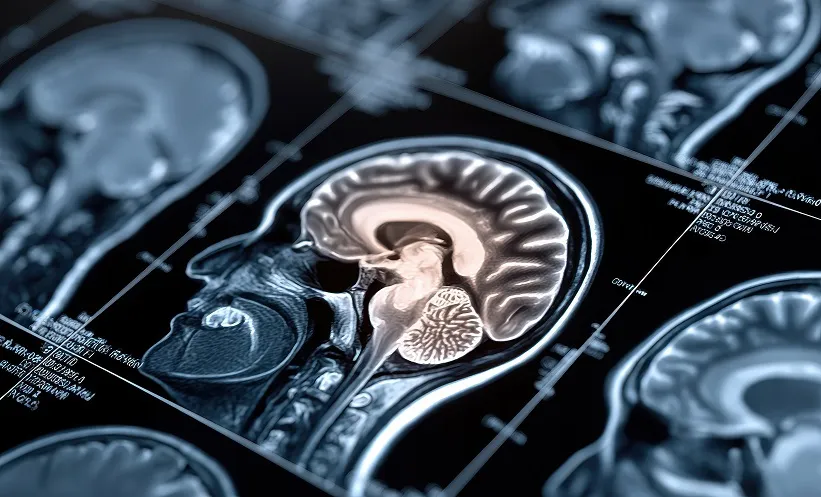
A groundbreaking study in pediatric endocrinology has introduced an MRI-based radiomics model capable of accurately predicting growth hormone deficiency (GHD) in children. By leveraging advanced imaging analytics and artificial intelligence, researchers can now identify subtle structural abnormalities in the pituitary gland—often undetectable through traditional diagnostic methods. This innovation holds the potential to transform early diagnosis and treatment strategies for children with delayed growth or hormonal imbalances. The model not only enhances diagnostic precision but also reduces dependence on invasive procedures, marking a major leap forward in noninvasive, data-driven pediatric care.
Transforming Pediatric Endocrinology Through Imaging Intelligence
The intersection of radiology and artificial intelligence is redefining diagnostic medicine, and nowhere is this more evident than in pediatric hormone research. Scientists have developed an MRI radiomics model capable of predicting growth hormone deficiency (GHD) in children with unprecedented accuracy.
Traditionally, diagnosing GHD requires stimulation tests, a series of invasive and time-consuming procedures involving hormone injections and blood sampling. These tests often cause discomfort for young patients and carry a risk of false results. The new MRI-based model, however, utilizes quantitative imaging biomarkers—derived from high-resolution scans—to analyze pituitary gland structure and texture, offering a faster and noninvasive diagnostic alternative.
Understanding the Innovation: How Radiomics Works
Radiomics is an emerging field that converts medical images into high-dimensional data using advanced computational algorithms. These data points capture subtle patterns, shapes, and textural features invisible to the human eye. In this study, researchers trained their model on MRI scans of children with confirmed GHD and compared them to healthy controls.
By employing machine learning techniques, the model was able to detect minute variations in the pituitary gland’s morphology—an organ central to hormone regulation and growth. The results showed a remarkable ability to distinguish between normal and deficient cases, with an accuracy rate exceeding 85% in preliminary validations.
Clinical Implications: Reducing Invasiveness and Improving Accuracy
The clinical implications of this development are profound. Growth hormone deficiency can lead to stunted physical development, delayed puberty, and metabolic issues if not diagnosed early. However, current testing methods are not only invasive but also subject to variability based on patient stress, sleep, and nutrition.
The radiomics approach eliminates these challenges by relying solely on imaging data. “This technique represents a paradigm shift,” noted one pediatric endocrinologist involved in the study. “We are moving from symptom-based testing to image-based prediction, where we can identify deficiencies even before clinical signs fully develop.”
Moreover, the model’s objectivity and reproducibility make it a reliable complement to clinical assessments, especially in ambiguous cases where hormone test results are inconclusive.
Integration with Artificial Intelligence and Predictive Analytics
At the core of this advancement lies artificial intelligence (AI)—particularly supervised learning algorithms trained on large datasets. AI models analyze MRI scans pixel by pixel, quantifying over a thousand parameters related to intensity, shape, and spatial distribution.
Once processed, these features are integrated into a predictive framework that classifies each case as “deficient” or “normal.” Over time, continuous data input is expected to enhance the system’s accuracy, potentially enabling personalized hormonal therapy plans.
The fusion of AI with MRI data underscores a new era of precision medicine, where technology aids clinicians in predicting, diagnosing, and even preventing disorders through pattern recognition rather than trial-and-error testing.
Potential for Broader Applications in Pediatric Health
While the current model focuses on growth hormone deficiency, its success has far-reaching implications. Researchers suggest that similar radiomics-based methods could soon assist in diagnosing other pediatric endocrine disorders, such as hypopituitarism or thyroid abnormalities.
Additionally, the technology’s noninvasive nature makes it ideal for longitudinal studies, allowing clinicians to monitor hormone recovery or response to therapy over time without repeated invasive testing. This could significantly improve treatment adherence, psychological comfort, and long-term outcomes among young patients.
Challenges and the Path Ahead
Despite the optimism, experts caution that widespread clinical implementation requires larger, multicenter trials to validate the model across diverse populations. MRI accessibility and standardization of imaging protocols also remain logistical challenges, particularly in low-resource regions.
Nevertheless, the integration of radiomics into pediatric endocrinology signals a transformative moment in diagnostic science. As AI models become more refined and data sets expand, these tools could soon transition from research settings to mainstream clinical practice.
Conclusion: Pioneering a Noninvasive Future for Hormonal Diagnostics
The development of an MRI radiomics model to predict childhood growth hormone deficiency marks a revolutionary step in pediatric healthcare. By replacing invasive hormonal stimulation tests with intelligent, data-driven imaging, this innovation brings medicine closer to the ideal of early, accurate, and compassionate diagnosis.
As radiomics continues to evolve, its ability to unlock hidden insights within medical images may redefine the future of diagnostic medicine—making precision care for children not just a possibility, but a standard.
Comments