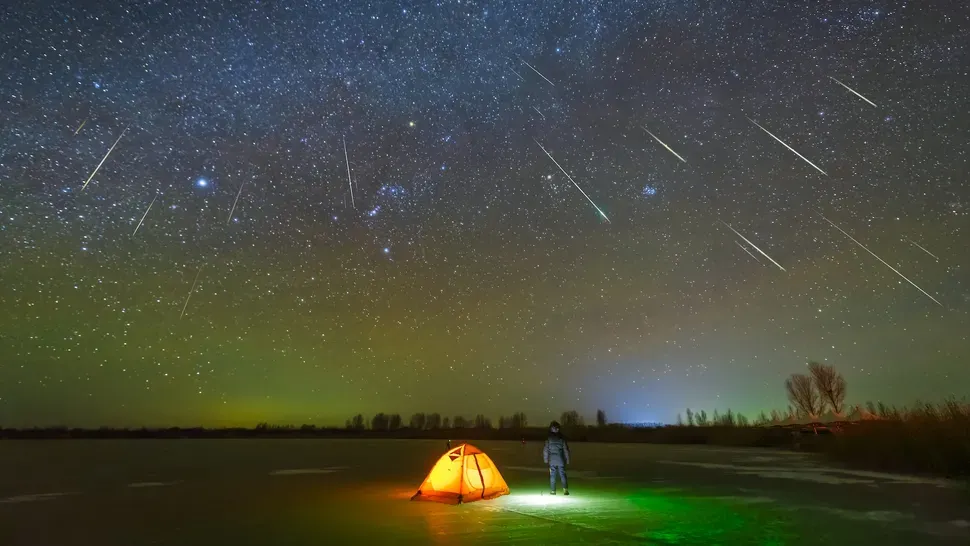
The Orionid meteor shower, one of the year’s most anticipated astronomical events, is set to peak in late October 2025, offering a spectacular display of shooting stars. Originating from debris left by Halley’s Comet, the Orionids are known for their swift, bright streaks across the night sky. Astronomers predict optimal viewing conditions in areas with minimal light pollution, with peak activity expected between midnight and pre-dawn hours. While the shower is visible globally, the Northern Hemisphere offers the best vantage points. Enthusiasts and casual observers alike are advised to prepare for an awe-inspiring cosmic display that combines scientific significance with visual wonder.
Origins and Characteristics
The Orionid meteor shower is caused by Earth passing through the trail of particles shed by Halley’s Comet. These particles, traveling at high velocities, burn upon entering Earth’s atmosphere, creating bright, fast-moving meteors. The shower derives its name from the Orion constellation, near which the meteors appear to radiate. Typically, the Orionids produce up to 20 meteors per hour at peak, with some exhibiting persistent trains and vibrant colors.
Best Viewing Practices
Optimal observation requires clear skies and minimal light interference. Astronomers recommend finding elevated locations away from city lights, allowing the eyes to adapt to darkness for 20–30 minutes. Comfortable seating, warm clothing, and patience enhance the experience. While telescopes and binoculars are optional, the meteor shower is best appreciated with the naked eye, providing a wide-field view of the sky. Peak activity generally occurs in the early morning hours before dawn.
Scientific Significance
Beyond their visual appeal, the Orionids provide insights into cometary debris and the dynamics of meteoroid streams. Observing and recording meteor trajectories helps scientists refine models of orbital mechanics, particle size distribution, and atmospheric interaction. The shower also contributes to understanding the composition of Halley’s Comet and its long-term evolution.
Public Engagement and Observation Events
Astronomical societies and observatories often host viewing sessions and virtual streams, allowing enthusiasts to witness the shower globally. Educational initiatives highlight the science behind meteors, fostering public interest in astronomy and space science. Social media platforms facilitate live updates, photos, and community engagement during peak activity nights.
Conclusion
The Orionid meteor shower forecast for 2025 promises a blend of natural beauty and scientific curiosity, captivating both casual skywatchers and professional astronomers. With proper preparation and ideal viewing conditions, observers can experience one of the year’s most thrilling celestial events. The Orionids serve as a reminder of Earth’s connection to the broader solar system, offering a fleeting yet unforgettable cosmic spectacle.
Comments