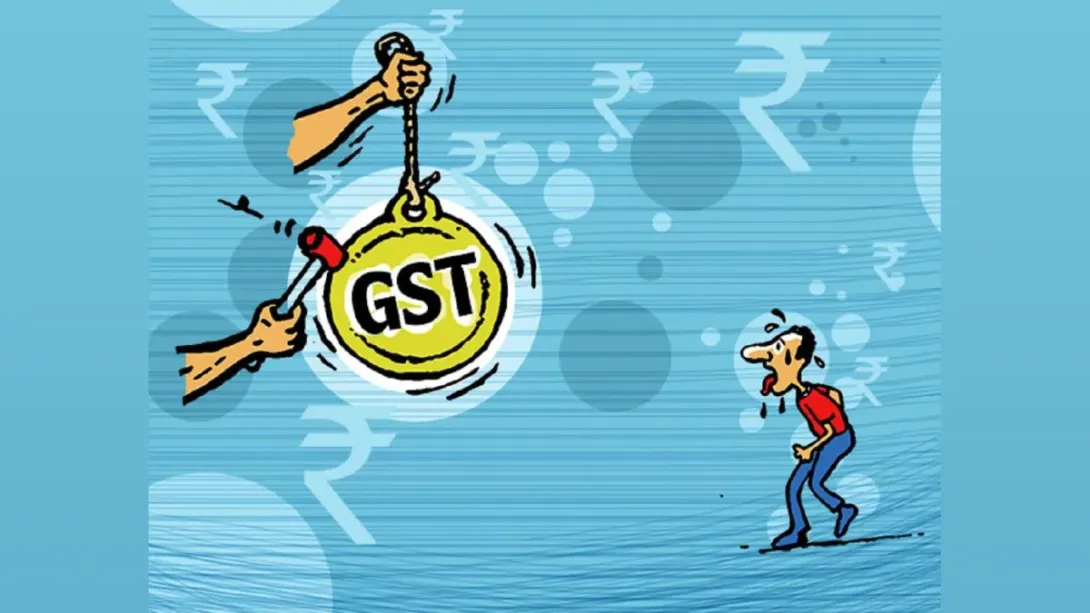
Over the past five years, Indian authorities have uncovered Goods and Services Tax (GST) evasion totaling a staggering Rs. 7.08 lakh crore, highlighting persistent vulnerabilities in the country’s indirect tax regime. While the rollout of GST in 2017 was aimed at simplifying taxation and improving compliance, the scale of detected fraud suggests significant loopholes in enforcement, monitoring, and digital infrastructure. The data has reignited concerns about tax leakage and underscores the need for stronger deterrents, robust analytics, and structural reform. As India advances toward a digitally-driven tax ecosystem, curbing such evasion remains a critical priority.
Massive GST Evasion Points to Structural Gaps
The detection of Rs. 7.08 lakh crore in GST evasion since the tax system’s inception reveals a concerning pattern. Authorities have stepped up surveillance and enforcement, yet fraud schemes—often involving fake invoices, shell companies, and identity theft—continue to undermine tax collection efforts. Despite multiple layers of reporting and input tax credit mechanisms, gaps in real-time tracking and verification still allow fraudulent activity to persist.
The figures also reflect improved detection capabilities by tax authorities, but they simultaneously call attention to the ongoing exploitation of systemic weaknesses.
Year-on-Year Breakdown Reflects Mixed Progress
While annual data shows fluctuations in the volume of evasion identified, the overall trend suggests that non-compliance remains a recurring challenge. Advanced data analytics and cross-agency coordination have enabled investigators to unearth large-scale frauds, but many schemes remain under the radar until well after the damage is done.
In response, enforcement agencies have launched targeted campaigns, increased audits, and issued stricter penalties. Nevertheless, the sheer magnitude of evasion suggests that more fundamental changes are needed—particularly in the way data is integrated, validated, and analyzed.
Policy Responses and Technology-Driven Interventions
To tackle this rising tide of tax evasion, the government has steadily expanded the use of artificial intelligence and machine learning in its tax administration. E-invoicing mandates, real-time invoice matching, and biometric verifications are among the reforms introduced to tighten oversight.
The Central Board of Indirect Taxes and Customs (CBIC) has also intensified its focus on high-risk sectors and entities, while exploring new frameworks to ensure greater transparency across supply chains.
Even so, experts argue that unless businesses see meaningful deterrents—like expedited prosecution or asset seizures—large-scale evasion may persist. Deterrence, they suggest, must be both credible and swift.
Economic and Fiscal Implications
GST is a cornerstone of India’s fiscal framework, contributing significantly to both central and state revenues. Continued evasion on this scale not only strains public finances but also distorts market competition by giving an unfair advantage to non-compliant operators.
For a government focused on fiscal consolidation and social spending, improving GST collections through better compliance is vital. Unchecked evasion limits the state’s ability to invest in infrastructure, welfare programs, and economic resilience.
In the long term, plugging revenue leaks could help lower tax rates while still improving total collections—creating a more equitable and growth-friendly fiscal environment.
The Way Forward
Addressing GST evasion at this scale requires a multi-pronged strategy: smarter technology, simplified compliance for honest taxpayers, tighter scrutiny for high-risk entities, and meaningful consequences for offenders. While detection has improved, prevention must now take center stage.
Tax experts also emphasize the need for continuous stakeholder engagement—ensuring that compliance measures are not only robust but also practical. A collaborative approach between industry, government, and technology providers may offer the most effective route to building a resilient, fraud-proof GST ecosystem.
Comments