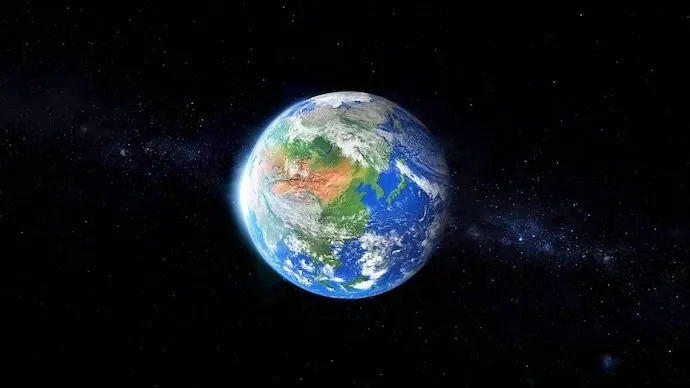
In a revelation that has unsettled the scientific community, researchers have discovered that portions of Earth’s outer layer — often referred to as its “skin” — are slowly peeling away beneath the oceans. This geological process, occurring deep under the seafloor, is believed to be triggering a series of undersea earthquakes that could reshape our understanding of tectonic dynamics. The phenomenon, which involves massive sections of the lithosphere detaching and sinking into the mantle, may hold the key to explaining mysterious seismic patterns long observed across major oceanic regions.
---
A Closer Look at Earth’s Layers
The planet’s structure is composed of several concentric layers — the crust, mantle, outer core, and inner core. The crust and uppermost part of the mantle form the lithosphere, a rigid shell that floats atop a semi-fluid layer known as the asthenosphere. Tectonic plates, which make up this outer shell, are in constant motion, colliding, diverging, or sliding past one another over geological timescales.
Traditionally, earthquakes were attributed to the movement of these plates along faults. However, recent studies indicate that some seismic events, particularly those deep beneath the ocean floor, cannot be explained solely by plate boundary activity. The new theory proposes that internal peeling or “delamination” of Earth’s lithosphere could be a hidden driver behind these anomalies.
---
How the Peeling Process Works
According to geophysical analyses, extreme temperature and pressure differences at the boundary between the lithosphere and mantle can cause parts of the dense, lower lithosphere to become unstable. Over time, gravity pulls these sections downward, causing them to peel away and sink deeper into the mantle.
This detachment, while occurring over millions of years, releases immense energy — enough to trigger significant undersea tremors. The process is gradual but far-reaching, altering the balance of stress within tectonic plates and influencing volcanic and seismic activity across wide regions.
Scientists describe this as Earth’s internal “renewal mechanism,” a natural recycling system that replenishes and reshapes the planet’s crust. Yet, as benign as it may sound, its seismic implications are anything but mild.
---
Evidence from Oceanic Earthquakes
The theory gained momentum after the detection of unusual quake patterns in several oceanic zones, particularly in subduction regions — areas where one tectonic plate slides beneath another. Researchers noticed that certain quakes originated far below the typical depth of tectonic boundaries, suggesting a deeper source.
Advanced seismic imaging has revealed layers within the oceanic crust exhibiting signs of separation and deformation consistent with lithospheric peeling. These findings imply that portions of Earth’s crust are literally “shedding” from below, a phenomenon unseen at the surface but measurable through vibrations captured by deep-sea sensors.
This peeling effect may also explain long-standing geological mysteries, such as why some oceanic regions remain unusually seismically active even in the absence of nearby fault lines.
---
Global Implications and Geological Significance
If the peeling process proves widespread, it could fundamentally alter how scientists model Earth’s geodynamics. It challenges the conventional notion of rigid, stable tectonic plates by suggesting that the planet’s outer shell is more fluid and internally unstable than previously believed.
Furthermore, the phenomenon could play a role in shaping ocean basins, influencing volcanic chains, and even driving the long-term carbon cycle by transporting surface material deep into the mantle. The process of lithospheric recycling is, in essence, a geological feedback loop — one that sustains the planet’s continuous renewal while occasionally producing catastrophic quakes and eruptions.
---
The Need for Further Research
Geologists emphasize that while the evidence for lithospheric peeling is compelling, much remains to be understood. The process operates deep beneath the ocean floor, in regions nearly inaccessible to direct observation. Future studies involving deep-sea drilling, high-resolution seismic mapping, and computer modeling are expected to shed more light on this hidden phenomenon.
Space-based monitoring and ocean-bottom observatories are also being deployed to track subtle crustal movements that could indicate ongoing peeling events. Such efforts are crucial not only for scientific understanding but also for improving early-warning systems for undersea quakes and tsunamis.
---
A Dynamic, Living Planet
The discovery that Earth’s skin is peeling from below is a reminder of the planet’s restless nature. Far from being a static sphere, Earth is a living, evolving system — one that continuously rebuilds itself from the inside out. The forces shaping our world operate silently beneath the waves, often unnoticed until their power reaches the surface.
As scientists continue to unravel these subterranean mysteries, one truth stands out: the planet’s deep interior is not just a relic of the past, but an active participant in shaping the Earth we live on today.
Comments