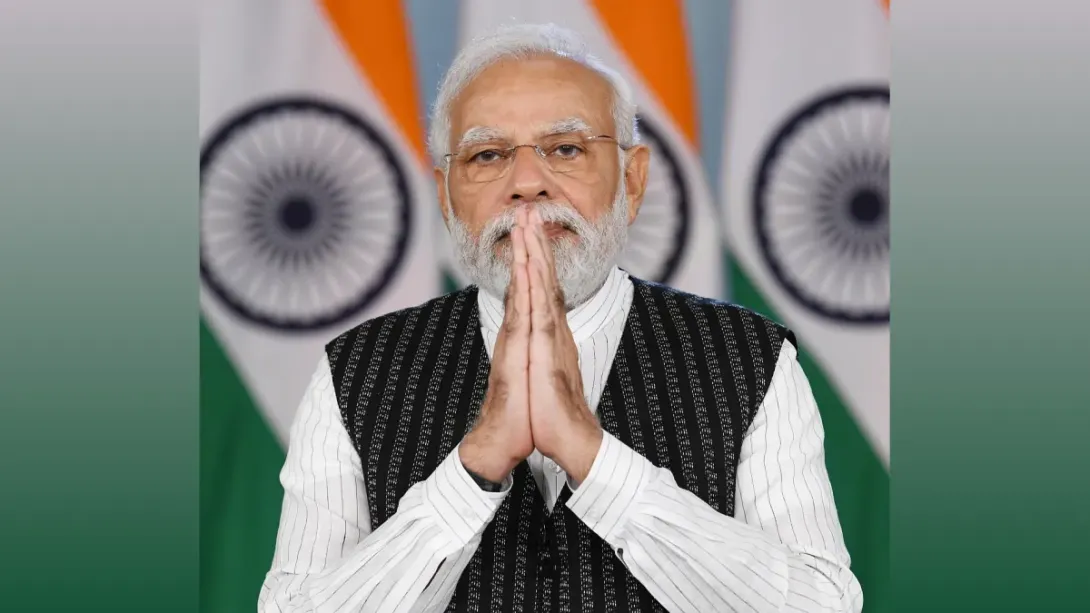
Prime Minister Narendra Modi has reiterated his vision to elevate India to the position of the world’s third-largest economy, placing emphasis on a ‘Swadeshi’ (self-reliant) model of development rooted in indigenous innovation, domestic manufacturing, and grassroots entrepreneurship. Speaking to stakeholders across industry and policy, Modi underlined the pivotal role of youth, startups, and homegrown solutions in driving economic transformation. As India eyes a multi-trillion-dollar GDP milestone, the call to shift from import dependency to local empowerment signals a clear shift in the country’s economic doctrine—blending nationalism with market dynamism in a push for global relevance.
---
A Vision Anchored in National Self-Reliance
In a renewed pitch for economic transformation, Prime Minister Narendra Modi outlined a strategic roadmap to position India as the third-largest economy globally. Central to his narrative is the doctrine of ‘Swadeshi’—not as a nostalgic return to isolation, but as a bold reimagining of India’s economic future grounded in self-sufficiency, innovation, and national pride.
The Prime Minister emphasized that while global collaboration remains important, India must reduce its reliance on imports and focus on harnessing local talent, technology, and manufacturing capabilities. His remarks come at a time when India’s GDP trajectory is approaching Rs. 300 lakh crore, with expectations of surpassing both Germany and Japan in the next few years.
---
Empowering Youth and Startups as Growth Engines
Modi’s Swadeshi narrative is strongly aligned with India’s growing youth demographic and entrepreneurial surge. With over 100 unicorns and one of the fastest-growing startup ecosystems in the world, the government is actively encouraging innovation across sectors—from fintech and agritech to space and defence.
He highlighted the importance of creating an ecosystem where Indian startups can solve Indian problems and eventually compete globally. "Why must we rely on foreign solutions when Indian brains can build for Bharat and the world?" he asked, in a rhetorical nod to the strength of local ingenuity.
---
Swadeshi Manufacturing: From ‘Make in India’ to ‘Make for the World’
The Prime Minister linked the Swadeshi ideal directly with the nation’s ongoing manufacturing push. Building on initiatives such as ‘Make in India’ and Production Linked Incentive (PLI) schemes, he called for a manufacturing renaissance that elevates India from an assembly hub to a value-creating industrial power.
Sectors like electronics, semiconductors, defence equipment, and electric vehicles were cited as areas where India must become not just self-reliant but globally competitive. As part of this effort, Modi stressed the need for high-quality local production that meets international standards while reducing the nation’s import bill.
---
Digital Infrastructure as a Catalyst
Underscoring the role of digital infrastructure, the Prime Minister referenced India’s success in platforms like UPI, Aadhaar, and ONDC as examples of Swadeshi tech built at scale. These initiatives, he noted, are now being studied and replicated abroad, establishing India not only as a consumer of global tech but as a creator of scalable digital public goods.
He encouraged the private sector to invest in digital capacity building, arguing that the combination of technology and traditional industries could unlock new economic frontiers for the country.
---
Economic Reforms and Global Aspirations
While invoking Swadeshi, Modi also reaffirmed the government’s commitment to reform-driven growth—simplifying taxation, enhancing ease of doing business, and ensuring policy stability to attract foreign and domestic investment. India’s aspirations to become the third-largest economy rest not just on ideology, but on execution—driven by resilient infrastructure, fiscal discipline, and inclusive growth.
He also highlighted how India’s economic progress can serve as a model for other developing nations striving for autonomy without isolation. In Modi’s words, “This is not just about becoming richer—it’s about becoming prouder, more independent, and more innovative as a nation.”
---
Outlook: A Swadeshi Economy for a Global Future
Modi’s address marks a decisive moment in India’s economic journey. The blend of Swadeshi values with ambitious fiscal and industrial policies signals a uniquely Indian pathway to growth—rooted in self-belief, yet globally aware.
If the vision is executed with strategic rigor, India’s transition to the world’s third-largest economy could happen within this decade. But the challenge lies not just in achieving scale, but in doing so with sustainability, equity, and resilience.
As the world recalibrates supply chains and seeks new growth centers, India’s Swadeshi-inspired economic model may emerge not only as a national transformation—but as a global template.
Comments