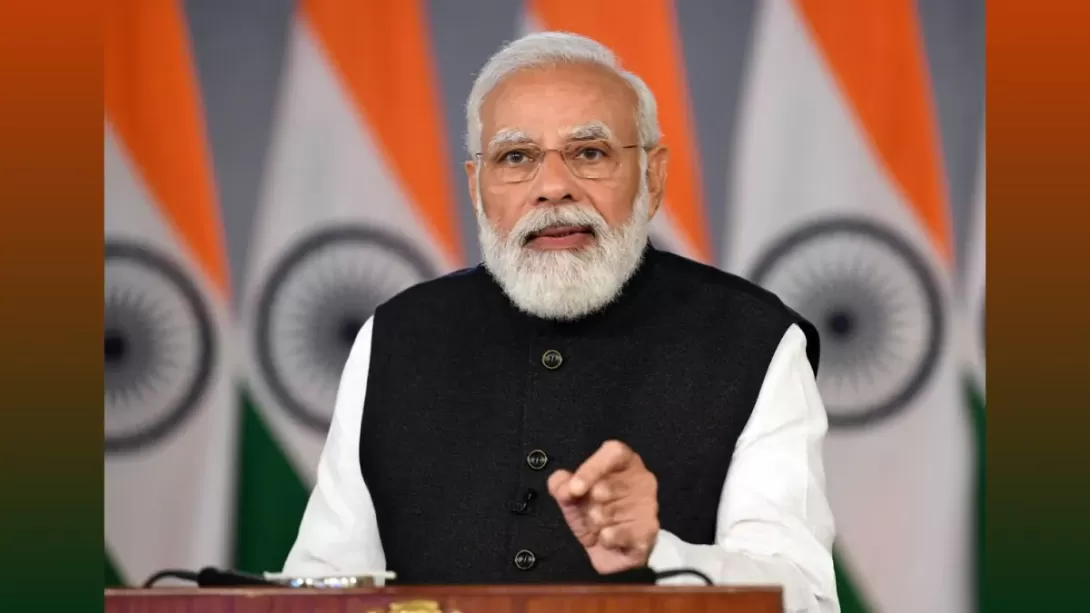
Prime Minister Narendra Modi is set to preside over the forthcoming Governing Council meeting of NITI Aayog on May 24, signaling renewed momentum for India’s top policy think tank. The annual gathering, which brings together chief ministers, Union ministers, and lieutenant governors, is a crucial platform for intergovernmental coordination and strategic policy formulation. While the agenda is still being finalized, the meeting is expected to address pressing national priorities, including economic growth, federal cooperation, and development planning. As India navigates a complex global landscape, this high-level assembly is poised to chart the next phase of inclusive, sustainable governance.
Annual Gathering of India’s Apex Policy Body
The Governing Council of NITI Aayog, chaired by Prime Minister Narendra Modi, is scheduled to convene on May 24, according to official sources familiar with the matter. The high-level conclave plays a vital role in shaping the country's developmental agenda through collaborative dialogue between the central and state governments.
The meeting brings together an influential cohort of India’s top policymakers, including all state chief ministers, lieutenant governors of Union Territories, and key Union Cabinet ministers. As the apex body of NITI Aayog, the council provides a structured forum for intergovernmental engagement and consensus-building on issues spanning economic reform, public service delivery, and sustainable development.
Anticipated Policy Agenda
While the official agenda has not yet been disclosed, sources indicate that the discussions will likely focus on key national priorities such as infrastructure investment, skilling and employment generation, climate resilience, and digital governance. With multiple states facing economic and social transitions, the council offers a timely opportunity to align state-specific goals with broader national objectives.
The meeting may also touch on India’s fiscal federalism model, ease of doing business, and reforms in education and health, especially as the country approaches a new budget cycle. Given the diversity of issues and regional challenges, the forum plays a pivotal role in harmonizing central and state policy frameworks.
Historical Context and Evolution of NITI Aayog
Formed in 2015 to replace the erstwhile Planning Commission, the National Institution for Transforming India (NITI) Aayog was envisioned as a dynamic policy think tank aimed at fostering cooperative federalism and bottom-up planning. The first Governing Council meeting was held on February 8, 2015, under Prime Minister Modi’s leadership.
Since its inception, the council has served as a key instrument for decentralizing decision-making, ensuring that states have a voice in shaping the national agenda. Unlike its predecessor, NITI Aayog emphasizes real-time data, competitive benchmarking, and performance-based outcomes.
The previous council meeting took place on July 27, 2023, and focused on themes such as achieving Viksit Bharat (Developed India) by 2047, leveraging technology for governance, and improving the delivery of public services.
A Crucial Platform in a Changing Economic Landscape
As India navigates evolving global headwinds, including geopolitical tensions, climate change, and digital transformation, the need for coherent and adaptive policymaking is more pressing than ever. The Governing Council’s ability to foster dialogue between the Centre and states becomes critical in ensuring that India's growth trajectory remains inclusive and resilient.
Moreover, with several flagship schemes nearing maturity—such as the PM Gati Shakti National Master Plan, the Production-Linked Incentive (PLI) schemes, and Jal Jeevan Mission—this year’s meeting could serve as a springboard for refining execution models and resource allocation.
Looking Ahead
The forthcoming meeting of NITI Aayog’s Governing Council stands as a testament to India’s evolving governance model—one that blends visionary leadership with participatory planning. As Prime Minister Modi prepares to engage with state and Union Territory leaders, the dialogue is expected to yield not only a sharper strategic focus but also reaffirm the Centre’s commitment to cooperative federalism.
In a world marked by volatility and complexity, the outcomes of this gathering may well define India’s socio-economic direction in the years ahead. All eyes will be on May 24 as the nation’s top policymakers convene to shape a shared vision for the country’s future.
Comments