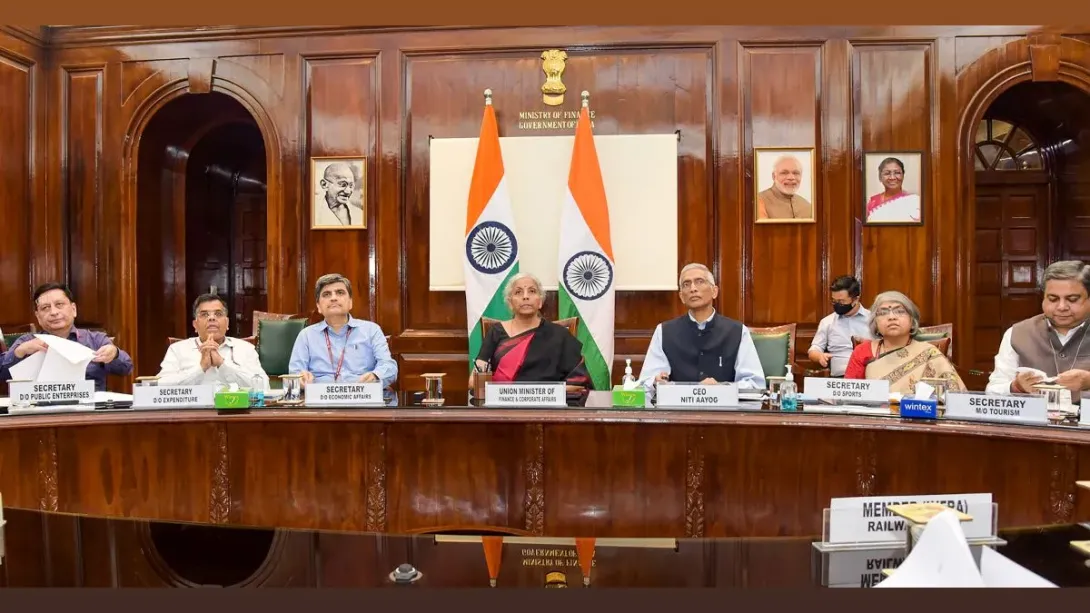
As preparations intensify for the Union Budget 2026–27, Prime Minister Narendra Modi convened a high-level meeting with leading economists to seek inputs on sustaining growth, managing fiscal pressures and advancing structural reforms. The consultation underscored the government’s intent to anchor policy decisions in expert analysis amid global uncertainty and domestic priorities. Discussions focused on balancing capital expenditure with social spending, strengthening manufacturing competitiveness and safeguarding macroeconomic stability. The outreach reflects a broader effort to build consensus ahead of the budget, which is expected to address investment momentum, employment generation and long-term productivity while navigating inflationary risks.
Strategic Consultations Ahead of the Budget
The meeting brought together prominent economists from academia, policy institutions and the private sector, signaling an inclusive approach to fiscal planning. According to officials familiar with the discussions, the prime minister sought views on how India can sustain high growth while maintaining fiscal discipline in a volatile global environment marked by uneven recovery and geopolitical risks.
Such consultations have become a recurring feature of the budget-making process, offering policymakers a platform to test assumptions and refine priorities before final decisions are taken.
Growth, Fiscal Balance and Structural Reform
Economists emphasized the importance of preserving momentum in capital expenditure, particularly in infrastructure, manufacturing and energy transition projects. Participants also highlighted the need to calibrate welfare spending to ensure efficiency and targeted delivery, avoiding undue strain on public finances.
Structural reforms—ranging from labor market flexibility to logistics efficiency—were discussed as critical levers to enhance productivity and attract long-term investment. The dialogue reflected broad agreement that sustained reforms, rather than short-term stimulus, would define India’s medium-term economic trajectory.
Navigating Global Headwinds
The consultation took place against a backdrop of slowing global growth, tighter financial conditions and evolving trade dynamics. Economists cautioned that external shocks could test emerging markets, underscoring the need for prudent macroeconomic management and adequate fiscal buffers.
India’s relative resilience, participants noted, stems from strong domestic demand and ongoing public investment. However, they stressed vigilance on inflation trends, currency stability and external financing conditions as the budget framework takes shape.
Signals to Markets and Stakeholders
From a market perspective, the engagement with economists sends a signal of policy continuity and evidence-based decision-making. Investors and industry leaders are closely watching for cues on taxation, capital spending and reform timelines that could influence sentiment ahead of the budget announcement.
While specific proposals were not disclosed, the meeting reinforced expectations that Budget 2026–27 will prioritize growth-oriented spending, reform momentum and fiscal credibility—pillars seen as essential to sustaining India’s economic expansion in the years ahead.
Comments