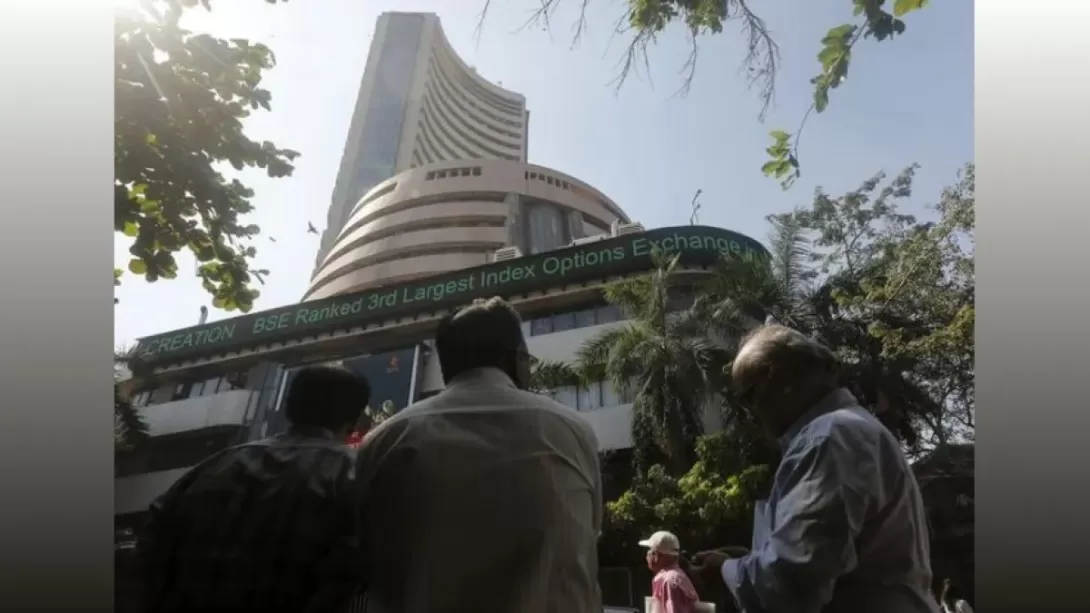
Indian stock markets experienced a decline on Thursday following a seven-day rally, driven by profit-taking activities and disappointing earnings reports from major companies like Hindustan Unilever. The Sensex and Nifty indices ended lower, with key stocks such as ICICI Bank and Bharti Airtel contributing to the downturn. Although global markets showed mixed signals, the FMCG sector in particular faced challenges due to weaker-than-expected financial results. Despite the setbacks, Foreign Institutional Investors (FIIs) remained optimistic, as evidenced by their substantial investment in Indian equities.
Market Overview: A Pause After a Strong Rally
Indian equity benchmarks Sensex and Nifty saw a downturn on Thursday, as investors opted for profit-booking after a robust seven-day rally. The Sensex ended 315.06 points lower at 79,801.43, while the Nifty dropped by 82.25 points to settle at 24,246.70. The decline marked a clear contrast to the previous weeks, where the BSE benchmark surged by over 6,000 points, reflecting investor optimism. The recent pullback was largely attributed to selling in blue-chip stocks and disappointing earnings results from several major companies, particularly in the FMCG sector.
Earnings Reports Weigh on Market Sentiment
The decline in key indices was significantly influenced by weaker-than-expected earnings reports from FMCG giant Hindustan Unilever (HUL) and others. Hindustan Unilever’s consolidated net profit for the fourth quarter of FY25 dropped by 3.35% to Rs 2,475 crore, disappointing investors who had hoped for stronger results. As a result, the stock fell by 4%, contributing to the overall market decline. Other companies from the FMCG sector, such as Nestle India, also reported disappointing results, with Nestle India’s profit falling by 6.5%.
Other stocks such as ICICI Bank, Bharti Airtel, HCL Technologies, Mahindra & Mahindra, HDFC Bank, Kotak Mahindra Bank, Tata Consultancy Services, and Bajaj Finance also saw a dip, further dragging down the indices.
Global Market Influence and Sectoral Performance
Global market conditions also had a role in the Indian stock market's dip. Asian markets, including South Korea's Kospi and Hong Kong's Hang Seng, experienced losses, reflecting global caution. However, Japan's Nikkei 225 and China's Shanghai SSE Composite managed to end on a positive note. European markets were also quoting lower, in line with global sentiment.
Despite the overall negative performance in Asia and Europe, US markets showed a sharp uptick on Wednesday. The Nasdaq Composite surged by 2.50%, while the S&P 500 and Dow Jones also recorded significant gains. This positive momentum in the US may not have fully translated to other global markets but indicated optimism in certain sectors.
Investor Activity: FII Confidence and Oil Market Trends
Foreign Institutional Investors (FIIs) continued to display confidence in the Indian market. On Wednesday, FIIs bought equities worth Rs 3,332.93 crore, a testament to their belief in the long-term potential of Indian markets despite short-term volatility. This influx of foreign capital, even amid profit-taking, indicates that many investors view the recent pullback as an opportunity for future growth.
The global oil market also added to the mixed sentiment, as Brent crude prices edged down by 0.03%, settling at USD 66.10 per barrel. While this slight decrease did not have a major impact on Indian markets, it highlights the continued uncertainty in global energy markets.
Outlook and Future Predictions
As the market moves forward, investors will likely remain cautious, keeping an eye on corporate earnings and global economic indicators. The recent profit-taking correction may continue in the short term, especially if earnings from key sectors like FMCG remain subdued. However, strong inflows from FIIs and positive developments in the US could provide support to Indian equities in the longer term.
Market participants will also focus on global trade developments, particularly the ongoing tariff disputes between the US and China, as these could have implications for Indian exports and the broader market sentiment.
Conclusion
The Indian stock market's modest decline on Thursday reflects the natural ebb and flow of investor sentiment after a period of strong gains. Despite profit-taking and disappointing earnings reports from key players in the FMCG sector, the market remains supported by ongoing foreign investment and a generally positive global outlook. Investors will be watching closely as the next round of earnings reports is released and will continue to navigate the complex mix of domestic and global factors influencing market behavior.
Comments