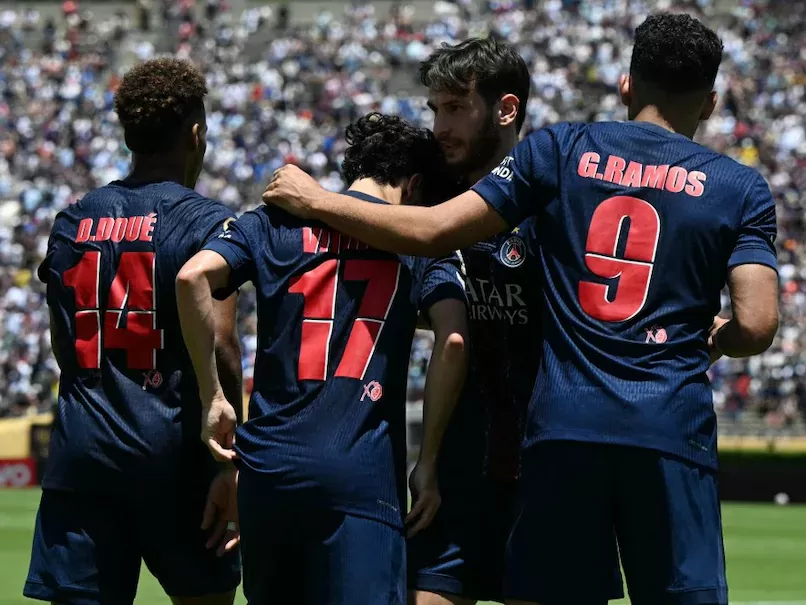
The 2025 FIFA Club World Cup began with a resounding statement from two of Europe’s most formidable clubs. Paris Saint-Germain delivered a clinical 4-0 win over Atletico Madrid in Pasadena, underscoring their ambition to cap off a dominant season with global glory. Meanwhile, Bayern Munich dismantled Auckland City 10-0 in Cincinnati, with Jamal Musiala netting a hat-trick in the second half. As the inaugural 32-team tournament got underway, the early rounds showcased the gulf between elite professional squads and amateur hopefuls, while setting the stage for more competitive clashes in the weeks to come.
PSG Dominate Atletico Madrid in Commanding Fashion
Paris Saint-Germain began their Club World Cup campaign with a performance that combined fluid attacking football and strategic discipline, cruising to a 4-0 win over La Liga giants Atletico Madrid. Playing in sweltering conditions at Pasadena’s Rose Bowl—historic host of the 1994 FIFA World Cup final—the French champions looked every bit the European titans they’ve become.
Goals from Fabian Ruiz and Vitinha put PSG two ahead at halftime. The second period saw substitutes Senny Mayulu and Lee Kang-In complete the rout, capitalizing on Atletico's defensive frailties and lack of midfield resistance. The French side’s dynamic play left no doubt about their title credentials.
“We had the objective of making history this season,” PSG head coach Luis Enrique said in a post-match briefing. “This is a new chapter. The club, the players, and the fans are still hungry, and we want to keep winning.”
Having already secured four trophies this season—including their long-awaited UEFA Champions League crown—PSG now have their sights set on a fifth. The win also highlighted their squad depth, with key contributions from across the lineup.
Bayern Munich Obliterate Auckland City 10-0
While PSG made a statement in California, Bayern Munich turned Group C into a showcase of firepower with a merciless 10-0 dismantling of Auckland City. The match, played in Cincinnati, was more target practice than competition, as the Bavarian giants showed no mercy against the Oceania underdogs.
Jamal Musiala stole the spotlight with a second-half hat-trick after coming on as a substitute. Kingsley Coman, Michael Olise, and Thomas Müller each scored twice, while Sacha Boey added his name to the scoresheet.
Bayern head coach Vincent Kompany tempered enthusiasm post-match, despite the emphatic scoreline. “We have to remain modest,” he said. “It was important to take the game seriously, but we know the challenges ahead will be more difficult.”
Auckland City’s squad, composed largely of amateurs who took unpaid leave from their day jobs to compete in the tournament, were clearly overmatched. Interim manager Ivan Vicelich acknowledged the lopsided nature of the contest while maintaining pride in his team’s effort.
“This was a dream opportunity,” said Vicelich. “We knew the challenge, but the players gave it everything.”
Tournament Structure and Wider Implications
This edition of the FIFA Club World Cup marks a significant expansion to a 32-team format, mirroring the structure of the FIFA World Cup. While the changes promise greater inclusivity and commercial appeal, the first round of fixtures has already reignited concerns about competitive balance between elite European clubs and teams from smaller confederations.
Despite those disparities, the expanded format offers invaluable exposure for teams like Auckland City and Palmeiras, who drew 0-0 with Porto in a tightly contested Group A match at MetLife Stadium in New Jersey.
As the group stage unfolds, the tournament is expected to become more competitive, particularly when continental champions begin to face one another. With clubs such as Boca Juniors, Benfica, and Flamengo also in the mix, the knockout phase promises more evenly matched battles.
Looking Ahead: Will Anyone Stop PSG and Bayern?
Both PSG and Bayern have signaled clear intentions of lifting the inaugural 32-team Club World Cup trophy. With their dominant wins and impressive squad depth, these European powerhouses are early favorites. However, they will face sterner tests as the tournament progresses.
For PSG, the Club World Cup offers the opportunity to extend a historic season and cement their status as the world's top club. For Bayern, it represents a chance to reassert themselves on the global stage after a relatively quiet European campaign.
As the world’s best clubs converge in the U.S., the opening weekend has made one thing clear: the path to glory will be ruthless, and only the most consistent, composed, and creative sides will make it to the top.
Comments